Craft Your Own Wooden Record Table
Woodworking Basics
Choosing Your Wood
The first step in any woodworking project is selecting the right material. For a record table, you want something strong and stable. Woods are generally divided into two categories: hardwoods and softwoods. Hardwoods like oak and maple come from deciduous trees (the ones that lose their leaves) and are dense and durable. Softwoods like pine come from coniferous trees and are generally lighter and easier to work with, but also more prone to dents and scratches.
Oak is a classic choice for furniture due to its strength and prominent grain pattern. Maple is also very hard and has a finer, more subtle grain. Pine is a budget-friendly option that's great for practicing, but it is softer. Don't overlook plywood, either. High-quality plywood, like Baltic birch, is made of many thin layers of wood glued together, making it incredibly stable and resistant to warping.
| Wood Type | Hardness | Cost | Grain Appearance |
|---|---|---|---|
| Oak | High | Medium-High | Prominent, coarse |
| Pine | Low | Low | Straight, with knots |
| Maple | Very High | High | Subtle, fine |
| Birch Plywood | High | Medium | Varies, often uniform |
Working with the Grain
Every piece of solid wood has a grain, which is the direction of the wood fibers. Think of it like petting a cat, it's smooth in one direction and rough in the other. Working with the grain means cutting or shaping in the same direction as these fibers. This results in smooth surfaces and strong joints.
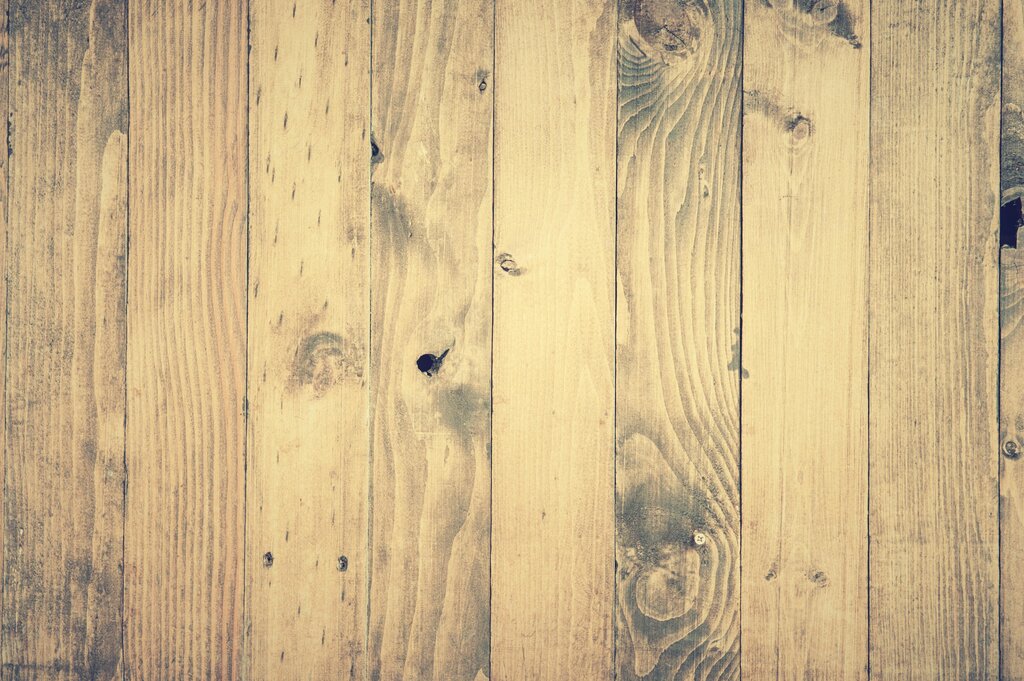
Going against the grain can cause the wood to splinter and tear, a frustrating problem called "tear-out." When planning your cuts, always try to align your tools to move along the grain, not fight it. For plywood, the grain direction of the top veneer layer is the one to pay attention to.
The Essential Toolkit
You don't need a professional workshop to get started. A few reliable tools will handle most basic projects. We can split them into measuring tools, cutting tools, and finishing tools.
Starting with the right tools is essential for any beginner in woodworking.
For measuring and marking, a quality tape measure and a combination square are non-negotiable. A combination square is fantastic for checking that your corners are a perfect 90 degrees and for drawing straight lines across a board. Always use a sharp pencil for marking your cut lines.
When it comes to cutting, a simple handsaw will do. A Japanese pull saw is a great choice for beginners because it cuts on the pull stroke, which gives you more control and a cleaner line. You'll also want a set of sharp chisels for cleaning up joints.
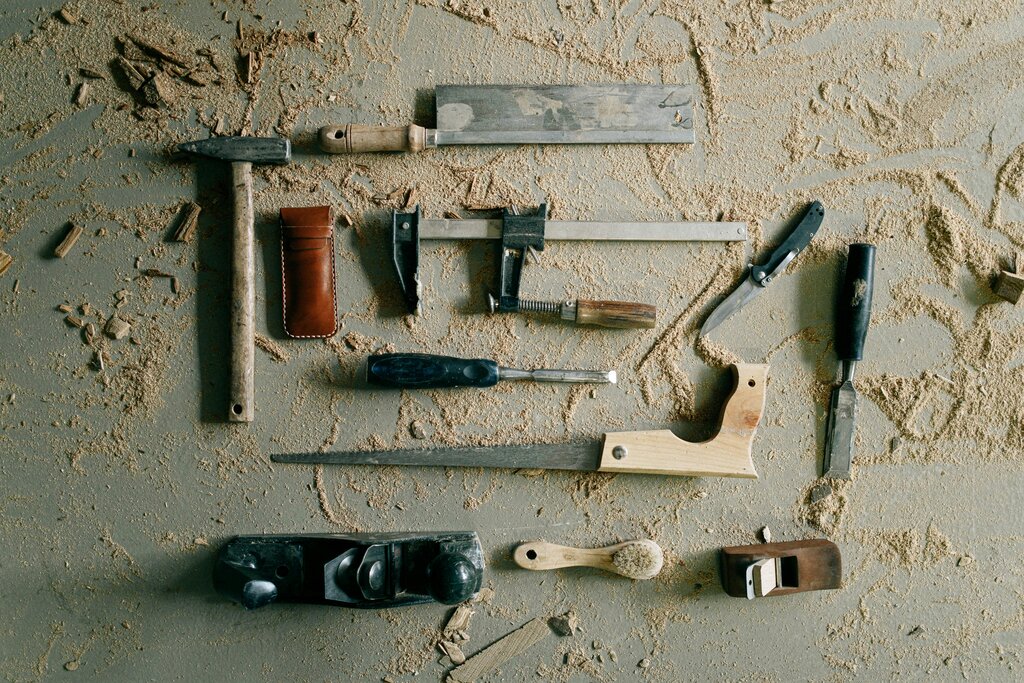
While you can do everything by hand, a couple of power tools make life much easier. A cordless drill is indispensable for drilling holes and driving screws. And an orbital sander will save you hours of effort when it comes to smoothing surfaces for a final finish.
Basic Joinery
Joinery is simply the art of connecting two pieces of wood. While there are dozens of complex joints, you only need to know a few simple ones to build sturdy furniture. The most basic method is the butt joint, where two pieces of wood are simply butted up against each other and secured with screws and glue.
For a little more strength, you can use a lap joint. This involves cutting a notch, or rabbet, into one or both pieces so they overlap. This creates more surface area for glue, making the joint stronger than a simple butt joint. These joints are perfect for the frame of a table.
Dowels can also be used to reinforce joints. You simply drill corresponding holes in both pieces of wood, apply glue, and insert a small wooden pin called a dowel. This helps keep the boards aligned and adds significant strength.
Always do a "dry fit" before applying glue. This means assembling your project without any glue or screws to make sure every joint fits together perfectly.
Safety First
Woodworking is a safe and enjoyable hobby as long as you respect your tools and your environment. There are a few rules that are absolute.
Using the correct safety gear is a fundamental first step to avoid accidents in carpentry.
First, always wear safety glasses. Sawdust, wood chips, and even broken tool bits can fly around unexpectedly. Second, keep your workspace clean. A cluttered bench or floor is a recipe for trips and falls. Finally, never work when you are tired or distracted. Your full attention should always be on the task at hand, especially when using power tools.
A woodworker is building a high-end record table and wants a material known for its strength, durability, and prominent grain pattern. Which of the following would be the most suitable choice?
Cutting or shaping wood against the direction of its fibers can cause splintering and a rough surface. This frustrating problem is called _________.
With these fundamentals, you're ready to start planning your project and making sawdust.