Cracking the Million View Code
2025 Algorithmic Satisfaction
Beyond Watch Time
For years, the YouTube growth mantra was simple: maximize watch time. The longer you kept someone on the platform, the more the algorithm rewarded you. That era is ending. While watch time and audience retention are still important, the new North Star for 2025 and beyond is viewer satisfaction.
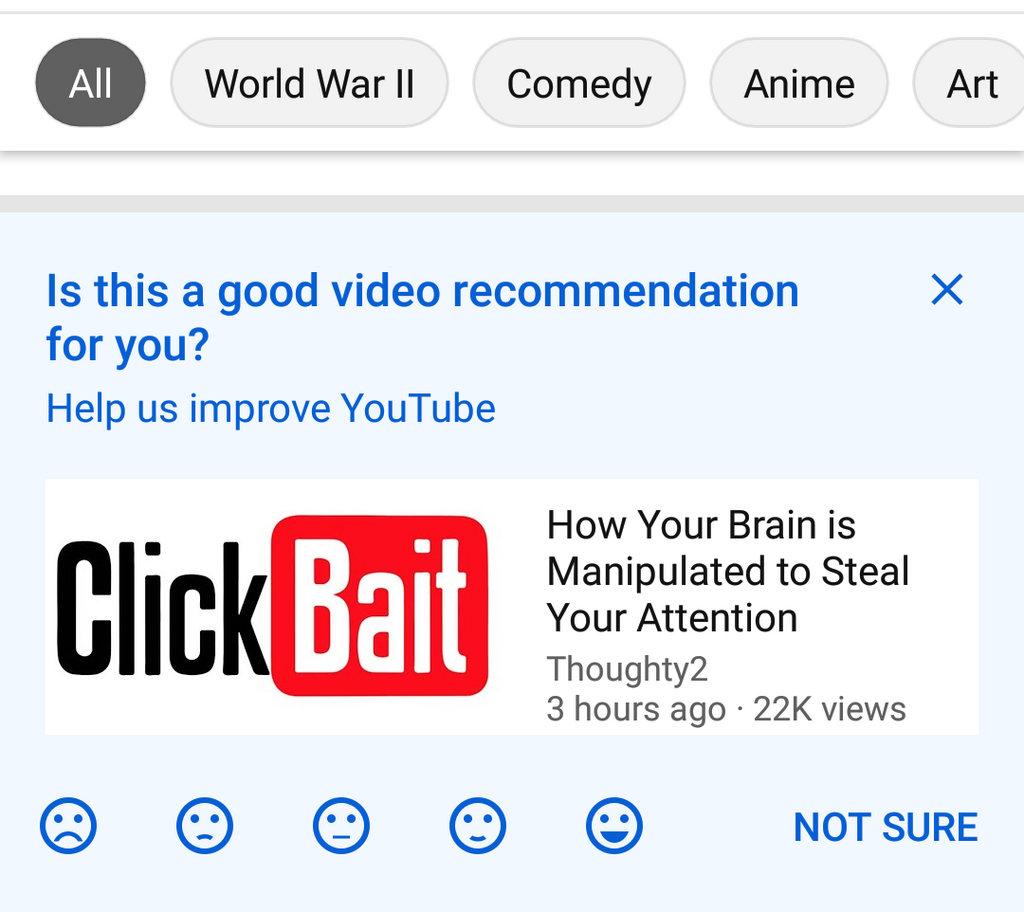
Think of it as the difference between a snack and a meal. A snack (a clickbait video) might satisfy an immediate craving but leaves the viewer unfulfilled. A meal (a high-satisfaction video) resolves a viewer's specific intent, whether that's learning a new skill, feeling a certain emotion, or understanding a complex topic. The algorithm is now smart enough to tell the difference.
It does this by looking beyond the view itself. What happens after the video ends? Does the viewer share it, save it to a playlist, or watch another video from your channel? Or do they close the app? These post-watch behaviors are the new currency. They signal that your content didn't just capture attention; it delivered real value.
The contemporary YouTube ecosystem is fundamentally shaped by algorithmic systems that connect viewers to videos, automate production workflows, and scale moderation.
The Session Scorecard
Every video contributes to a viewer's session, but not all contributions are equal. The algorithm now assesses your video based on two key metrics related to this: session contribution and session depth.
Session contribution measures whether your video is the start of a long and fruitful viewing session. If someone discovers your video through search or browse features and then stays on YouTube for another 30 minutes, your video gets a massive checkmark. It's seen as a valuable entry point to the platform.
Session depth goes a step further. Does your video inspire the viewer to go deeper, either with your own content or within the same topic? A video that leads to a viewer watching two more of your videos in a row has incredible session depth. This is far more valuable than a one-off viral hit that acts as a dead end, causing the viewer to leave immediately after.
These factors, along with direct feedback from satisfaction surveys, feed into a sort of internal "Satisfaction Score." While you can't see this score in your analytics, you can see its effects. Videos that solve problems and create loyal fans consistently outperform those that chase fleeting trends.
The Four Circles of Trust
When you publish a new video, YouTube doesn't just show it to everyone. It runs your content through a rigorous, four-layer testing system to gauge its quality and determine its potential reach. Think of it as a series of concentric circles, where your video must prove itself at each level to expand to the next.
- Core Subscribers: The first test group is your loyal fanbase—the people who have notifications turned on. If they watch and engage positively, the algorithm gains confidence.
- Recent Viewers: Next, the video is shown to people who have watched your content recently but aren't subscribed. This tests if the video has appeal beyond your base.
- Topic Matches: If it passes the second layer, YouTube pushes it to a broader audience of people interested in your video's topic, even if they've never heard of your channel. This is where significant channel growth occurs.
- Adjacent Audiences: This is the final frontier, where a video can go truly viral. The algorithm starts recommending your content to viewers interested in related, but not identical, topics. A well-made video about baking bread might start getting shown to people who watch videos about making pasta from scratch. Success here means you've created content with universal appeal.
The Algorithm's Two Brains
Finally, it's crucial to understand that YouTube no longer has a single, monolithic algorithm. The systems that recommend Shorts and long-form videos are almost entirely separate, and they optimize for different goals.
The is built for rapid discovery and immediate gratification. It prioritizes quick engagement signals like loops, shares, and a high swipe-away rate. It wants to know if your video can hook a viewer in under a second and start a consumption binge.
The long-form algorithm, by contrast, is a slow-burn strategist. It's focused on intent fulfillment and session depth. It wants to know if your 15-minute video truly answered the viewer's question and left them satisfied enough to explore more. A video that performs brilliantly as a Short will likely fail as a long-form recommendation, and vice versa.
For 2025, satisfying viewer intent is the master skill. Chasing vanity clicks and empty watch time is a losing game. Create content that serves a clear purpose, and the algorithm's new brain will know exactly who to show it to.
According to the new YouTube growth model for 2025, what is the most important metric the algorithm is optimizing for?
A viewer finds your video through a search query, watches it, and then continues to watch other videos on YouTube for the next 45 minutes. Your video has demonstrated strong ______.