Crabs Under the Sea and On Your Plate
Crab Anatomy
The Crab's Suit of Armor
A crab's most recognizable feature is its hard outer shell, the exoskeleton. This isn't just a passive shell like a snail's; it's a complex, multi-functional suit of armor. The exoskeleton provides structural support, protects the crab from predators, and serves as an attachment point for muscles, allowing for movement.
This tough exterior is made primarily of two materials: chitin, a fibrous sugar molecule that provides a flexible framework, and calcium carbonate, which adds rigidity and strength. Think of it like reinforced concrete, where chitin is the rebar and calcium carbonate is the cement.
Because the exoskeleton is rigid, it can't grow. To get bigger, a crab must shed its old shell in a process called molting, or ecdysis. It absorbs some of the calcium from the old shell, then swells with water to crack it open and wriggle out. The new, soft shell underneath then hardens over a few days.
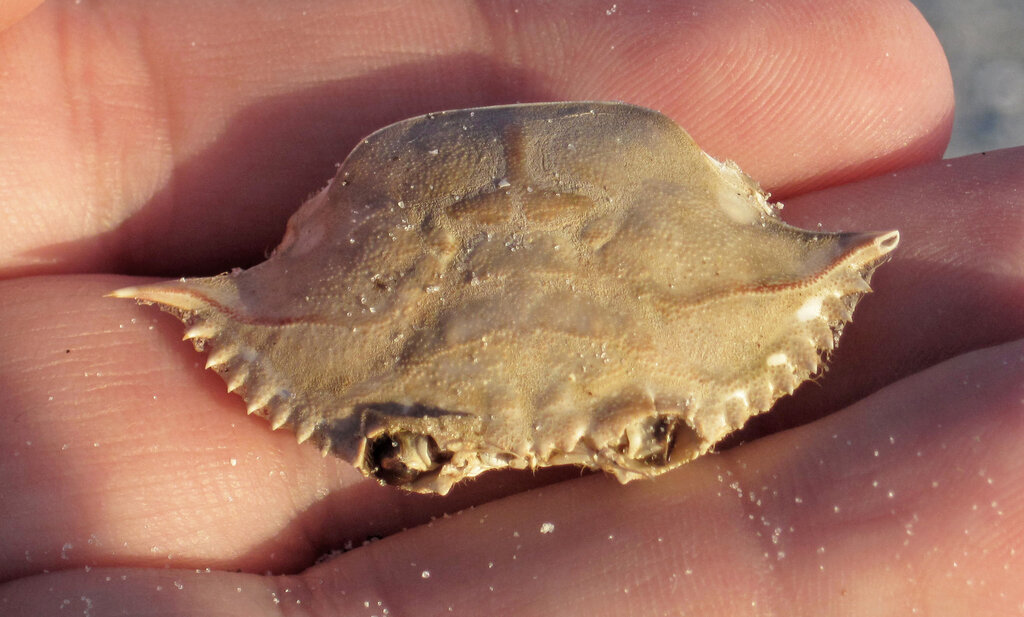
This process is incredibly vulnerable. A soft-shelled crab has little defense and must hide until its new armor is ready. But this trade-off is essential for growth.
Tools of the Trade
Crabs are decapods, meaning they have ten legs. These appendages are highly specialized for different tasks, from walking and fighting to eating and mating. They are attached to the underside of the cephalothorax, the fused head and chest region covered by the main shell, or carapace.
The front-most pair of appendages are the claws, or chelae. These are powerful tools used for defense, capturing prey, and communication. One claw is often larger than the other. The larger one, the "crusher," is used for breaking open shells, while the smaller, sharper one, the "cutter" or "pincer," is for tearing soft food.
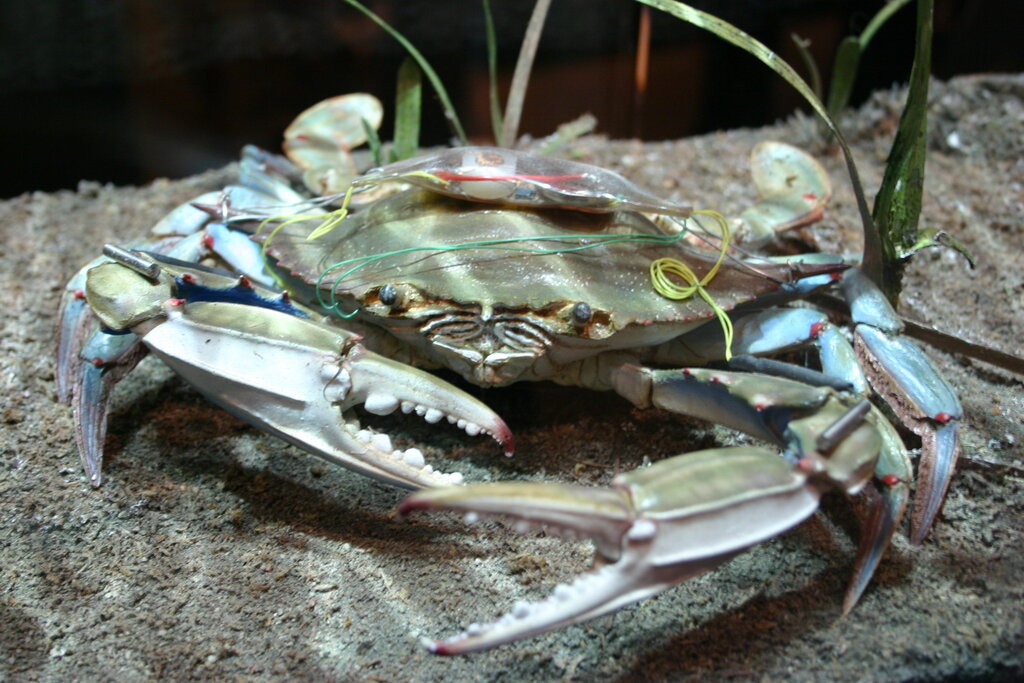
The next four pairs are the walking legs, or pereiopods. These are what crabs use to scuttle sideways. In some species, like blue crabs, the last pair of legs is flattened into paddle-like structures called swimmerets, which help them swim.
Tucked under the abdomen, or "apron," are smaller appendages called pleopods. In females, these are used to carry eggs. In males, they are modified for transferring sperm during mating.
| Appendage Group | Common Name | Primary Function |
|---|---|---|
| Chelae | Claws | Defense, feeding, courtship |
| Pereiopods | Walking Legs | Locomotion (walking/swimming) |
| Pleopods | Swimmerets | Reproduction, carrying eggs |
A Look Inside
Beneath the hard exoskeleton lies a surprisingly complex set of internal systems that keep the crab functioning.
Digestive System: Food enters the mouth and passes to the stomach, which contains a "gastric mill"—a set of hard, chitinous plates that grind food into smaller pieces. The mashed food is then mixed with enzymes from the large digestive gland (hepatopancreas), which absorbs the nutrients. Waste passes through the intestine and is expelled through the anus, located under the abdomen.
Respiratory and Circulatory Systems: Crabs breathe using gills, which are located in a chamber under the sides of the carapace. They extract oxygen from the water. Unlike humans, crabs have an open circulatory system. A simple heart pumps blood, called hemolymph, into open spaces within the body, bathing the organs directly in oxygenated fluid rather than containing it within vessels.
Reproductive System: The shape of a crab's abdomen is the easiest way to tell its sex. Males have a narrow, pointed abdomen, while females have a broad, rounded one that is used to protect her eggs. The reproductive organs are internal, and fertilization happens when the male transfers sperm to the female.
Now let's test your knowledge of the crab's remarkable anatomy.
What are the two primary materials that make up a crab's exoskeleton?
A crab's stomach contains a set of hard, chitinous plates that grind food into smaller pieces. What is this structure called?
By understanding these structures, from the tough outer shell to the specialized legs and internal organs, we can appreciate the crab as a highly adapted and successful creature.