CPR Essentials
Introduction to CPR
What is CPR?
Cardiopulmonary Resuscitation, or CPR, is an emergency procedure that can help save a person's life if their breathing or heart stops. When someone collapses from cardiac arrest, their heart is no longer pumping oxygen-rich blood to the brain and other vital organs. CPR uses chest compressions and rescue breaths to mimic the heart's pumping action, keeping blood circulating until medical help arrives.
Cardiac Arrest
noun
A sudden stop in heart function, breathing, and consciousness, caused by an electrical malfunction in the heart.
Think of it as a temporary life-support system. It doesn't restart the heart on its own, but it buys critical time. Without oxygen, brain damage can begin in just a few minutes. By performing CPR, you become a crucial link between the emergency event and professional medical care.
Cardiopulmonary Resuscitation, or CPR, is a lifesaving technique used during emergencies when someone's breathing or heartbeat has stopped.
Why Every Second Counts
In a cardiac emergency, time is the most critical factor. The chance of survival decreases significantly for every minute that passes without CPR and defibrillation. Immediate action can be the difference between life and death.
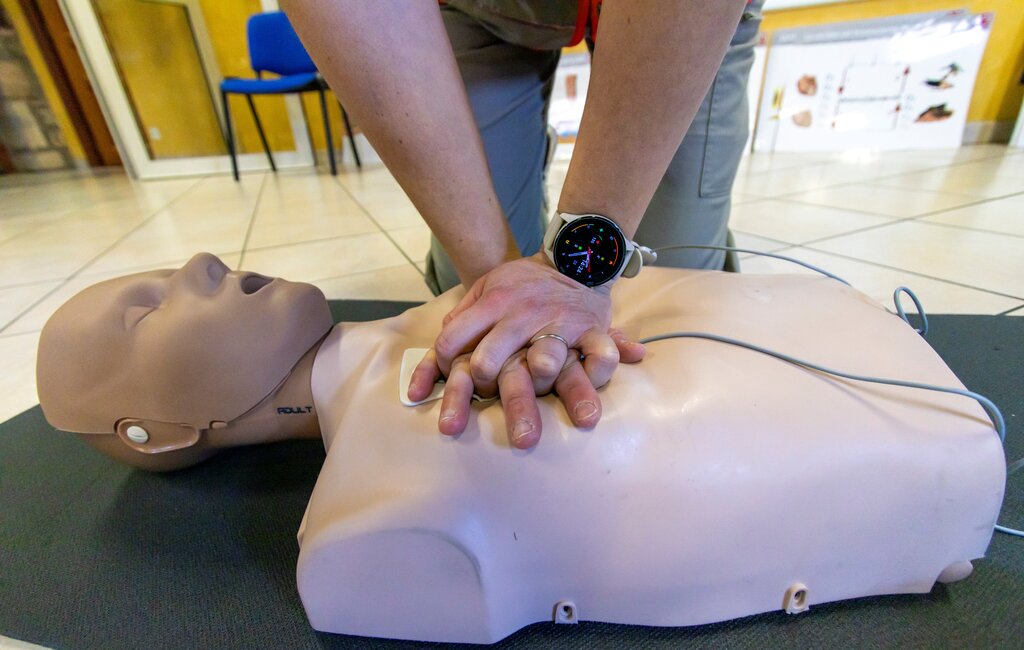
Performing CPR right away keeps blood flowing and provides oxygen to the brain, which helps prevent permanent damage. A person who receives bystander CPR is two to three times more likely to survive after cardiac arrest.
CPR can double or triple a person’s chance of survival
The Chain of Survival
To be effective, CPR is part of a sequence of actions known as the Chain of Survival. Just like a real chain, it's only as strong as its weakest link. Each step is essential for giving a person the best possible chance of recovery.
The first two links are the most critical for a bystander to perform: recognizing the emergency and calling for help, then starting CPR immediately. The next links, which we'll cover later, involve using a defibrillator and getting the person to advanced medical care.
The Basic Principles
CPR has two main components: chest compressions and rescue breaths.
Chest Compressions: These are the most important part of CPR. By pushing hard and fast in the center of the chest, you manually pump blood to the body's vital organs. The goal is to push deep and at a steady, quick rhythm.
Rescue Breaths: These provide oxygen to the person's lungs. After a set number of compressions, you deliver breaths into the person's mouth, ensuring their chest rises with each breath. This oxygen is then circulated through the body by the next set of compressions.
Together, these two actions create an artificial circulation and breathing system. The specifics of how to perform them vary slightly for adults, children, and infants, but the underlying goal is always the same: to keep oxygenated blood moving until the heart can be restarted.
What is the primary goal of performing CPR on a person in cardiac arrest?
A person who receives bystander CPR is ______ to survive after cardiac arrest compared to someone who does not.
Understanding these core concepts is the first step toward being prepared to act in an emergency. In the next sections, we'll dive into the specific techniques for performing CPR.