Course Downloadability
Understanding Course Content Formats
Content Comes in All Shapes and Sizes
Online courses deliver information in many ways. You might read an article, watch a video, listen to a podcast, or click through an interactive simulation, all within a single lesson. This variety isn't just for show; it's designed to make learning more effective. Different concepts are best taught in different ways, and different people learn best with different types of media.
The mix of formats—text, audio, quizzes, and fun games—keeps things lively and caters to different learning styles.
Understanding these formats helps you know what to expect from a course. It also gives you a better sense of how you'll be able to interact with the material, both online and off.
The Core Formats
Most course content falls into a few main categories. The most traditional is text. This includes everything from web pages and articles to downloadable PDFs and e-books. Text is excellent for dense, detailed information that you might want to reference later. You can easily search for keywords, highlight passages, and read at your own pace.
The main advantage of text is control. You set the pace. The downside is that it can sometimes feel passive or dry, especially for complex, dynamic topics.
Video has become incredibly popular for online learning. Video lectures can make abstract concepts feel more concrete and personal. They’re great for visual demonstrations, like showing how to solve a math problem or use a piece of software. The instructor's tone and body language can also add valuable context that text alone can't provide.
Audio formats, like lecture recordings or podcasts, offer unique flexibility. You can listen while commuting, exercising, or doing chores. This makes them perfect for absorbing content when you can't be in front of a screen. They are particularly effective for interviews, discussions, and language lessons.
Finally, there are interactive modules. These are designed for active learning. They include quizzes, simulations, coding exercises, and digital flashcards. Instead of just consuming information, you get to apply it. This hands-on practice is one of the most effective ways to build and test your understanding.
How Platforms Deliver Content
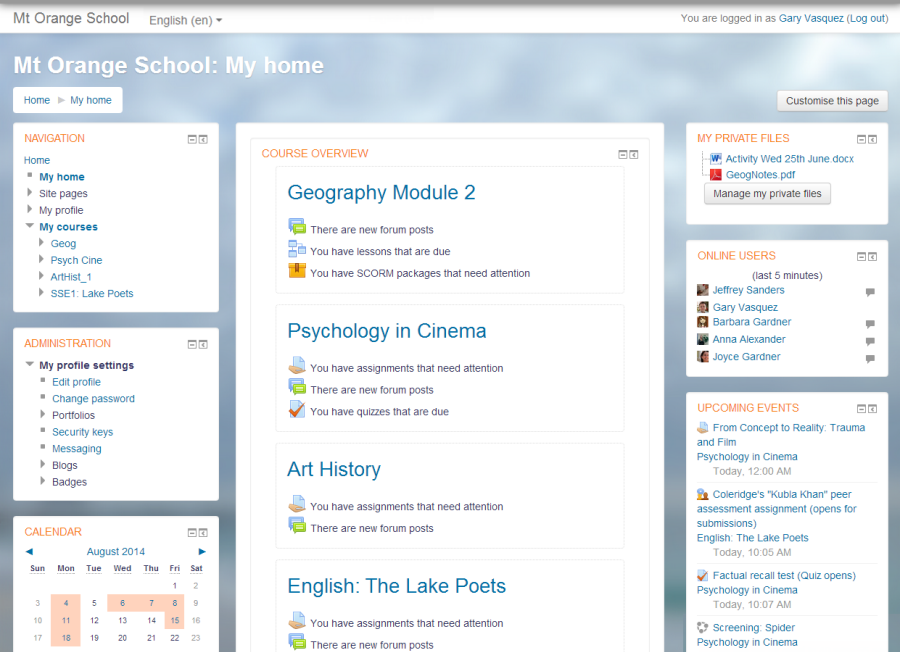
The learning platform, or Learning Management System (LMS), acts as the container for all this content. How a platform implements these formats affects your experience, especially when it comes to offline access.
Some materials are embedded directly into the course website. A video might play in a built-in player, and a quiz is something you complete right on the page. This content usually requires an active internet connection.
Other materials are provided as downloadable resources. These are separate files, like a PDF worksheet, a set of presentation slides, or source code for a programming project. Once downloaded, you can use them anytime, anywhere, without being connected to the internet.
| Format | Best For | Interactivity | Common Offline Access |
|---|---|---|---|
| Text (PDFs, articles) | Detailed information, reference | Low | High (usually downloadable) |
| Video | Demonstrations, lectures | Low | Varies (often streaming only) |
| Audio | On-the-go learning, interviews | Low | High (usually downloadable) |
| Interactive Modules | Active learning, skill practice | High | Low (usually requires browser) |
The availability of downloadable content varies widely between platforms and courses. Some courses provide extensive resources you can keep forever, while others rely entirely on web-based materials. Knowing the difference helps you plan your studies, especially if you have an unreliable internet connection or prefer to work offline.
Let's review what you've learned about these different formats.
Which content format is best suited for learning on the go, such as during a commute or while exercising?
A student needs to learn a complex, multi-step visual process, like how to use a specific feature in a graphic design program. What would be the MOST effective format for this task?
By recognizing the different types of course content and how they're delivered, you can better choose courses that fit your learning style and technical needs.