Course Creation Uncomplicated
Understanding Learning Theories
How People Learn
To design a great course, you first have to understand how people learn. It's not about just dumping information and hoping it sticks. Learning is a process, and over the years, experts have developed several major theories to explain how it works. These aren't just academic ideas; they are practical frameworks that shape everything from classroom activities to the apps on your phone.
Learning theories describe the conditions and processes through which learning occurs, providing teachers with models to develop instruction sessions that lead to better learning.
Let's explore three foundational theories: behaviorism, cognitivism, and constructivism. Each offers a different lens through which to view learning, and understanding them will help you create more effective and engaging educational experiences.
Behaviorism: Learning by Doing
Behaviorism focuses on what we can see: actions. This theory suggests that learning is a change in observable behavior caused by a response to events in the environment. Think about how you might train a dog. When it sits, you give it a treat. The treat is positive reinforcement, making the dog more likely to sit again in the future. That's behaviorism in a nutshell.
This theory sees the mind as a "black box." It's not concerned with what's happening inside someone's head—thoughts, feelings, or motivations—only the inputs (stimuli) and outputs (responses). Early proponents like B.F. Skinner showed that behavior could be shaped by a system of rewards and punishments.
In practice, behaviorist strategies include repetition, drills, and immediate feedback. Think of a language app that has you repeat a phrase until you get it right, then rewards you with points. It’s about building habits through practice and reinforcement.
This approach is very effective for teaching concrete skills or information that needs to be memorized, like multiplication tables or basic safety procedures. The goal is a specific, correct response every time.
Cognitivism: The Mind as a Computer
While behaviorism ignored the mind, cognitivism puts it front and center. This theory arose in the mid-20th century, inspired by the dawn of the computer age. It pictures the human mind as a kind of computer that processes information. Learning isn't just about behavior; it's about what happens internally.
Cognitivism explores mental processes like memory, problem-solving, and thinking. It suggests we take in information, process it, store it in our memory, and retrieve it when needed. A key idea is the concept of a schema, which is like a mental blueprint or a folder in your brain for a topic. When you learn something new, you either fit it into an existing folder or create a new one.
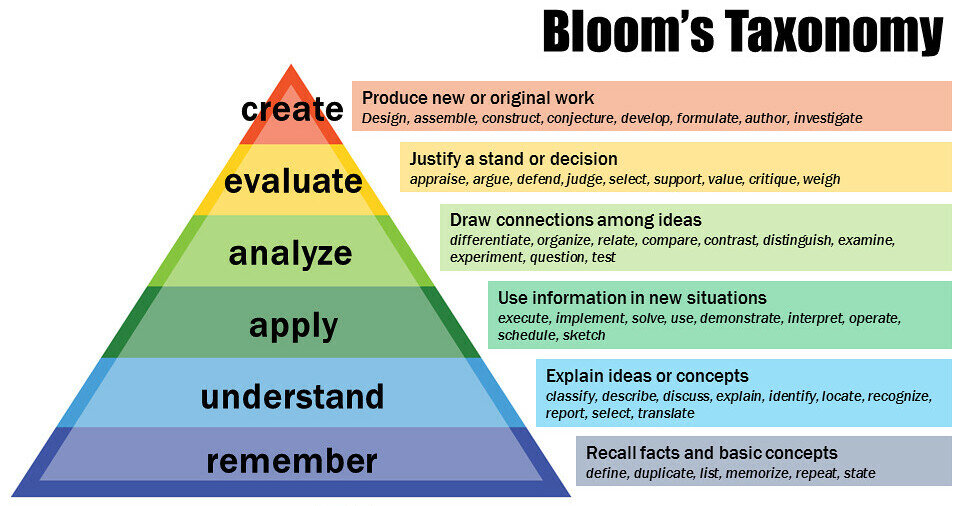
Instructional strategies based on cognitivism focus on organizing information in a logical way to help the brain process it efficiently. This includes breaking complex topics into smaller, manageable chunks, using outlines and diagrams to show relationships, and activating prior knowledge with questions like, "What do you already know about this?" The goal is to help learners build clear mental models.
Constructivism: Building Your Own Understanding
Constructivism takes the ideas of cognitivism a step further. It argues that people don't just passively receive and process information. Instead, they actively construct their own knowledge and understanding by connecting new experiences to what they already know.
Imagine two people looking at the same painting. One, an art historian, might see a commentary on a specific historical period. The other, an artist, might see a masterful use of color and texture. Neither view is wrong; they've each built a different meaning based on their unique background and experience. That's the core idea of constructivism.
Learning, from a constructivist perspective, is a social and creative process of making sense of the world. It's less about getting the one "right" answer and more about developing a deep, personal understanding.
In course design, this theory encourages hands-on, problem-based learning. Instead of just listening to a lecture on physics, students might build a small catapult to see the principles in action. Collaborative projects, group discussions, and real-world case studies are all hallmarks of a constructivist approach. The instructor acts more as a facilitator or guide, helping learners build their own path to knowledge.
Putting It All Together
So, which theory is best? None of them. They each have their place, and the most effective course design often borrows from all three. You might use behaviorist drills for foundational facts, cognitivist strategies to organize complex ideas, and constructivist projects to encourage deep, critical thinking.
Understanding these theories helps you move beyond simply presenting content. It allows you to think about what you want your learners to do—memorize, analyze, or create—and then choose the instructional strategies that will best help them get there. By catering to the different ways people learn, you can create a richer, more effective, and more engaging experience for everyone.
Ready to check your understanding of these core theories?
An instructor breaks a complex topic into smaller, manageable chunks and uses diagrams to show how the pieces connect. This approach is most aligned with which learning theory?
Which learning theory views the mind as a "black box," focusing only on observable inputs (stimuli) and outputs (responses)?
By keeping these foundational theories in mind, you can design learning that is more intentional, effective, and tailored to your students' needs.