Course Creation From Syllabus
Introduction to Course Design
Blueprint for Learning
Great courses don't just happen. They are carefully planned. Course design is the process of creating a roadmap for learning. It's about intentionally connecting what you want students to learn with how they'll learn it and how you'll know they've learned it. Without a solid design, a course can feel like a random collection of facts. With one, it becomes a clear, purposeful journey.
The core of good design is alignment. Think of it like a three-legged stool. The legs are your Learning Objectives, your Instructional Activities, and your Assessments. If one leg is too short or pointing in the wrong direction, the whole thing wobbles.
- Learning Objectives: What should learners be able to do after the course?
- Instructional Activities: What will learners do to achieve the objectives (e.g., read, watch, practice)?
- Assessments: How will you and the learners know they've met the objectives (e.g., quizzes, projects)?
These three parts must support each other. If your objective is for a student to bake a cake, your activities should involve mixing ingredients and using an oven, and your assessment should be tasting the final cake—not writing an essay about its history.
Before you can align anything, you have to know who you're building it for. Who are your learners? What do they already know? What motivates them? Are they learning on a phone during their commute or at a desk in a quiet office? This context is everything. Designing a course without understanding the learner is like trying to give a speech without knowing the audience. You might say something interesting, but it probably won't land.
Frameworks for Design
Instructional designers don't just start from scratch. They use established models as frameworks to guide their process. These models provide a structured approach to ensure all the important steps are covered. One of the most common and foundational models is ADDIE.
ADDIE stands for Analysis, Design, Development, Implementation, and Evaluation. It’s a simple, powerful cycle for creating effective learning experiences.
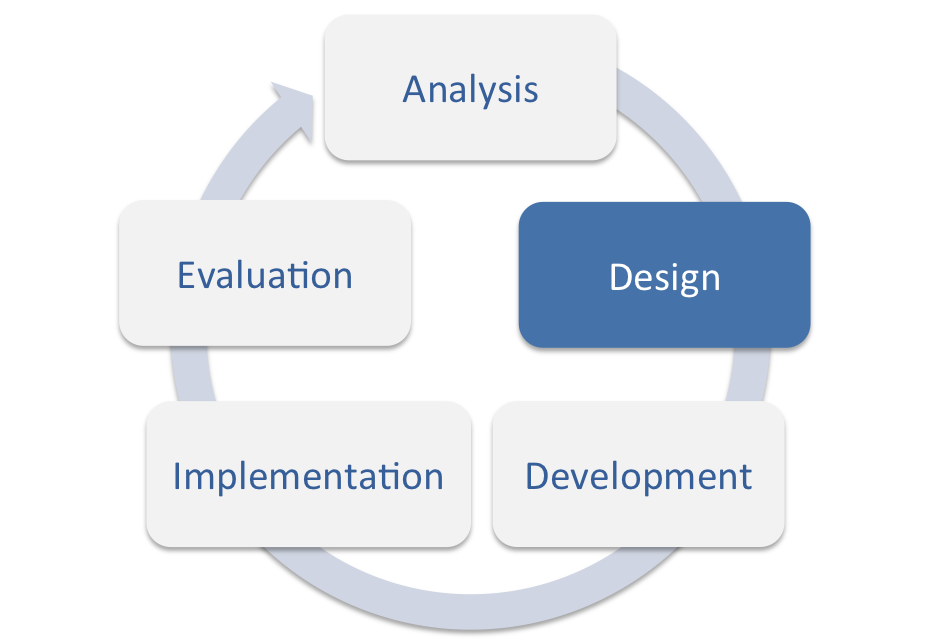
Let’s walk through the five phases:
- Analysis. This is the discovery phase. You dig into who the learners are, what they need to learn, and any constraints you're working with. This is where you define the problem your course is going to solve.
- Design. Now you create the blueprint. You write the learning objectives, plan your assessments, and outline the instructional activities. You decide on the look, feel, and flow of the course.
- Development. Here, you bring the blueprint to life. You create the actual content—writing text, recording videos, building quizzes, and assembling all the materials.
- Implementation. This is the launch. You deliver the course to the learners. This phase also involves training instructors and making sure learners can access the material smoothly.
- Evaluation. The process isn't over when the course is live. In this final phase, you gather feedback and data to determine if the course met its objectives. Was it effective? Were learners engaged? The results of the evaluation feed back into the beginning of the cycle for future improvements.
Instructional design is the process of planning, structuring, and creating learning experiences so people actually learn and take action, not just consume information.
Ready to check your understanding of these core design concepts?
An instructor's learning objective is for students to be able to 'critique a classic film.' Which of the following assessments is most poorly aligned with this objective?
What is the primary purpose of the 'Analysis' phase in the ADDIE model?
Ultimately, course design is about being intentional. By focusing on alignment, understanding your learners, and following a structured process like ADDIE, you can create courses that are not only informative but truly effective.