Country Blues: CAGED, Triads, and Vocals
CAGED Blues Mapping
Beyond Isolated Chords
You already know your open chords. You can play a C, an A, a G, an E, and a D. But thinking of them as separate, static shapes locks you into one small area of the guitar neck. The CAGED system transforms these five chords into a complete map of the fretboard, allowing you to see the connections between them. For a blues player, this is everything. It's the key to unlocking fluid transitions and creating the steady, driving bass lines essential to styles like country blues.
The CAGED system is a method for organizing and visualizing the fretboard of the guitar.
Instead of seeing a random assortment of frets, you'll start to see five interlocking zones. Each zone is based on one of the five open chord shapes, and each contains all the notes you need to play through a full progression without ever having to make a big, clumsy jump up or down the neck.
The I-IV-V in Every Zone
The heart of the blues is the I-IV-V progression. The magic of the CAGED system is that each of the five shapes, or zones, contains its own I, IV, and V chords. You don't need to leave the position to find the next chord in the sequence; you just need to know which shape to switch to. This allows you to keep your hand in one area, making it easier to maintain a bass line with your thumb while playing melodic parts with your fingers.
Let's take the key of G as an example. Your I chord is G. Your IV chord is C. Your V chord is D.
- If you're playing your G (I) chord using the open G shape, your C (IV) chord is found right there using a D shape, and your D (V) chord uses an A shape.
- If you move up the neck and play your G (I) chord using an E shape barre chord at the 3rd fret, your C (IV) is an A shape barre chord at the 3rd fret, and your D (V) is an E shape barre chord at the 5th fret.
Connecting the Fretboard
The five CAGED zones don't just exist in isolation. They flow into one another up the neck in a predictable sequence: C connects to A, which connects to G, then E, then D, which finally connects back to C an octave higher. Visualizing this chain is crucial for moving smoothly between positions.
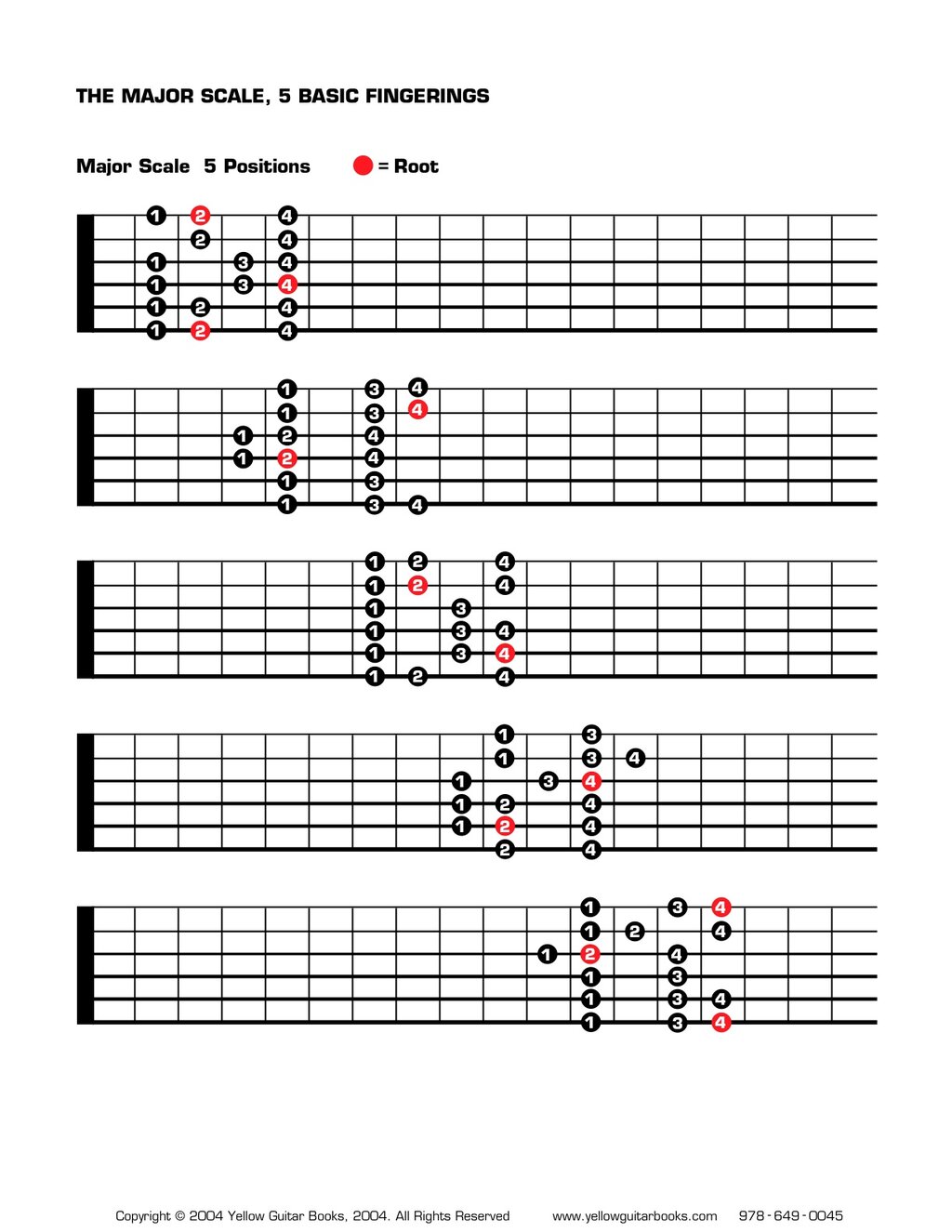
This horizontal connection is powerful, but for fingerstyle blues, the vertical connections within a single position are just as important. Your thumb needs to find the root note of each chord to play a steady bass line, while your fingers handle the chord tones and melodies on the higher strings. By mastering one CAGED zone at a time, you learn the specific locations of the root notes for the I, IV, and V chords in that area. This internal map allows you to play complex bass patterns without looking, freeing you up to focus on the melody.
Playing the Blues in a Box
Let's put this into practice. Try playing a 12-bar blues in A (I=A, IV=D, V=E) entirely within the 'E shape' zone at the 5th fret. Your A chord is an E-shape barre chord. When the progression moves to the IV chord (D), you can find it right there by playing an A-shape barre chord, also rooted at the 5th fret. For the V chord (E), you slide up two frets and play an E-shape barre chord at the 7th fret.
Your hand barely has to move, but you've played the entire progression. The key is seeing the different chord shapes that exist within the same fretboard 'box'.
Practice this in all five positions. Pick a key, find the I chord in one of the CAGED shapes, and then locate the IV and V chords within that same zone. Focus on hitting the root of each chord with your thumb as you change shapes. Over time, you'll stop thinking about individual chords and start seeing the entire fretboard as a connected grid of possibilities. This is the foundation of fluid, improvisational blues playing.
Now, let's test your understanding of how these concepts fit together.
What is the primary purpose of the CAGED system for a guitarist?
For a blues guitarist, what is a key advantage of using the CAGED system for the I-IV-V progression?
Mapping the blues across the fretboard takes practice, but the CAGED system provides a logical and powerful framework. Mastering it will fundamentally change the way you see and navigate the guitar.