CouchDB Fundamentals for Developers
Introduction to CouchDB
Beyond Rows and Columns
For decades, relational databases like SQL have been the standard. They organize data into tables with strict rows and columns, much like a spreadsheet. This is great for structured, predictable information, but what happens when your data doesn't fit neatly into boxes?
Enter NoSQL databases. The "NoSQL" part doesn't mean they reject SQL entirely; it stands for "Not Only SQL." These databases are built for flexibility, scalability, and handling diverse data types—exactly what modern web and mobile applications need. They trade some of the rigid structure of relational databases for speed and adaptability.
There are several types of NoSQL databases, including key-value stores, column-family stores, and graph databases. CouchDB falls into a popular category: the document-oriented database.
Meet CouchDB
Apache CouchDB is an open-source NoSQL database that stores data as self-contained documents. Instead of breaking information apart into multiple tables, each document holds all the data related to a single item. This structure is intuitive and mirrors how developers often work with objects in their code.
Document
noun
In CouchDB, a document is a self-contained data structure. It's stored in a format called JSON (JavaScript Object Notation), which uses key-value pairs to organize information.
Imagine you're storing user information. In a traditional relational database, you might have a users table for names and emails, an addresses table for street info, and a preferences table for user settings. To get a complete picture of one user, you'd need to join these tables together.
In CouchDB, all of that information can live in a single JSON document. This makes retrieving a user's complete profile incredibly simple—you just fetch one document.
{
  "_id": "user123",
  "name": "Alice",
  "email": "alice@example.com",
  "address": {
    "street": "123 Main St",
    "city": "Anytown"
  },
  "preferences": {
    "theme": "dark",
    "notifications": true
  }
}
Notice the _id field? Every document in CouchDB has a unique ID. The _rev field (not shown here but added automatically) tracks the revision of the document, which is crucial for handling updates and conflicts in distributed systems.
The CouchDB Advantage
So why would you choose CouchDB? Its design offers some key benefits, especially for modern applications.
-
Flexible Schema: You can add new fields to documents without having to restructure an entire database. If you decide to start tracking a user's phone number, you just add a
"phone"field to new or updated documents. Older documents without it remain perfectly valid. -
Web Native: CouchDB speaks the language of the web. It uses HTTP for its API, meaning you can interact with it using common tools like web browsers or
curlcommands. Data is stored in JSON, the standard data format for web applications, so there's no need for complex data mapping. -
Built for Sync: One of CouchDB's killer features is its replication protocol. It's designed to synchronize data between different database copies, making it perfect for mobile apps that need to work offline or for distributed systems that need to stay in sync across different geographic locations.
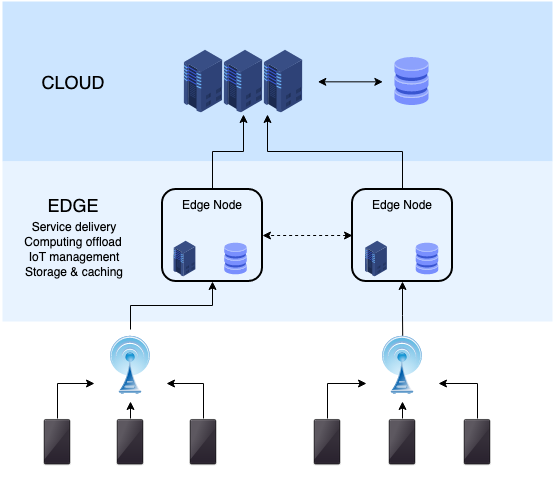
This synchronization power means a mobile app can have a local copy of its data, work completely offline, and then seamlessly sync changes with a central server once it's back online. This is a huge advantage for creating reliable and responsive user experiences.
Time to check your understanding.
The term "NoSQL" in the context of databases like CouchDB primarily means:
In a relational database, user data might be split across users, addresses, and preferences tables. How would CouchDB typically store all the information for a single user?
CouchDB provides a flexible, web-friendly approach to data storage that excels in scenarios where relational databases can be rigid. By understanding its document-oriented nature, you can see why it's a powerful choice for many modern applications.