Cost-Effective Email Hosting for Your Domain
Email Hosting Types
Where Your Email Lives
When you set up a custom email address like you@yourdomain.com, the emails have to be stored somewhere. That 'somewhere' is an email server, and the service that provides it is called email hosting. Think of it as renting a digital post office box for your domain.
There are three main ways to host your email, each with its own set of trade-offs regarding cost, control, and complexity. Choosing the right one depends entirely on your needs.
Shared Hosting
Shared hosting is the most common and affordable option. It’s like living in an apartment building. You get your own flat (your email account), but you share the building (the server) and its resources like water, power, and security with all the other tenants.
This means the provider manages the server's maintenance, security updates, and technical upkeep. It's a straightforward, hands-off approach. However, your email performance can sometimes be affected by other users on the same server. If a neighbour is using a huge amount of resources, it might slow things down for everyone else.
| Advantages | Disadvantages |
|---|---|
| Cost-effective: The most budget-friendly option. | Limited Resources: Server resources are shared among all users. |
| Easy to Manage: The provider handles all technical maintenance. | 'Noisy Neighbour' Effect: High traffic from other users can slow your service. |
| Beginner-Friendly: Ideal for individuals and small businesses. | Less Secure: A security breach on another account could potentially impact you. |
Shared hosting is a great starting point for personal projects, freelancers, or small businesses that need professional email without a large budget or technical team.
Dedicated Hosting
If shared hosting is an apartment, dedicated hosting is owning your own house. You get an entire server all to yourself. This gives you complete control over the environment. You can install custom software, fine-tune security settings, and use all the server's resources without sharing them.
This autonomy comes with more responsibility and a higher price tag. You are typically responsible for managing the server, including updates, security patches, and troubleshooting. Some providers offer 'managed' dedicated hosting, where they handle these tasks for an additional fee, but the core cost is still significantly higher than shared hosting.
| Advantages | Disadvantages |
|---|---|
| Full Control: Customise the server environment to your exact needs. | Expensive: Significantly higher cost than shared options. |
| High Performance: All server resources are dedicated to you. | Requires Expertise: You need technical knowledge to manage the server. |
| Enhanced Security: You control all security configurations. | High Responsibility: You are responsible for all maintenance and updates. |
Dedicated hosting is best for larger businesses or organisations with strict security requirements, high email volume, and the technical staff to manage a server.
Cloud-Based Hosting
Cloud-based hosting is a more modern, flexible approach. Instead of relying on a single physical server, your email service is run on a vast network of interconnected servers that form 'the cloud'. This is like using a modern co-working space. You get your own secure office, but you benefit from shared amenities that can scale up or down as you need them.
This model combines the ease of shared hosting with the power of dedicated resources. You only pay for what you use, and you can easily add or remove users and storage. The underlying infrastructure is incredibly reliable because if one server fails, another one instantly takes its place. Major providers like Google Workspace and Microsoft 365 use this model.
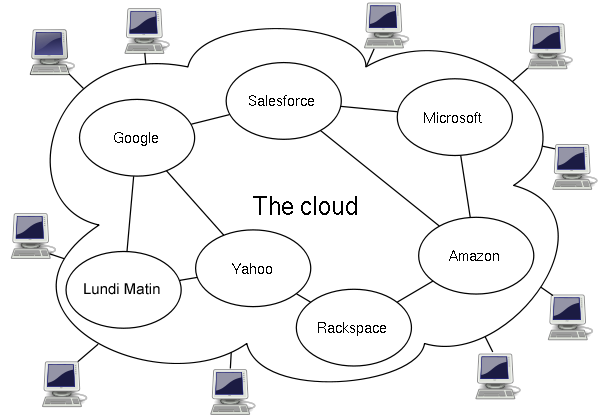
The main benefit is scalability. If your business grows from five employees to fifty, a cloud solution can handle it seamlessly. You don't need to migrate to a new server; you just adjust your plan.
| Advantages | Disadvantages |
|---|---|
| Scalable: Easily adjust resources as your needs change. | Potential for High Costs: Costs can increase quickly with heavy usage. |
| Reliable: High uptime due to distributed network of servers. | Less Control: You don't have root access to the underlying hardware. |
| Pay-As-You-Go: You often only pay for the resources you consume. | Provider Dependant: Your service is tied to the provider's ecosystem. |
Cloud hosting is an excellent choice for businesses of all sizes that value flexibility, reliability, and the ability to scale on demand.
Which type of email hosting is compared to owning your own house, offering complete control but also requiring more responsibility?
A potential disadvantage of shared hosting is that your email performance can be affected by other users on the same server.
Choosing the right email hosting is a foundational step for establishing a professional online presence. Each type offers a different balance of cost, performance, and control, allowing you to find the perfect fit for your specific needs.