Cosmology and Physics' Greatest Unsolved Mysteries
Introduction to Cosmology
The Expanding Universe
About 13.8 billion years ago, everything in the universe was crammed into an incredibly hot, dense point. This wasn't a point sitting in empty space. It was the entire universe. Then, it began to expand. This expansion, known as the Big Bang, wasn't an explosion in space, but rather the expansion of space itself.
A good way to picture this is to imagine a loaf of raisin bread dough. As the dough bakes and expands, all the raisins move farther apart from each other. From the perspective of any single raisin, all the other raisins seem to be moving away from it. The universe is like the dough, and galaxies are like the raisins. No matter which galaxy you're in, all the others appear to be receding as space itself stretches.
In the first moments after the Big Bang, the universe was an unimaginably hot soup of fundamental particles. As it expanded, it cooled down, allowing protons and neutrons to form. Over thousands of years, this cooling continued, setting the stage for the first atoms to come together.
The First Light
For the first 380,000 years, the universe was a foggy, opaque plasma. Light particles, called photons, were constantly bouncing off free-floating electrons, unable to travel very far. The universe was like a thick cosmic cloud.
But as the universe continued to expand and cool, a critical event occurred. The temperature dropped enough for protons and electrons to combine and form the first stable, neutral atoms—mostly hydrogen and helium. This event is called recombination. Suddenly, the photons were free. With the electrons now bound up in atoms, the universe became transparent, and light could travel unimpeded for the first time.
This ancient light, released when the universe was just a baby, is still traveling through space today. We detect it as a faint glow in all directions, known as the Cosmic Microwave Background (CMB).
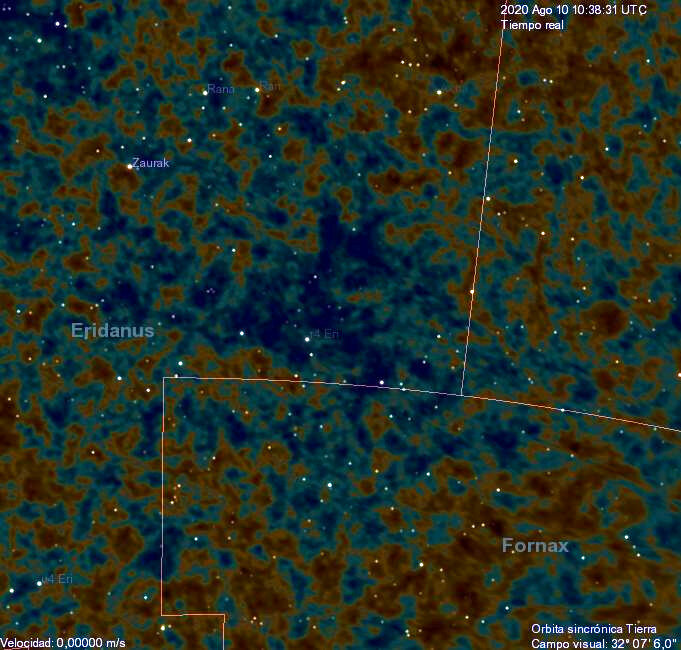
The CMB is essentially a snapshot of the oldest light in the universe. It's not perfectly uniform; it has tiny temperature variations. These slight differences in temperature and density were the seeds from which all future structures, like stars and galaxies, would eventually grow.
The Cosmic Web
As billions of years passed, gravity got to work on those tiny irregularities seen in the CMB. Regions that were slightly denser began to pull in more and more matter. Over eons, this process sculpted the universe into the vast structure we see today.
Galaxies aren't scattered randomly throughout space. They are organized into a colossal, web-like pattern. This structure is called the cosmic web.
The cosmic web consists of three main parts:
- Filaments: Long, thin strands of galaxies and dark matter stretching across hundreds of millions of light-years.
- Clusters: The massive, dense hubs where filaments intersect. These are the largest gravitationally bound structures in the universe.
- Voids: The enormous, nearly empty regions of space that lie between the filaments.
Our own galaxy, the Milky Way, is located within one of these filaments. Looking at the grand scale of the universe, we see this beautiful, intricate structure woven by gravity over billions of years.
Which statement best describes the Big Bang?
For the first 380,000 years, the universe was opaque because photons were constantly scattering off of free-floating electrons.
These three concepts—the Big Bang, the Cosmic Microwave Background, and the cosmic web—form the foundation of modern cosmology. They tell a coherent story of how our universe began, how it evolved, and how it's structured today.