Corti Clinical AI Analysis
Core Technical Architecture
Beyond General-Purpose AI
Most AI platforms are designed to be jacks-of-all-trades. They can write a poem, summarise a news article, or translate a language. But in high-stakes environments like healthcare, a generalist approach isn't enough. Precision, reliability, and contextual understanding are paramount. This is where the concept of 'supportive computing' comes in. Instead of aiming for full automation, this model focuses on augmenting human expertise. It acts as a co-pilot, not a replacement, providing real-time, structured information to help clinicians make faster, more informed decisions.
Supportive Computing
noun
An AI paradigm where technology acts as a co-pilot to augment human professionals, providing real-time, structured support rather than replacing their decision-making functions.
At the heart of Corti's platform is a triad of specialised foundation models, each fine-tuned for a specific role within the clinical workflow. These are not general-purpose Large Language Models (LLMs) retrofitted for healthcare; they are built from the ground up on medical data.
The process begins with the Solo model. This is the platform's ear, responsible for listening to and transcribing clinical interactions. Next, the Ensemble model takes this transcription and specialises in structuring it for documentation, such as generating clinical notes or suggesting billing codes. Finally, the Symphony model works in parallel, providing real-time analysis and decision support during the interaction itself.
Medical-Grade ASR
The accuracy of any voice-driven AI system hinges on its ability to understand speech. General-purpose Automatic Speech Recognition (ASR) systems, like those in consumer smart speakers, are trained on broad datasets of everyday language. They perform well for common requests but often falter when faced with the unique demands of a clinical setting: complex terminology, various accents, background noise, and non-linear conversations.
| Feature | General-Purpose ASR (e.g., GPT-4) | Medical-Grade ASR (e.g., Corti) |
|---|---|---|
| Training Data | Broad internet text, general conversations | >250,000 anonymised clinical interactions |
| Vocabulary | General, consumer-focused | Specialised for medical and pharma terms |
| Error Tolerance | Moderate; errors are low-impact | Extremely low; designed to minimise risk |
| Primary Goal | Convenience, general tasks | Clinical accuracy and patient safety |
Corti's ASR and (NLP) engines are different. By training exclusively on a massive, curated dataset of over 250,000 real-world clinical interactions, the models learn the specific language, cadence, and structure of medical conversations. This domain-specific training results in significantly higher accuracy for tasks like distinguishing between "hyperkalemia" and "hypokalemia"—a nuance that could have critical consequences.
Structured Facts, Not Summaries
A key weakness of many generalist LLMs in a clinical context is their tendency to hallucinate, or invent facts. A one-shot summary of a patient conversation might seem helpful, but if it contains inaccuracies or omits a critical detail, it creates significant risk. To combat this, Corti's architecture includes a specialised reasoning layer called FactsR.
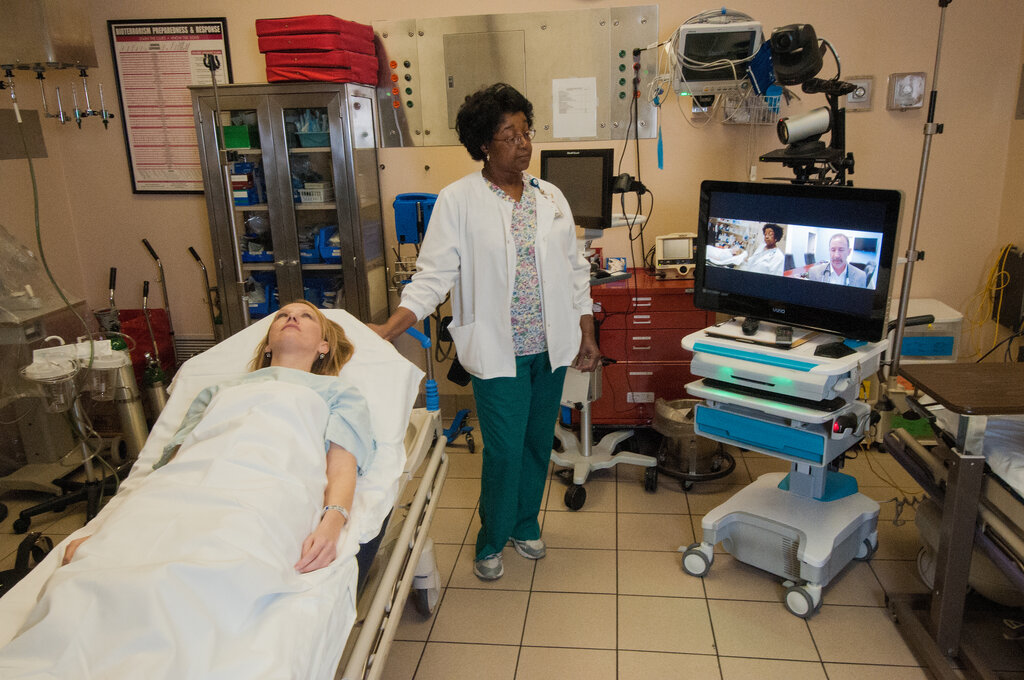
Instead of generating a prose summary, FactsR is engineered to extract and structure discrete clinical facts in real time. As the conversation happens, the layer identifies and tags specific pieces of information: symptoms, medications, vitals, patient history, and more. It functions less like a creative writer and more like a meticulous stenographer who organises notes into a predefined template. This process of is crucial for reliability.
This creates a verifiable data stream. Each extracted fact can be traced back to a specific moment in the conversation, allowing a clinician to quickly validate the information. This transparency is fundamental to building trust and ensuring safety in a healthcare IT ecosystem.
Let's check what you've learned with a quick quiz.
What is the primary goal of the 'supportive computing' model as described for high-stakes environments?
Which of Corti's foundation models is specifically designed to listen to and transcribe clinical interactions?
By focusing on supportive computing and a specialised, multi-model architecture, this approach provides a framework for AI that enhances clinical workflow without introducing the risks associated with generalist models.