Corporate Financial Innovations
Introduction to Financial Innovations
What is Financial Innovation?
Financial innovation is the act of creating new financial products, services, or processes. Think of it like the evolution of music. We went from vinyl records to cassette tapes, then CDs, and now streaming services. Each step made music more accessible and changed how we interact with it. Financial innovation does the same for money and capital.
innovation
noun
The introduction of something new, such as a new idea, method, or device.
At its core, it's about finding better, faster, and more efficient ways to manage money, raise funds, and handle risk. This isn't just about Wall Street; it happens inside companies of all sizes, shaping how they operate and grow.
Financial innovation is about solving old problems in new ways, from how a small business gets a loan to how a large corporation manages its global cash flow.
A Quick Trip Through Time
Financial innovation isn't a new phenomenon. It's been happening for centuries. Merchants in medieval Italy used bills of exchange to trade across long distances without carrying chests full of gold. This was a major process innovation that made commerce safer and more efficient.

The 20th century accelerated the pace. The first mutual fund appeared in the 1920s, allowing ordinary people to invest in a diversified portfolio of stocks. Credit cards emerged in the 1950s, revolutionizing consumer spending. Then came the digital age, bringing ATMs, online banking, and sophisticated software that changed how companies manage their finances entirely.
| Era | Key Innovation | Impact |
|---|---|---|
| Medieval | Bills of Exchange | Enabled long-distance trade without physical currency. |
| 1920s | Mutual Funds | Made diversified investing accessible to the public. |
| 1950s | Credit Cards | Transformed consumer purchasing and lending. |
| 1970s-80s | ATMs & Electronic Trading | Provided 24/7 banking access and sped up stock markets. |
| 2000s+ | Fintech & Crowdfunding | Lowered barriers to financial services and capital. |
Innovation in Action
So what do these innovations look like inside a modern company? They fall into a few key areas.
New Financial Instruments: These are tools companies use to manage financial risks. For example, an airline might use a futures contract to lock in a price for jet fuel, protecting it from sudden price spikes. Derivatives, like options and futures, give companies a way to manage uncertainty in a volatile world.
New Technologies: Technology is a massive driver of change. Enterprise Resource Planning (ERP) systems integrate a company's financials, inventory, and human resources into a single database, giving managers a real-time view of the business. Algorithmic trading uses complex formulas to make high-speed trading decisions, a far cry from the crowded trading floors of the past.
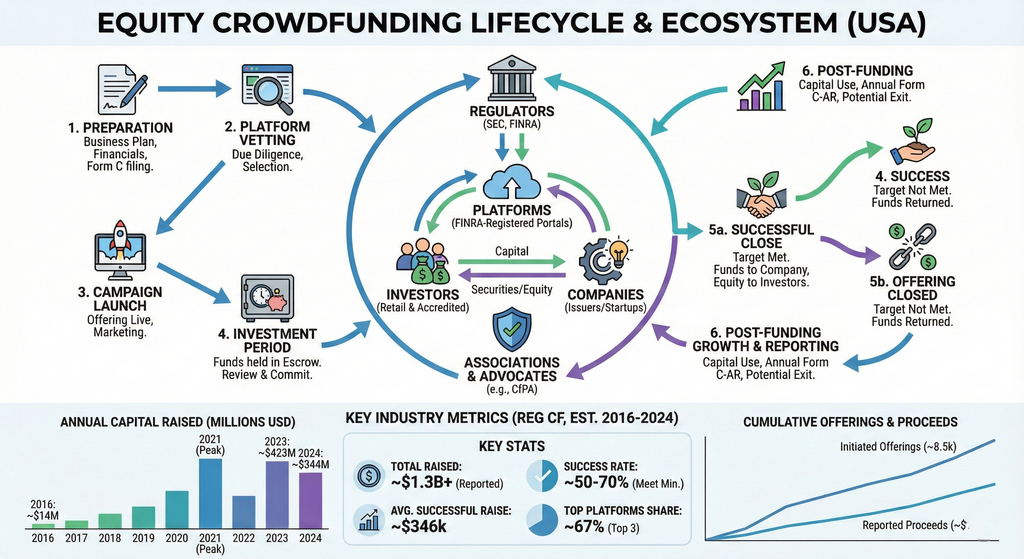
New Processes: Innovation also changes how things are done. Traditional bank loans used to be one of the only ways for a new business to get funding. Now, companies can use equity crowdfunding platforms to raise capital from thousands of small investors online. Venture capital has evolved into a sophisticated process for funding and mentoring high-growth startups.
Why It Matters for Companies
Financial innovations aren't just clever ideas; they are fundamental to how a modern business succeeds. Their role in corporate finance is about creating value and building resilience.
The key to successful financial management is continuous improvement and adaptability.
One of the biggest benefits is improved efficiency. Automated accounting software can do in minutes what used to take a team of accountants days, reducing errors and freeing up people to focus on more strategic work.
Another key role is better risk management. A multinational corporation can use currency swaps to protect itself from losses when exchange rates fluctuate. These tools don't eliminate risk, but they make it manageable.
Perhaps most importantly, innovation provides greater access to capital. A brilliant idea for a new product is useless without the money to develop and market it. New financing models have made it possible for more entrepreneurs than ever to get their ideas off the ground.
Ultimately, embracing financial innovation gives a company a competitive edge. By managing money more efficiently, mitigating risks more effectively, and finding new ways to fund growth, a company can outperform its rivals and thrive in a constantly changing market.