Corporate Data Transformation Explained
Introduction to Data Concepts
What is Data Anyway?
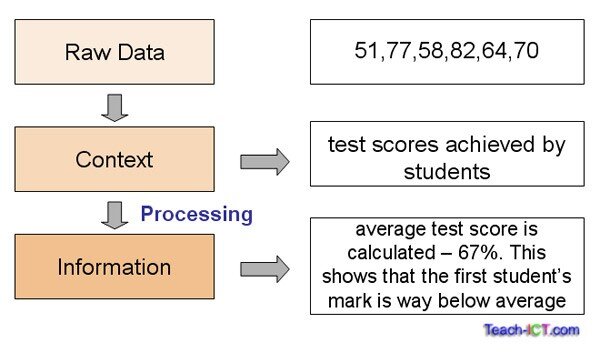
At its core, data is simply a collection of raw, unorganized facts. Think of individual numbers, words, or measurements. On their own, they don't mean much. A number like '150' is just a number. The word 'blue' is just a color. They are pieces of a puzzle waiting to be assembled.
It's only when we give these pieces context that they become useful information. If we know that '150' is the number of units sold yesterday and 'blue' is the most popular product color, we can start making decisions. This transformation from raw data to meaningful information is the first step in using data to understand and improve a business.
The Two Flavors of Data
Data generally comes in two main types: structured and unstructured. Understanding the difference is key to knowing how to work with it.
Structured data is highly organized and formatted to be easily searchable. It fits neatly into rows and columns, like a perfectly arranged spreadsheet. Think of customer records, sales transactions, or inventory lists. Because of its predictable format, it's straightforward for computers to process and analyze.
| Customer ID | First Name | City | Last Purchase |
|---|---|---|---|
| 101 | Jane | San Francisco | 2023-10-26 |
| 102 | John | New York | 2023-11-15 |
| 103 | Priya | Chicago | 2023-11-20 |
Unstructured data, on the other hand, is everything else. It doesn't have a predefined format and can feel a bit chaotic. Examples include emails, social media posts, customer support call transcripts, photos, and videos. While this type of data is rich with insights, it's more complex to analyze because it doesn't fit into neat tables.
Why Quality is Everything
Having tons of data is useless if it's not good data. Data quality refers to the state of data in terms of its accuracy, completeness, consistency, and reliability. Low-quality data can lead to flawed analysis, poor business decisions, and wasted resources.
Imagine your company launches a direct mail campaign based on its customer database. If that data is riddled with typos in addresses, outdated contact information, and duplicate entries, the campaign will fail. Mail will be sent to the wrong people or returned as undeliverable. The investment is lost, and potential customers are missed.
This leads to a fundamental principle in data management: "Garbage in, garbage out." If you feed a system with bad data, you will get bad results, no matter how sophisticated your tools are.
High-quality data is the bedrock of sound decision-making. When you can trust your data, you can be confident in the insights you draw from it. This foundation of quality ensures that every subsequent step in your data journey, from analysis to strategy, is built on solid ground.
Ensuring high-quality data requires a multi-faceted approach that encompasses various dimensions, including accuracy, completeness, consistency, and timeliness.
With a grasp of what data is, its different forms, and why its quality is so critical, you're ready to explore how we can begin to process and transform it.