Corporate Compliance and Governance Strategy
Risk-Control Mapping
From Theory to Action
Identifying risks is one thing; controlling them is another. A company’s risk appetite statement sets the tone from the top, defining how much risk it’s willing to accept to achieve its goals. But this high-level statement needs to translate into tangible, everyday actions. This is where risk-control mapping comes in, creating a direct line of sight from strategic risk tolerance to the operational controls that keep the business on track.
Think of it as building a bridge. On one side, you have the identified risks and regulatory obligations, like GDPR's data privacy rules or the financial reporting requirements of SOX. On the other, you have your internal processes and systems. The bridge itself is a structured set of controls designed to ensure that for every significant risk, there is a specific, effective countermeasure in place.
Frameworks for Control
Organisations don't build this bridge from scratch. They use established frameworks to provide a blueprint. Two of the most widely used are the and the ISO 31000 risk management standard. These frameworks offer a structured way to think about and implement controls, ensuring all bases are covered from the boardroom to the back office.
The COSO framework, for example, is built on five interconnected components: Control Environment, Risk Assessment, Control Activities, Information & Communication, and Monitoring. It’s not a simple checklist. It's a model that helps management design a control system that is integrated into the business itself.
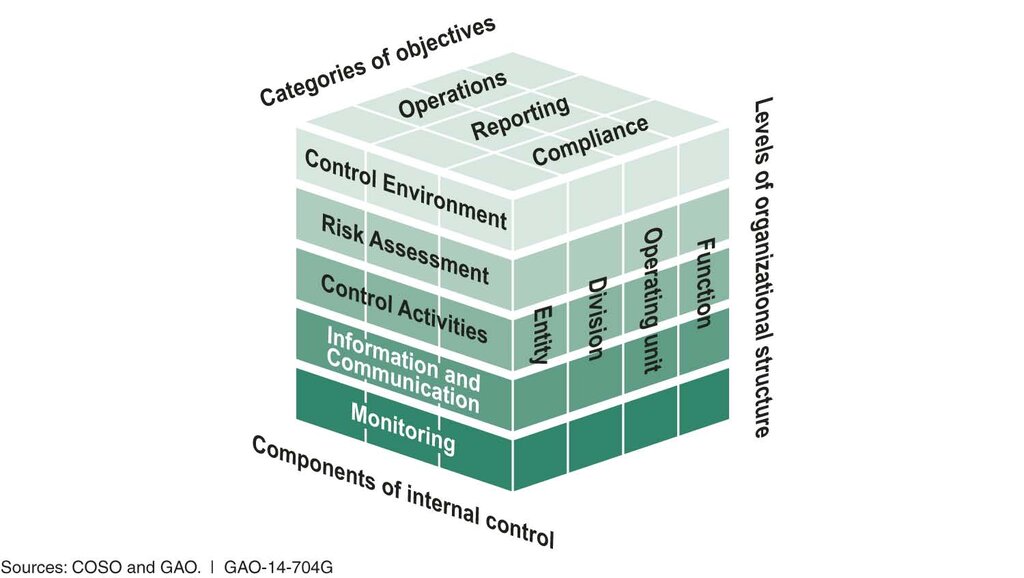
These frameworks guide you in asking the right questions. Is our company culture (Control Environment) one that values integrity? Have we properly identified our key risks (Risk Assessment)? What specific policies and procedures (Control Activities) do we have in place? How do we report issues (Information & Communication), and how do we check that controls are working (Monitoring)?
Mapping Risks to Controls
The primary tool for this mapping exercise is the Risk-Control Matrix (RCM). An RCM is a detailed document, often a spreadsheet, that lines up specific risks with the controls designed to mitigate them. It serves as a central repository for the organisation's control landscape, providing clarity to managers, auditors, and regulators.
A well-constructed RCM typically includes the risk, the associated compliance obligation, the control activity, the type of control, and who is responsible for performing it. This level of detail is crucial for accountability and for identifying any potential weaknesses in the control system.
| Risk Description | Compliance Obligation | Control Activity | Control Type | Control Owner |
|---|---|---|---|---|
| Unauthorised access to sensitive customer data. | GDPR Article 32 | All privileged user accounts must use multi-factor authentication (MFA). | Preventative | Head of IT |
| Inaccurate financial reporting in quarterly statements. | SOX Section 302 | Monthly review and sign-off of departmental budgets by finance managers. | Detective | CFO |
| Failure to report a data breach within the required timeframe. | GDPR Article 33 | An automated alert system flags potential breach incidents for immediate review by the security team. | Detective | CISO |
In the matrix, you'll see controls categorised as either preventative or detective. Preventative controls are designed to stop an undesirable event from happening in the first place. Think of them as a locked door. Examples include requiring manager approval for payments over a certain amount or segregating duties so one person cannot both create and approve a payment.
Detective controls, on the other hand, are designed to find problems after they have occurred. A security camera or a bank reconciliation are classic examples. They don't stop the initial event, but they identify it so it can be corrected. A strong control environment needs a healthy mix of both. Relying only on detective controls means you're always cleaning up messes; relying only on preventative controls can be inefficient and might not catch everything.
From Paper to Practice
An RCM is more than a compliance document; it’s a management tool. One of its most powerful uses is for . By mapping all known risks and regulations against existing controls, you can quickly spot areas where your defences are weak or non-existent. This is where risk management becomes proactive. If a new data privacy law is introduced, the RCM is the first place you look to see if your current controls are sufficient or if new ones need to be designed.
This process also involves trade-offs. Automated controls, like a system that automatically blocks an employee from accessing a sensitive file, offer consistency and are great for high-volume, routine tasks. They reduce the chance of human error. Manual controls, such as a senior manager reviewing a complex contract before signing, rely on professional judgement and experience. They are essential for nuanced situations where a simple rule won't suffice. The challenge is finding the right balance between the efficiency of automation and the wisdom of human oversight.
What is the primary purpose of a Risk-Control Matrix (RCM)?
A company policy requires a manager's signature to approve any expense claim over $500 before it can be paid. What type of control is this?
Ultimately, mapping risks to controls transforms abstract governance principles into a concrete, auditable system. It ensures that the organisation’s commitment to managing risk is not just a statement, but a daily operational reality.