Core Programming Logic and Application
Complex Control Structures
Smarter Control Flow
You already know how to use if statements to make decisions and for or while loops to repeat actions. But real-world problems aren't always so straightforward. Code often needs to handle many conditions, exceptions, and layers of data. Sticking to the basics can lead to messy, complicated logic that's hard to read and even harder to fix.
Let's move beyond simple branching and looping to explore more sophisticated techniques for managing control flow. These patterns help you write cleaner, more efficient, and more resilient code.
Flattening Logic with Guard Clauses
Deeply nested if-else statements create what's sometimes called the "arrowhead anti-pattern." The code indents further and further to the right, making it difficult to follow the primary logic path. The main action is buried under layers of conditions.
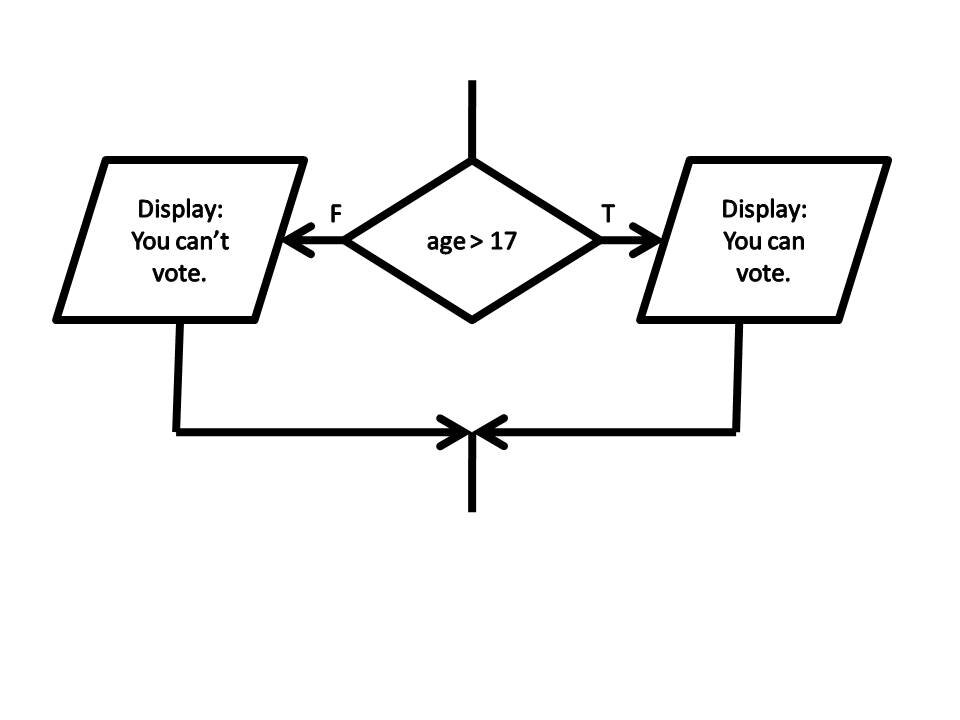
A guard clause is a simple but powerful technique to flatten this structure. It's a conditional check placed at the beginning of a function that exits early if a precondition isn't met. Instead of nesting the main logic inside an if block, you handle the invalid cases first and then proceed with the main logic at the top level of the function.
Consider this function for processing a user profile:
# "Arrowhead" style with nested ifs
def process_user(user):
    if user is not None:
        if user.is_active:
            if user.has_permissions('editor'):
                print(f"Processing editor: {user.name}")
                # ... core logic here ...
            else:
                print("User does not have editor permissions.")
        else:
            print("User is not active.")
    else:
        print("User object is missing.")
The core logic is three levels deep. Now, let's refactor it using guard clauses:
# Refactored with guard clauses
def process_user_clean(user):
    if user is None:
        print("User object is missing.")
        return

    if not user.is_active:
        print("User is not active.")
        return

    if not user.has_permissions('editor'):
        print("User does not have editor permissions.")
        return

    # Core logic is now at the top level
    print(f"Processing editor: {user.name}")
    # ... core logic here ...
The second version is much easier to read. Each condition is handled and exited, leaving the main workflow clear and unindented. This pattern greatly improves code maintainability.
Handling Multiple Paths
When you need to choose one action from several possibilities, a long if-elif-else chain is a common solution. Some languages offer a switch statement for this, which can be cleaner. But there's often an even better way: using a dictionary or map to associate values with actions.
# Using if-elif-else
def handle_command(command):
    if command == 'save':
        # logic to save
        print("Saving file...")
    elif command == 'load':
        # logic to load
        print("Loading file...")
    elif command == 'delete':
        # logic to delete
        print("Deleting file...")
    else:
        print("Unknown command.")
While this works, it can become lengthy. A switch statement cleans this up in languages that support it, but a dictionary-based approach is often more flexible and powerful, especially in languages like Python.
# Using a dictionary for dispatch

def save_action():
    print("Saving file...")

def load_action():
    print("Loading file...")

def delete_action():
    print("Deleting file...")

command_actions = {
    'save': save_action,
    'load': load_action,
    'delete': delete_action
}

def handle_command_dispatch(command):
    # Get the function from the dictionary and call it.
    # The .get() method provides a default if the key is not found.
    action = command_actions.get(command)
    if action:
        action()
    else:
        print("Unknown command.")
This pattern separates the routing logic (the dictionary) from the action logic (the functions). It's easier to add new commands without touching the main handler function; you just add a new entry to the dictionary. This makes the code more scalable and adheres to the Open/Closed Principle: open for extension, but closed for modification.
Finer Control Over Loops
Sometimes you need to interrupt a loop's normal flow. You might want to exit early or just skip the current iteration.
breakterminates the loop entirely.continueskips the rest of the current iteration and proceeds to the next one.
breakis for when you've found what you were looking for.continueis for when you want to ignore the current item and move on.
For example, to find the first even number in a list:
numbers = [1, 3, 5, 6, 7, 9]
found_number = None
for num in numbers:
    if num % 2 == 0:
        found_number = num
        break # Exit the loop as soon as we find it

if found_number:
    print(f"First even number found: {found_number}")
To process only positive numbers in a list, you can use continue to skip the negative ones:
numbers = [10, -5, 20, 0, -15, 30]
for num in numbers:
    if num <= 0:
        continue # Skip this iteration
    print(f"Processing positive number: {num}")
Some languages, like Python, offer an even more interesting feature: a loop's else block that executes only if the loop completes without being interrupted by a break statement. It's perfect for running code when a search fails.
# Using a for-else block
numbers = [1, 3, 5, 7, 9]
for num in numbers:
    if num % 2 == 0:
        print(f"Found an even number: {num}")
        break
else:
    # This block only runs if the loop finishes without a break
    print("No even numbers were found.")
Navigating Nested Data
Real-world data is rarely a simple, flat list. You'll often work with nested collections, like a list of lists or a list of dictionaries. Iterating through them requires nested loops. For example, to process students and their grades stored in a nested list:
data = [
    ['Alice', [85, 90, 92]],
    ['Bob', [78, 88]],
    ['Charlie', [95, 99, 100]]
]

for record in data:
    student_name = record[0]
    grades = record[1]
    total = sum(grades)
    average = total / len(grades)
    print(f"{student_name}'s average: {average:.2f}")
The outer loop iterates through each student's record, and the inner logic processes the list of grades for that student. While this example uses sum(), a nested loop would be needed if you had to process each grade individually.
By combining these techniques—guard clauses, dictionary dispatch, and precise loop control—you can write logic that is not only correct but also clean, readable, and ready for whatever complex data you throw at it.
What is the primary benefit of using guard clauses to refactor deeply nested if-else statements?
Instead of a long if-elif-else chain to select an action based on a command string, a more scalable and maintainable pattern is to use a ________.