Core Philosophical Systems and Ethics
Rationalism and Empiricism
Where Does Knowledge Come From?
During the 17th and 18th centuries, a period known as the Age of Reason, philosophers grappled with a fundamental question: How can we be certain about what we know? The old authorities of tradition and religion were no longer enough. The scientific revolution showed that new knowledge was possible, but its foundations were up for debate. This debate crystallized into two major camps: rationalism and empiricism. The core disagreement wasn't about what we know, but how we know it. Does knowledge begin in our minds, or does it come entirely from the outside world?
The Rationalist's Path
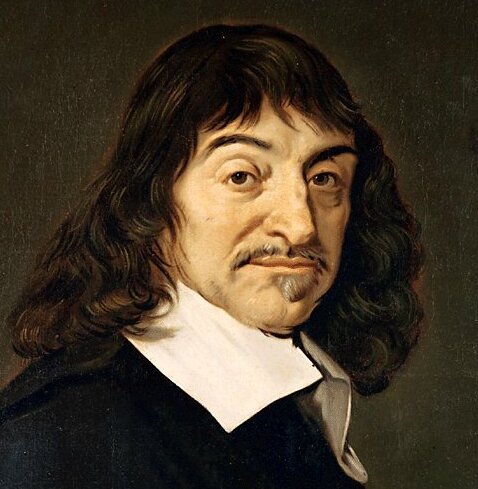
Rationalists argue that reason is the primary source of knowledge. The most famous proponent of this view was the French philosopher René Descartes. To find a bedrock of certainty, Descartes developed a method of systematic doubt. He decided to discard any belief that could be doubted, even slightly. Your senses can deceive you, so out they go. You might be dreaming, so your perception of reality is unreliable. He even imagined an evil demon systematically deceiving him about everything.
What was left? Only one thing: the act of doubting itself. To doubt, one must think. And to think, one must exist. This led him to his famous conclusion, Cogito, ergo sum—"I think, therefore I am." For Descartes, this single, undeniable truth, discovered through pure reason, became the foundation upon which all other knowledge could be built. Rationalists believe in innate ideas, concepts that are present in the mind from birth, such as mathematical principles or the idea of God.
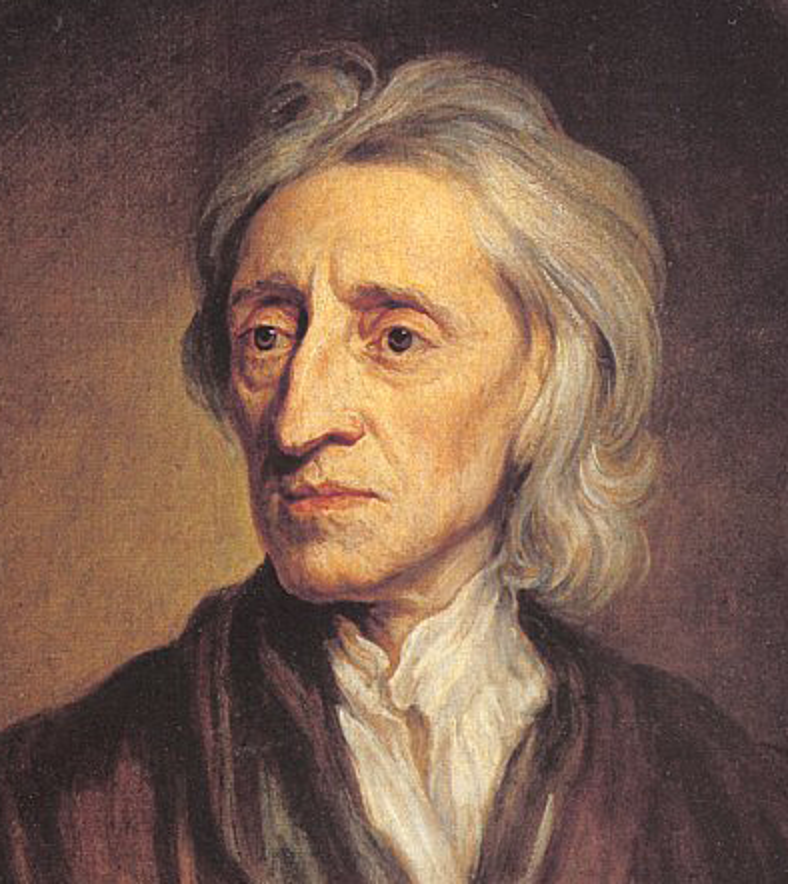
Empiricists took the opposite view, arguing that all knowledge originates in sensory experience. The English philosopher John Locke proposed that the mind at birth is a tabula rasa, or a "blank slate." There are no innate ideas. Everything we know is written on this slate by experience.
Locke distinguished between two types of qualities. Primary qualities, like shape, size, and motion, exist in objects themselves, whether we perceive them or not. A billiard ball has a certain mass and diameter regardless of an observer. Secondary qualities, like color, taste, and smell, are not in the objects but are powers that objects have to produce sensations in our minds. The apple isn't "red"; it has properties that cause us to experience the sensation of redness. For Locke, knowledge is the perception of the agreement or disagreement between our ideas, all of which come from experience.
Hume's Skeptical Challenge
The Scottish philosopher David Hume took empiricism to its logical, and startling, conclusion. If all our ideas come from sensory impressions, he asked, where does our idea of causality come from? We see one billiard ball strike another, and then we see the second ball move. We assume the first event caused the second. But do we ever actually perceive the causal link itself?
Hume argued that we don't. All we ever observe is a "constant conjunction" of events. Because we've seen B follow A repeatedly, we form a psychological habit of expecting it to happen again. We project this expectation onto the world and call it a law of nature. This is the famous : just because the sun has risen every day in the past doesn't logically guarantee it will rise tomorrow. For Hume, beliefs about cause and effect are based on habit and feeling, not on reason or direct observation of a causal power.
Hume's skepticism shook the foundations of both science and philosophy. If we can't be certain about cause and effect, how can we trust any scientific law?
Kant's Synthesis
The German philosopher Immanuel Kant was so shaken by Hume's work that it awoke him from his "dogmatic slumber." He realized that both the rationalists and the empiricists were partly right and partly wrong. In his Critique of Pure Reason, Kant proposed a revolutionary synthesis.
He agreed with the empiricists that knowledge begins with experience; we can't know anything without sensory input. However, he sided with the rationalists in arguing that the mind isn't a passive blank slate. Instead, the mind actively structures and organizes our experiences using innate "categories of understanding," such as space, time, and causality. We don't derive the idea of causality from experience, as Hume thought. Rather, our minds impose the structure of causality onto our sensory data to make sense of it. Knowledge is a product of both sensory experience and the mind's innate structures.
Immanuel Kant synthesized these opposing views in his Critique of Pure Reason, proposing that while knowledge begins with experience, it is structured by innate categories of understanding.
Now that you've explored these competing theories of knowledge, let's test your understanding.
What is the fundamental disagreement between rationalism and empiricism?
The idea that the mind at birth is a "tabula rasa," or blank slate, is a core concept of which philosophy?
The debate between rationalism and empiricism set the stage for modern philosophy and science. It forced thinkers to be rigorous about the sources of knowledge and the limits of human reason, a conversation that continues to this day.