Core ML Comic Recognition App
Core ML Intro
A New Kind of Smart
Traditionally, programming a computer meant giving it very specific, step-by-step instructions. If you wanted an app to identify a cat, you might write code like: "If it has pointy ears, and whiskers, and a long tail, then it's a cat." This is called rule-based programming. But what if the cat is facing away, or its ears are folded? The rules quickly fall apart.
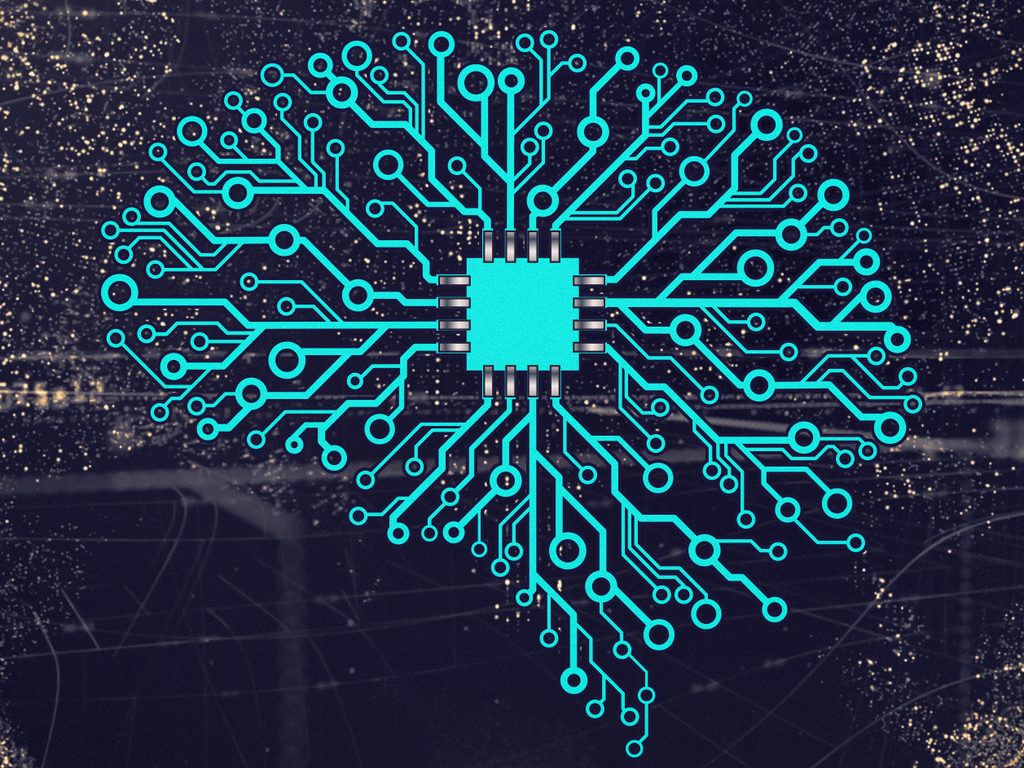
Machine learning (ML) takes a different approach. Instead of writing rules, you show the computer thousands of examples. You feed it countless pictures of cats, telling it, "This is a cat. This is also a cat." Eventually, the computer builds its own understanding of what a cat looks like. This understanding is stored in something called a model, which acts like a small, specialized brain.
Core ML is the bedrock of machine learning inference on Apple platforms.
Core ML is Apple's framework that lets developers put these trained models directly into their apps. It's the bridge that connects the model's intelligence with the app's user interface. For our comic book app, we won't write thousands of 'if-then' rules. Instead, we'll use a pre-trained model that already knows how to recognize comic covers. Core ML is what lets our app use that model's brain.
On-Device Intelligence
Where does the model do its thinking? With Core ML, the answer is: right on your device. This is a big deal.
Many AI services you might use, like some voice assistants or online image generators, work in the cloud. Your request is sent over the internet to a powerful server, which processes it and sends the result back. Core ML, however, is designed for on-device processings. The model lives inside the app on your iPhone, iPad, or Mac. This has three huge advantages.
Privacy: Your data stays with you. If our comic book app is analyzing a photo from your library, that photo never leaves your phone. It's never uploaded to a server or seen by anyone else.
Speed: There's no delay. Because there's no internet connection required for the thinking part, the results are practically instantaneous. You point the camera, and you get an answer. This is often called 'zero latency.'
Offline Access: The app's core feature works anywhere, whether you're on a plane, in the subway, or out in the wilderness. No internet, no problem.
The Brain in the Box
It's helpful to distinguish between two phases of machine learning: training and inference. Training is the process of creating the model, where it learns from massive amounts of data. This is computationally expensive and is done by data scientists using powerful computers. It's like the model's school years.
is what happens when you use the already-trained model to make a prediction. You give it a new piece of data—like a photo of a comic book cover—and it gives you an output, or an 'inference'—like "Amazing Fantasy #15." Core ML is an inference engine. Its job is to run pre-trained models efficiently.
For our purposes, the model is a 'black box.' We don't need to understand the complex math or architecture inside it. We just need to know what kind of input it expects (an image) and what kind of output it provides (a comic book title). Core ML handles all the complicated work of running the model on the device's hardware, letting us focus on building a great app around this powerful brain.
What is the primary difference between traditional rule-based programming and machine learning?
What is the main function of an 'inference engine' like Core ML?