Copyrighting Your Book
Introduction to Copyright
What Is Copyright?
Copyright is a legal right that grants creators exclusive control over their original works. Think of it as a form of protection for creativity. The moment you write a story, compose a song, or take a photograph, copyright law automatically protects it. You don't have to file any paperwork or register it for this basic protection to exist.
Copyright is the legal concept that works—art, writing, images, music, and more—belong to the people who create them.
The main purpose of copyright is to encourage the creation of new works. By giving authors, artists, and musicians control over how their creations are used and distributed, the law provides an incentive for them to produce and share their work with the public. It strikes a balance between protecting the creator's rights and allowing society to benefit from their creativity.
A Brief History
The idea of copyright isn't new. Its roots trace back to the early 18th century with the Statute of Anne in Great Britain (1710), which was the first law to grant rights to authors rather than just printers. Before this, printers held the power, and authors had little legal say over their own work.
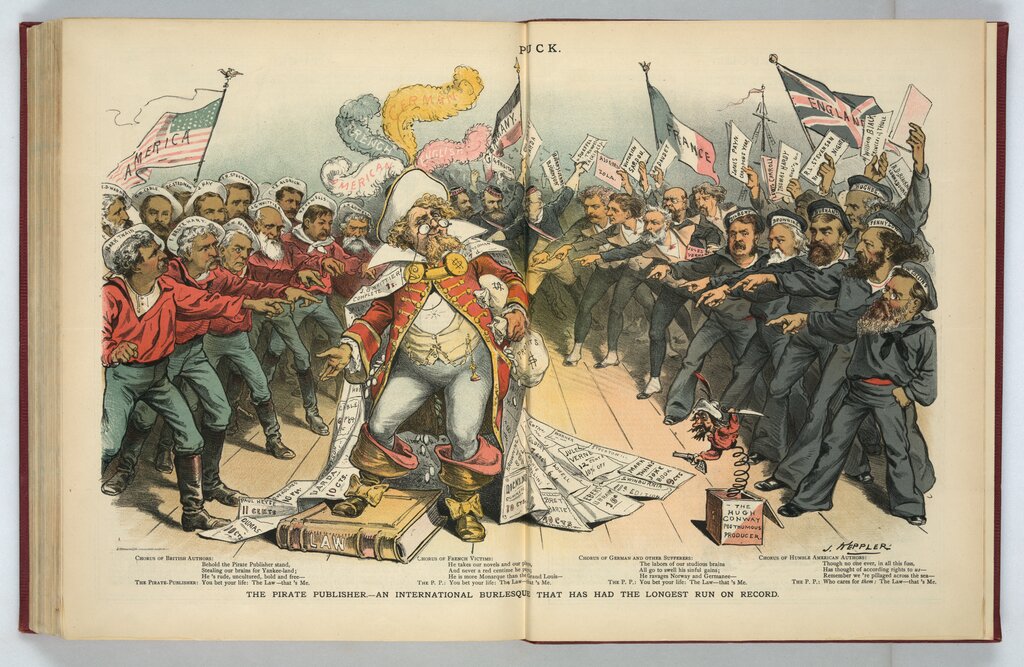
Over time, copyright laws evolved. In the United States, the Constitution empowered Congress to create laws to "promote the progress of science and useful arts." Globally, the Berne Convention in 1886 was a major step forward. It established a system where creators from one signatory country are given the same copyright protection in all other signatory countries. This created a framework for international copyright that still largely stands today.
What Copyright Protects
Copyright doesn't protect everything. It specifically applies to “original works of authorship fixed in any tangible medium of expression.” Let's break that down:
- Original Works of Authorship: The work must be independently created and have at least a minimal degree of creativity. A simple list of ingredients might not qualify, but a cookbook with descriptive instructions and photos would.
- Fixed in a Tangible Medium: The work must be recorded in some way. This could be writing on paper, a file on a computer, a recording of a song, or paint on a canvas. A story you only tell out loud isn't protected by copyright until it's written down or recorded.
The types of works eligible for copyright protection are broad and include:
- Literary works: Books, articles, poems, and computer code.
- Musical works: Compositions and lyrics.
- Dramatic works: Plays and scripts.
- Pictorial, graphic, and sculptural works: Photographs, paintings, maps, and statues.
- Motion pictures and other audiovisual works: Movies, television shows, and videos.
- Sound recordings: The specific recording of a song or spoken word.
- Architectural works: Building designs.
Crucially, copyright protects the expression of an idea, not the idea itself. Anyone is free to write a story about a young wizard who attends a magical school, but they can't copy the specific words and plot of Harry Potter.
An Author's Exclusive Rights
Copyright grants a creator a bundle of exclusive rights. These rights give the owner control over how their work is used. If someone wants to use the work in one of these ways, they typically need to get permission from the copyright holder.
| Right | Description | Example with a Book |
|---|---|---|
| Reproduction | To make copies of the work. | Printing new copies of a novel. |
| Distribution | To sell or otherwise distribute copies to the public. | Selling the book in stores or as an e-book. |
| Adaptation | To create new works based on the original (derivative works). | Turning the book into a movie or a play. |
| Public Performance | To perform the work publicly. | A public reading of a chapter from the book. |
| Public Display | To display the work publicly. | Showing illustrations from the book in a gallery. |
These rights are the foundation of a creator's ability to control and profit from their work. They allow an author to decide who can print their book, how it's sold, and whether it can be adapted into other forms.
Ready to check your understanding? Let's see what you've learned about the basics of copyright.
At what point does an original work, like a song you've written, receive copyright protection?
Which of the following would most likely NOT be protected by copyright?
Understanding these core principles is the first step in navigating the world of creative rights. It ensures that creators are respected and that creativity continues to flourish.