Copyright Law Essentials
Introduction to Copyright
What Is Copyright?
Copyright is a legal tool that protects creative work. Think of it like a deed to a house. The deed proves you own the physical building, and you get to decide who can come inside. Copyright is like a deed for something you create, whether it's a song, a book, a photograph, or a piece of software.
Copyright is a legal concept that provides creators with exclusive rights over their original works.
This protection is automatic. The moment you write a story or take a picture, copyright law protects it. You don't have to file any paperwork or even add the little © symbol for the basic rights to apply. The main purpose is to encourage creativity by giving creators control over their work, allowing them to benefit from their efforts.
What Copyright Protects
Copyright doesn't protect just any idea. It protects the specific expression of an idea once it's fixed in a tangible form. You can't copyright the idea of a wizard school, but you can copyright a specific book about a boy named Harry Potter who attends one.
Here are the major categories of works that are covered:
| Category | Examples |
|---|---|
| Literary Works | Books, poems, articles, computer code |
| Musical Works | Compositions, lyrics |
| Dramatic Works | Plays, screenplays, scripts |
| Artistic Works | Paintings, drawings, photographs, sculptures |
| Audiovisual Works | Movies, television shows, online videos |
| Sound Recordings | Recordings of songs, podcasts, audiobooks |
| Architectural Works | Building designs |
Crucially, copyright does not protect facts, ideas, systems, or methods of operation. It only protects the way these things are expressed.
The Rights of a Creator
Owning a copyright gives the creator a set of exclusive rights. These rights act like a bundle, and the owner can use them, sell them, or give them away, either together or separately. If someone else wants to do any of these things, they need the creator's permission.
Copyright law gives the owner of copyright the right to reproduce, prepare derivative works, distribute copies, perform the work publicly, display the work publicly, and, in the case of sound recordings, to perform the work publicly by means of a digital audio transmission.
Let's break that down:
- To reproduce the work: This means making copies, like printing a book or saving a digital photo.
- To prepare derivative works: This is about creating new works based on the original, like making a movie from a novel or translating a book into another language.
- To distribute copies: This includes selling, renting, or lending the work to the public.
- To perform or display the work publicly: This covers everything from a play being performed in a theater to a photograph being shown in a gallery.
How Long Protection Lasts
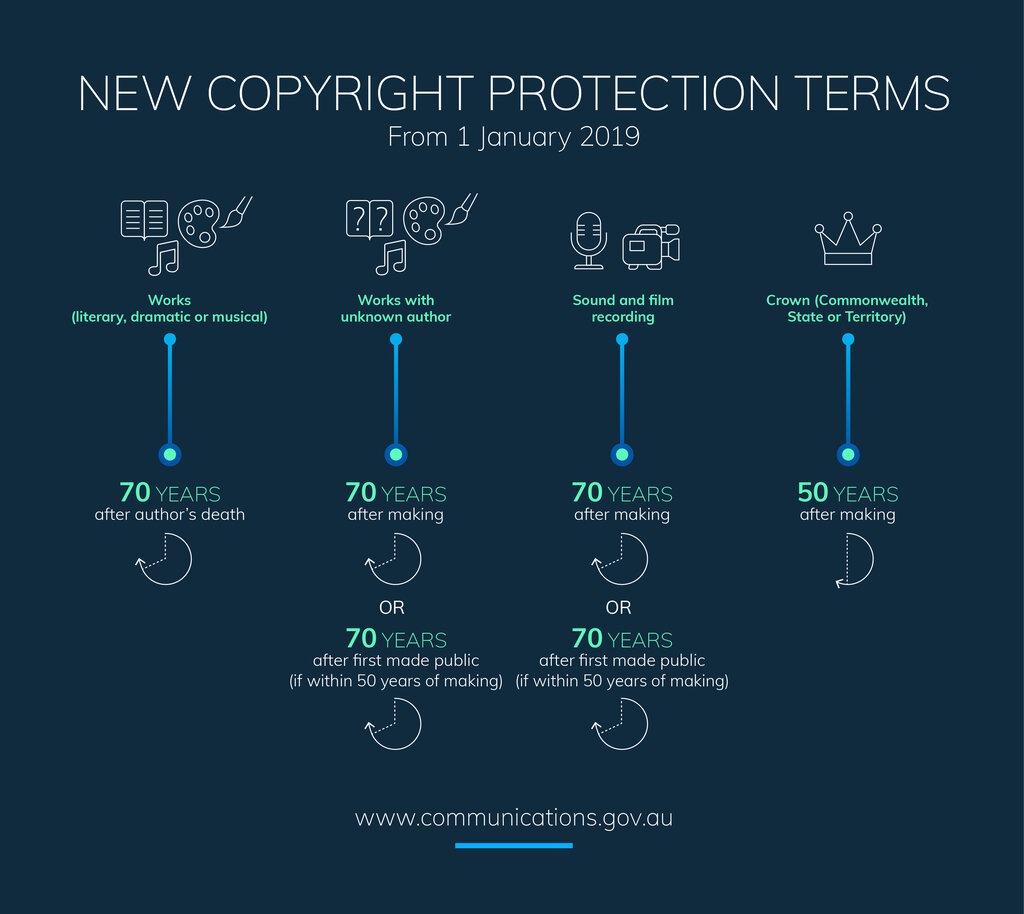
Copyright doesn't last forever. The duration has changed over the years, and it can vary by country and the type of work. In the United States, the rules are generally straightforward for works created today.
For works created by an individual, copyright typically lasts for the life of the author plus 70 years.
For works made for hire or by corporations, as well as anonymous or pseudonymous works, the term is different. In these cases, copyright protection lasts for 95 years from the date of publication or 120 years from the date of creation, whichever is shorter. Once the copyright term expires, the work enters the public domain, where it is free for anyone to use for any reason.
Ready to check your understanding of these core concepts?
What is the primary purpose of copyright law?
Which of the following can be protected by copyright the moment it is created?