Copyright Law Essentials for Media Use
Introduction to Copyright
What Is Copyright?
Copyright is a legal protection for original creative works. The moment you write a poem, snap a photo, or record a song, you've created something that belongs to you. Copyright law ensures you have control over how your work is used and shared.
Think of it as a creator's right to own and profit from their own work. This encourages people to create new things, knowing their efforts are protected.
This protection applies to a huge range of creative expressions. The key requirements are that the work must be original—meaning it has a spark of creativity from a human author—and it must be “fixed in a tangible medium.” This just means it has to be recorded in some way, whether it's written down, saved as a digital file, or captured on film.
What's Protected?
Copyright covers a broad spectrum of creative fields. While the law is detailed, most works fall into a few major categories. This system is designed to protect the specific way an idea is expressed, not the idea itself.
| Category | Examples |
|---|---|
| Literary Works | Books, articles, poems, computer code |
| Musical Works | Compositions, lyrics, sound recordings |
| Dramatic Works | Plays, screenplays, scripts |
| Artistic Works | Paintings, sculptures, photographs, graphics |
| Audiovisual Works | Movies, television shows, online videos |
| Architectural Works | Building designs, blueprints |
Ideas are not copyrightable: only original works of authorship are eligible for copyright protection.
That's a crucial distinction. You can't copyright the idea of a wizard school, but you can copyright your specific story about one. Similarly, facts, names, short phrases, and systems are not protected. Anyone can use the fact that water boils at 100°C, but they can't copy the exact paragraph you wrote to explain it.
The Rights of a Copyright Holder
Owning a copyright gives you a bundle of exclusive rights. These rights allow you to control how your work is used and to benefit from it financially. If someone wants to use your work in one of these ways, they generally need your permission, often through a license.
Copyright law gives the owner of copyright the right to reproduce, prepare derivative works, distribute copies, perform the work publicly, display the work publicly, and, in the case of sound recordings, to perform the work publicly by means of a digital audio transmission.
Let's break that down:
- Reproduce the work: Making copies, like printing a photo or burning a CD.
- Create derivative works: Making a new work based on the original, like turning a book into a movie.
- Distribute copies: Selling or giving away copies of the work to the public.
- Perform or display the work publicly: Playing a song at a concert, screening a film, or hanging a painting in a gallery.
How Long Does It Last?
Copyright protection doesn't last forever. The goal is to reward creators for a limited time before their works eventually enter the public domain for everyone to use freely. For most works created today, the rule is straightforward.
The basic term of protection for works created today is for the life of the author, plus seventy years.
So, if an author writes a novel and lives for another 40 years, the copyright on that book will last for 110 years (40 years of their life + 70 years). The rules are different for works created by corporations or for works where the author is anonymous. In those cases, protection typically lasts for 95 years from publication or 120 years from creation, whichever is shorter.
This extended period ensures that creators and their heirs can benefit from the work for a meaningful amount of time.
Automatic Protection vs. Registration
One of the most important things to know about copyright is that it's automatic. You don't have to fill out any forms or pay any fees to have a copyright.
Copyright protection automatically attaches to a work when it is created.
So if it's automatic, why do people talk about registering their copyright with the U.S. Copyright Office? While not required, registration provides powerful benefits.
First, it creates a public record of your ownership. This makes it easier to prove you are the rightful owner if a dispute ever arises.
Second, and most importantly, you must have a registered copyright to file a lawsuit for infringement in federal court. If someone steals your work and you haven't registered it, you can't take legal action until you do.
Finally, timely registration makes you eligible for statutory damages and attorney's fees. This means if you win your case, the court can award a set amount of money without you having to prove specific financial losses, and the infringer might have to pay your legal bills. This is a huge advantage that makes it much easier to enforce your rights.
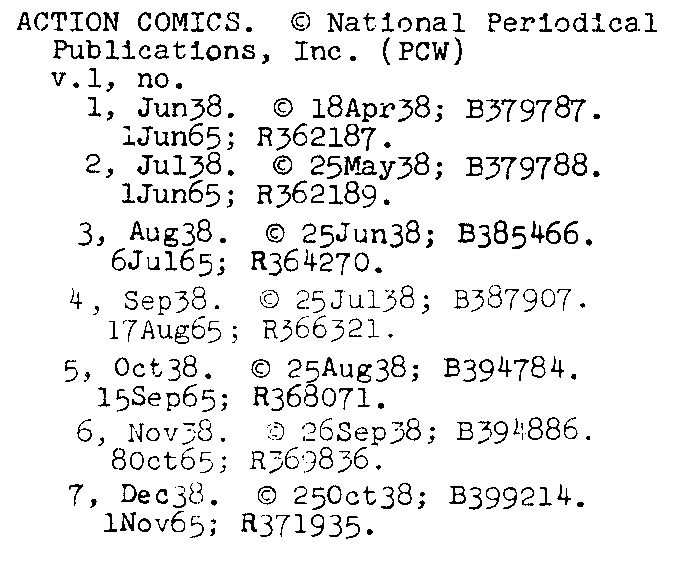
Think of registration as an insurance policy. You hope you'll never need it, but if you do, it provides essential tools to protect your creation.
For a creative work to be protected by copyright, it must be original and...
Which of the following can be protected by copyright?
That's a quick look at the fundamentals of copyright. Understanding these basic concepts helps creators protect their work and helps everyone use creative works responsibly.