Copyright Law Essentials
Introduction to Copyright
What is Copyright?
Copyright is a legal right that automatically gives the creator of an original work exclusive control over how that work is used and distributed. Think of it like a deed to a house, but for a creative product like a book, song, or photograph. This system exists to encourage people to create and share new things.
Copyright law is intended to encourage people to create new works.
When creators know they can control their work and potentially benefit from it, they have a stronger incentive to invest their time, effort, and resources into producing new art, literature, music, and software. This protection doesn't last forever, but it gives creators a window of time to manage their creations.
copyright
noun
A form of intellectual property law that protects original works of authorship once the work is fixed in a tangible form of expression.
What Copyright Protects
Copyright protection kicks in the moment a creative work is “fixed in a tangible medium.” This just means it exists in a stable format that can be perceived or reproduced. A song is fixed when it's recorded, a novel when it's saved as a computer file, and a painting when the paint dries on the canvas.
Copyright applies to a wide range of creations, including:
- Literary works: Books, poems, articles, and computer code.
- Musical works: Compositions and lyrics.
- Dramatic works: Plays, screenplays, and scripts.
- Artistic works: Paintings, sculptures, photographs, and graphics.
- Audiovisual works: Movies, TV shows, and online videos.
- Sound recordings: The specific recording of a musical performance or spoken words.
- Architectural works: Building designs.
Crucially, copyright protects the expression of an idea, not the idea itself. You can't copyright the idea of a wizard school, but you can copyright your specific story about one.
A Creator's Exclusive Rights
Owning a copyright gives the creator a bundle of exclusive rights. These rights allow them to control how their work is used and to authorize others to use it. For a period of time, the copyright holder is the only one who can legally do the following:
Copyright law gives the owner of copyright the right to reproduce, prepare derivative works, distribute copies, perform the work publicly, display the work publicly, and, in the case of sound recordings, to perform the work publicly by means of a digital audio transmission.
Let's break that down. A derivative work is a new work based on the original, like a movie adaptation of a book or a translation of a novel into another language. The right to distribute means controlling how copies are sold or given to the public. Public performance and display rights apply to things like playing a song on the radio, staging a play, or showing a photograph in a gallery.
How Long Does It Last?
Copyright protection doesn't last forever. The duration has changed over the years, but a standard rule has emerged in many parts of the world. For most works created today, the protection term is straightforward.
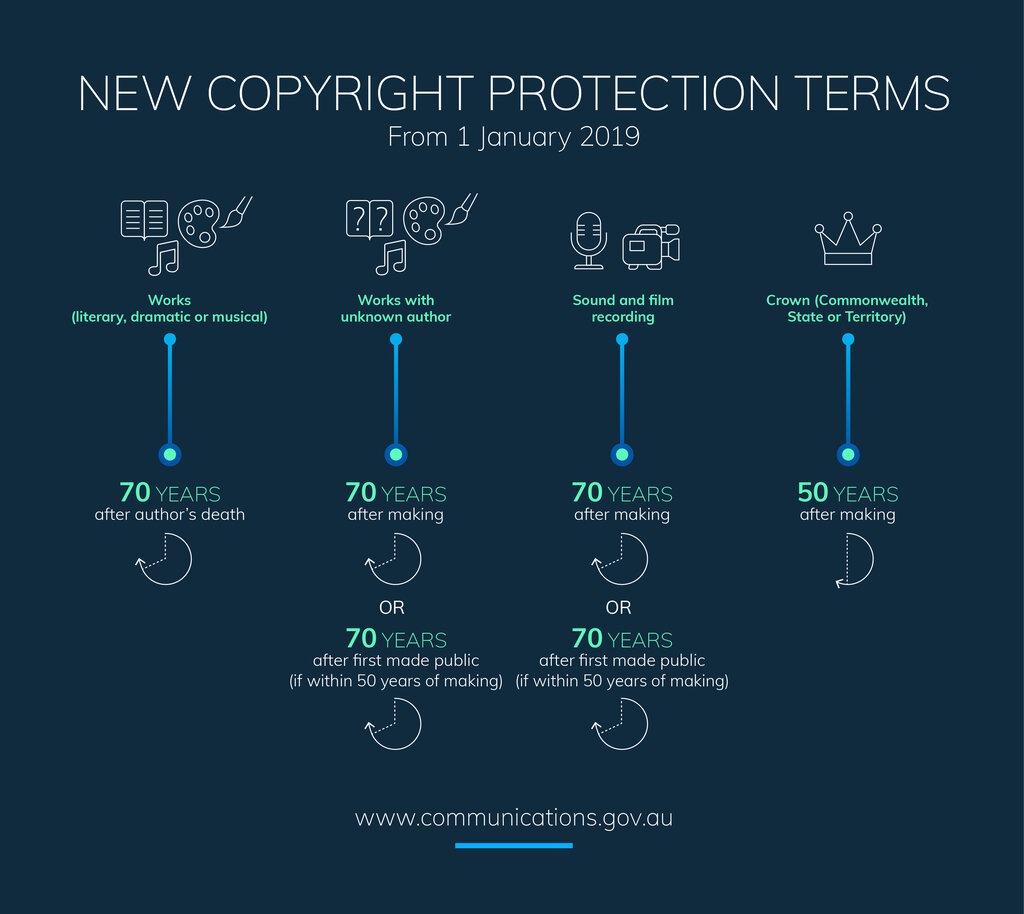
In the United States, copyright protection for works created by an individual generally lasts for the life of the author plus 70 years.
For works made for hire or anonymous works, the term is typically 95 years from publication or 120 years from creation, whichever is shorter. Once the copyright term expires, the work enters the public domain, meaning it's free for anyone to use for any purpose. This ensures that creative works eventually become part of our shared cultural heritage.
What is the primary purpose of copyright law?
Copyright protection for a creative work begins...
By granting these temporary, exclusive rights, copyright law aims to strike a balance. It rewards creators for their contributions while ensuring their works can eventually be freely used and built upon by future generations.