Copyright Law Essentials
Introduction to Copyright
What is Copyright?
Copyright is a legal tool that gives creators exclusive rights to their original works. Think of it as a way to protect creative expression. When someone writes a book, composes a song, or paints a picture, copyright ensures they have control over how that work is used, copied, and shared.
copyright
noun
A form of intellectual property law that protects original works of authorship once the author has fixed the work in a tangible form of expression.
The main purpose of copyright is to promote creativity. By giving authors, artists, and musicians a temporary monopoly on their creations, the law encourages them to produce new works that enrich our culture. It strikes a balance between rewarding creators for their labor and ensuring the public eventually has access to those works.
Copyright law is intended to encourage people to create new works.
A Brief History
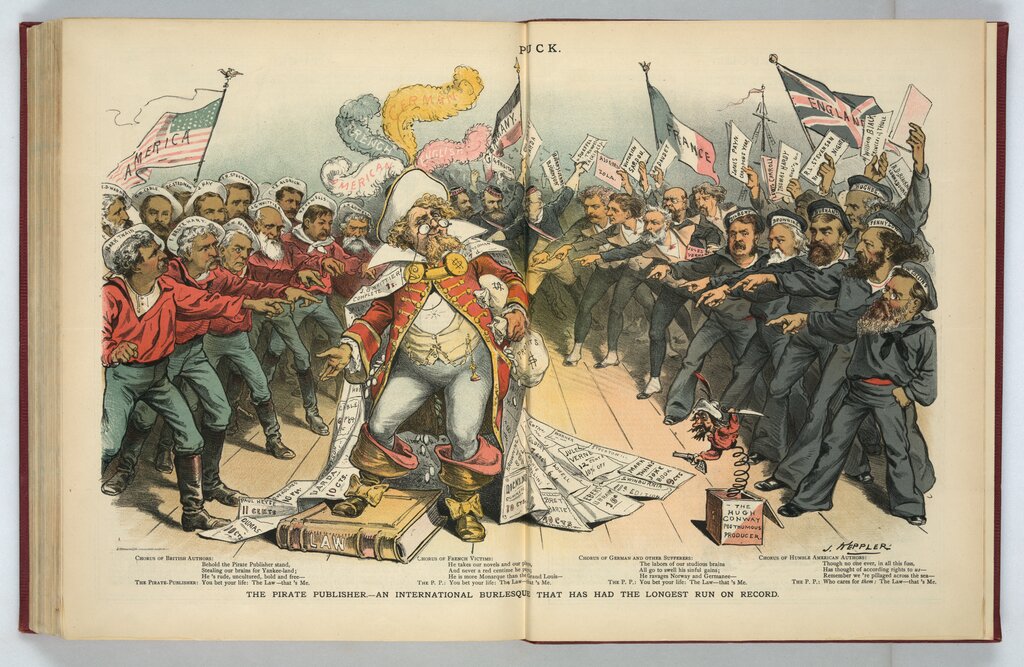
The idea of protecting creative works isn't new. Its roots in the English-speaking world go back to the Statute of Anne in 1710. Before this law, printers and booksellers held the power, not the authors. This statute was revolutionary because it granted rights directly to authors for the first time, giving them control over their books for a limited period.
This principle traveled across the Atlantic and influenced the founders of the United States. They included a Copyright Clause in the Constitution, giving Congress the power "To promote the Progress of Science and useful Arts, by securing for limited Times to Authors and Inventors the exclusive Right to their respective Writings and Discoveries." From there, copyright law has evolved to cover new technologies, from photographs and films to software and digital music.
What Copyright Protects
Copyright doesn't protect just anything. For a work to be eligible, it must meet two main criteria: originality and fixation.
Originality: The work must be independently created by the author and have at least a small spark of creativity. It doesn't need to be a masterpiece. A simple doodle or a short poem can be original enough. The bar is intentionally low.
Fixation: The work must be captured in a tangible medium. This means it has to be written down, recorded, or saved in some way that it can be perceived or reproduced. A story you tell your friends isn't copyrighted until you write it down or record it.
In short, if you made it, it's original, and you saved it, it's likely protected by copyright the moment it's created.
This protection covers a wide range of creative output. Here are some of the major categories:
| Category | Examples |
|---|---|
| Literary Works | Books, poems, articles, computer code |
| Musical Works | Compositions, lyrics |
| Dramatic Works | Plays, screenplays, scripts |
| Artistic Works | Paintings, drawings, photographs, sculptures |
| Audiovisual Works | Movies, TV shows, online videos |
| Sound Recordings | A specific recording of a song or spoken word |
| Architectural Works | Building designs |
The Idea-Expression Dichotomy
One of the most important concepts in copyright law is the separation between ideas and expression. Copyright protects the expression of an idea, but not the idea itself. This is a crucial distinction that allows creativity to flourish.
Copyright law protects the expression of ideas, not the ideas themselves.
For example, the idea of a young wizard who attends a magical school is not copyrightable. Anyone is free to write a story based on that general concept. However, the specific characters, plot points, and descriptive language that J.K. Rowling used to express that idea in the Harry Potter series are protected by copyright.
This principle prevents anyone from monopolizing a concept, genre, or theme. It ensures that creators can build upon the ideas of others while still protecting their own unique contributions.
Understanding these core principles is the first step in navigating the world of creative work. Copyright automatically applies to original works, providing a foundation that supports and encourages new art, literature, music, and more.
Ready to check your understanding? Let's see what you've learned.
What is the primary purpose of copyright law?
The Statute of Anne (1710) was a landmark law because it was the first to do what?
By grasping what copyright is, where it came from, and what it covers, you're better equipped to both protect your own creative work and respect the work of others.