Copyright Essentials for Media Use
Introduction to Copyright
What Is Copyright?
Think of something you created, maybe a story you wrote or a photo you took. Copyright is the legal right that automatically protects that creation. It's like an invisible shield that says, “This is mine. I made this.” The moment you create something original and put it into a tangible form—like writing it down or saving the digital file—copyright protection kicks in.
Copyright is a legal framework that grants creators exclusive rights over their original works, such as literature, music, art, and software.
The main purpose of copyright is to encourage creativity. By giving creators control over how their work is used and shared, the law provides an incentive to produce new art, literature, music, and more. It ensures that creators can benefit from their efforts, whether through recognition or financial gain.
Copyright
noun
A form of intellectual property law that protects original works of authorship as soon as the author fixes the work in a tangible form of expression.
What Copyright Protects
A common point of confusion is what copyright actually covers. It doesn't protect ideas, facts, systems, or methods of operation. It only protects the specific expression of those ideas.
For example, the idea of a secret agent who saves the world is not protected by copyright. Anyone can write a story about a spy. But the specific character of James Bond, with his unique traits, catchphrases, and story arcs, is a protected expression of that idea. You can't write a new story and call your character James Bond without permission.
Copyright law protects the expression of ideas, not the ideas themselves.
Copyright law applies to a wide range of creative works. If it's an original work of authorship fixed in a tangible medium, it's likely protected. Some of the major categories include:
- Literary works: Books, articles, poems, and even computer code.
- Musical works: Compositions and lyrics.
- Dramatic works: Plays, screenplays, and scripts.
- Artistic works: Paintings, drawings, photographs, and sculptures.
- Audiovisual works: Movies, television shows, and online videos.
- Sound recordings: The specific recording of a song or spoken word.
- Architectural works: Building designs.
The Rights of a Copyright Holder
Owning a copyright gives the creator a set of exclusive rights. This means they are the only one who can legally perform these actions, or authorize others to do so. These rights are often called a “bundle of rights” because they can be managed separately. For example, a novelist might sell the movie rights to a studio while keeping the rights to publish the book.
A copyright holder has the exclusive right to:
- Reproduce the work (make copies).
- Create derivative works (make new works based on the original, like a movie from a book).
- Distribute copies of the work to the public.
- Perform the work publicly (like a play or a song).
- Display the work publicly (like a painting in a gallery).
If someone performs any of these actions without the copyright owner's permission, they may be infringing on the copyright. This framework gives creators meaningful control over their work's journey after it leaves their hands.
How Long Does It Last?
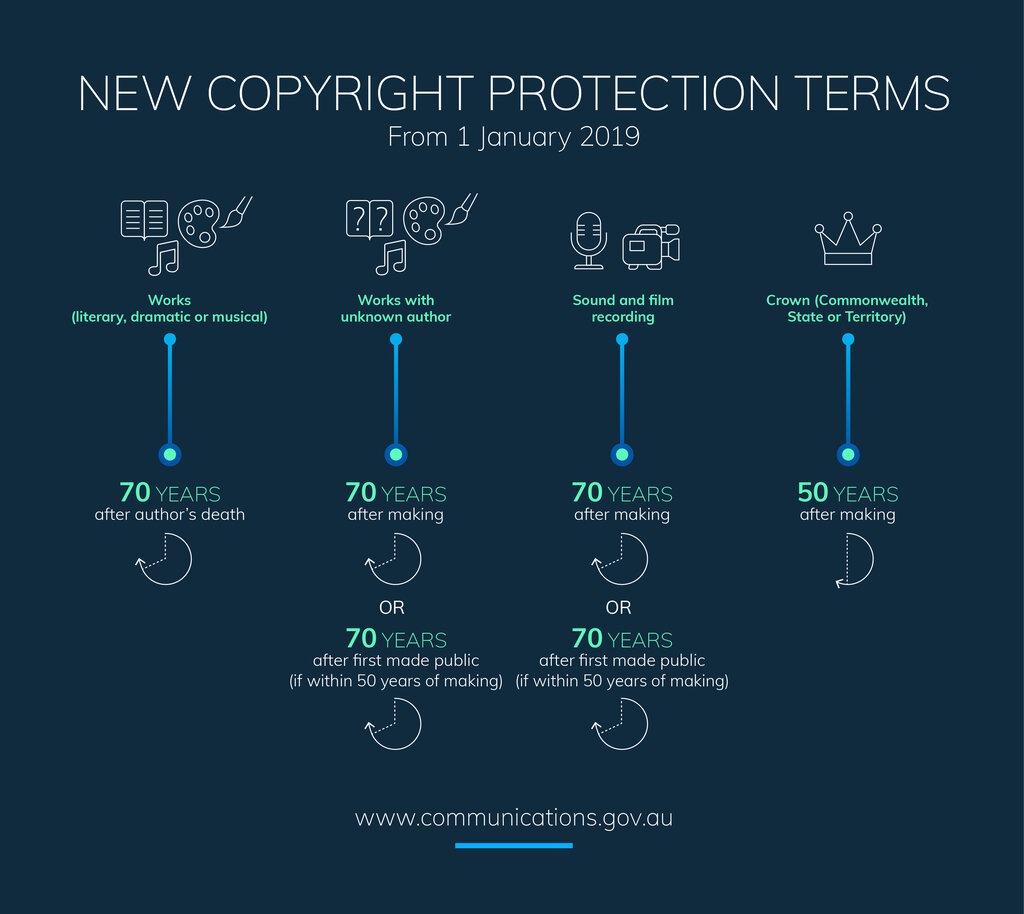
Copyright protection doesn't last forever. The duration has changed over the years, but a standard rule has emerged in many parts of the world, including the United States. For most works created today, the protection lasts for the entire life of the creator plus an additional 70 years.
The basic term of protection for works created today is for the life of the author, plus seventy years.
For works made by a corporation or works with an anonymous author, the term is different. It's typically 95 years from the date of publication or 120 years from the date of creation, whichever is shorter. These long terms ensure that the creator and their heirs can benefit from the work for a significant period.
When does copyright protection for an original creative work, like a photograph or a story, officially begin?
Which of the following does copyright law primarily protect?
Now that you know the fundamentals of copyright, you're better equipped to navigate the world of creative works. Understanding these rules is the first step in respecting the rights of others and protecting your own creations.