Copyright Essentials for Media Use
Introduction to Copyright
What is Copyright?
Copyright is a legal tool that gives creators control over their original work. Think of it like a deed to a house, but for something you've made, like a book, a song, or a photograph. The moment you create something original and fix it in a tangible form—like writing it down or recording it—copyright protection automatically applies. You don't have to register it or even put the little © symbol on it, though those things can be helpful later on.
The main purpose of copyright is to encourage creativity. By giving authors, artists, and musicians exclusive rights to their creations for a limited time, the law allows them to benefit from their labor. This incentive helps fuel the creation of new art, science, and literature that enriches society as a whole.
Copyright law is intended to encourage people to create new works.
A Quick History
Copyright wasn't always around. For centuries, creators had little control over their work once it was shared. The invention of the printing press in the 15th century changed everything. Suddenly, books could be copied and distributed on a massive scale, often without the author's permission or payment.
This led to the first modern copyright law, the Statute of Anne, which was passed in Great Britain in 1710. It granted authors the exclusive right to print their books for a period of 14 years, with an option to renew. This was a revolutionary idea. For the first time, the law recognized that an author's intellectual creation was a form of property.
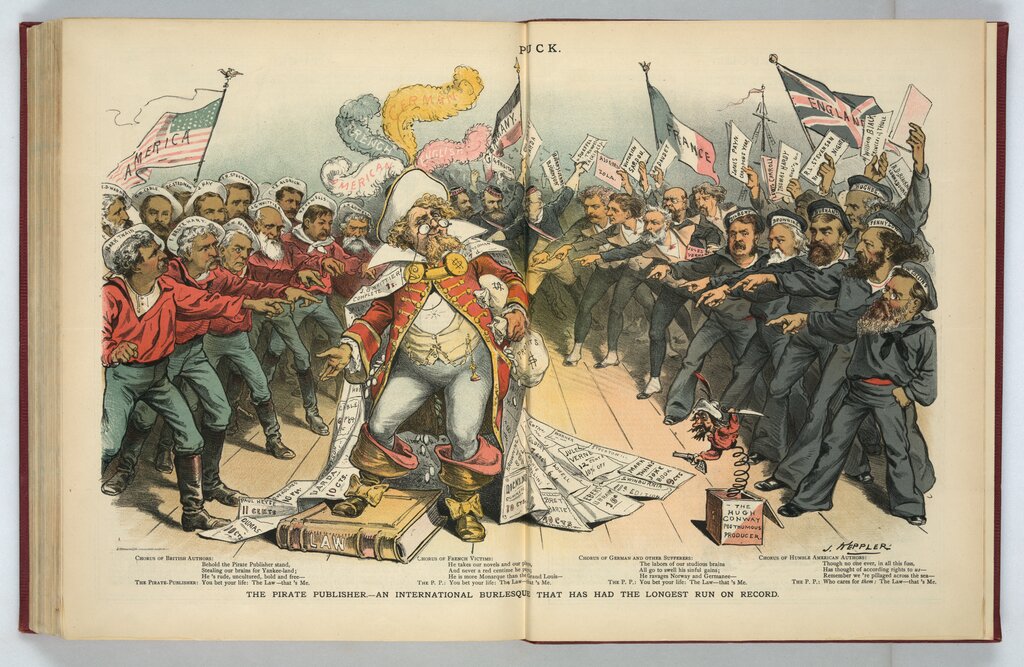
Over the centuries, copyright laws have evolved and expanded around the world. What started as protection for books now covers a vast range of creative works, and the duration of protection has grown significantly longer.
What Can Be Copyrighted?
Copyright protects "original works of authorship" that are fixed in a tangible medium of expression. That's a bit of a mouthful, so let's break it down.
Originality: The work must be independently created by the author and have at least a small spark of creativity. It doesn't have to be a masterpiece, just not a direct copy of something else.
Fixed in a tangible medium: The work must be captured in a stable format. A story you tell your friends isn't copyrighted until you write it down, record it, or save it as a digital file. An improvised dance isn't protected until it's choreographed or filmed.
Copyright law protects creative works “fixed in any tangible medium of expression”, such as books, movies, musical scores or recordings, paintings, photographs, websites, video games, performances, architecture, and software.
Here are some common categories of works that are protected:
| Category | Examples |
|---|---|
| Literary Works | Books, poems, articles, computer code |
| Musical Works | Sheet music, lyrics, melodies |
| Dramatic Works | Plays, screenplays, scripts |
| Pictorial & Sculptural | Paintings, photographs, maps, sculptures |
| Motion Pictures | Movies, TV shows, video games, animations |
| Sound Recordings | A specific recording of a song or speech |
| Architectural Works | Blueprints, building designs |
Crucially, copyright does not protect ideas, facts, systems, or methods of operation. It only protects the specific expression of those ideas. You can't copyright the idea of a boy wizard who goes to a magic school, but you can copyright a specific book about Harry Potter.
The Rights of a Creator
When you hold the copyright to a work, you get a bundle of exclusive rights. These rights give you the legal authority to control how your work is used. Think of it as a set of permissions that only you, the owner, can grant.
If someone wants to do any of these things with your work, they generally need your permission first.
These rights form the foundation of copyright law, giving creators the power to share their work with the world on their own terms.