Coordinate Systems within Reference Frames
Reference Frame Origins
Choosing Your Zero Point
A reference frame gives us a way to describe motion. You already know that involves setting up axes, like x, y, and z, to define direction. But just as important is choosing the origin, the (0, 0, 0) point from which all positions are measured. Think of it as the 'you are here' sticker on a map.
The choice of origin is completely up to you, but it's not a trivial decision. A smart choice can make the math for describing motion incredibly simple. A poor choice can make it a nightmare. Every position is described by a position vector, an arrow drawn from your chosen origin to the object's location.
Change the origin, and the components of this vector change, even if the object hasn't moved an inch. Let's look at a few common origins used in physics and navigation.
Common Origins
In space applications, there are three primary choices for an origin, each with its own advantages.
Geocentric: The origin is at the Earth's center of mass. Topocentric: The origin is at a specific point on the Earth's surface. Barycentric: The origin is at the center of mass of a system of bodies, like the Sun and its planets.
A geocentric frame is perfect for describing a satellite's orbit. Since Earth's gravity pulls the satellite toward its center of mass, placing the origin there simplifies the gravitational force equations. The math becomes elegant because the dominant force in the system points directly at (0, 0, 0).
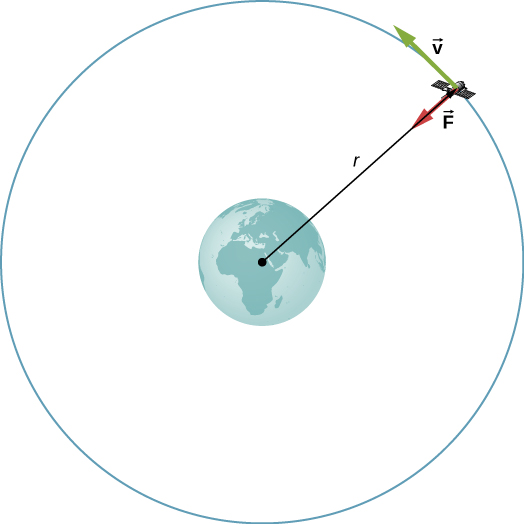
A topocentric frame, on the other hand, is observer-centric. If you're tracking a plane from an airport's radar tower, it makes sense to put the origin at the tower. All your measurements of position, velocity, and acceleration are relative to your location. This is practical for local navigation and tracking.
For describing the motion of planets or deep-space probes, scientists often use a barycentric frame. This places the origin at the barycenter of the solar system, which is the system's true center of mass. Since all bodies in the system orbit this common point, it provides a stable, nearly inertial reference frame that simplifies the complex gravitational interactions between multiple planets.
Shifting Your Perspective
What is the mathematical relationship between measurements made from different origins? Let's say we have two reference frames, S and S'. They have the same axis orientation, but their origins, O and O', are in different places. The position of O' relative to O is described by a displacement vector, .
Now, consider an object at some point P. In frame S, its position is given by the vector . In frame S', its position is given by the vector . By looking at the geometry, you can see that to get from origin O to point P, you can first go from O to O' (the vector ) and then from O' to P (the vector ). This gives us the rule for translating coordinates.
This simple equation is incredibly powerful. It allows us to convert measurements from an observer-centric (topocentric) frame to a global (geocentric or barycentric) frame, and vice versa. For example, a GPS satellite calculates its position in a geocentric frame, but your phone needs to know its location relative to you, standing on the surface. Coordinate translation makes that conversion possible.
Any measurement of position, distance, or speed must be made with respect to a reference frame, or frame of reference.
This highlights the core idea: there is no absolute position. Every measurement is relative to a chosen origin. The key is to pick the origin that makes your problem easiest to solve.
Time to check your understanding of these different frames of reference.
What is the primary purpose of choosing an origin in a reference frame?
Which reference frame is most suitable for describing a satellite's orbit around Earth, as it simplifies the gravitational force equations?
By mastering the selection and translation of origins, you can simplify complex motion problems and see them from the most effective viewpoint.