Conversational Spanish Essentials
Spanish Pronunciation
The Five Vowel Rule
Spanish pronunciation is more straightforward than English, and it starts with the vowels. While English has over a dozen vowel sounds, Spanish has just five pure, consistent sounds. Once you learn them, you've learned them for good. They don't change from word to word.
| Vowel | Sound | Example |
|---|---|---|
| A | 'ah' as in father | amigo (friend) |
| E | 'eh' as in get | café (coffee) |
| I | 'ee' as in see | si (yes) |
| O | 'oh' as in boat | hola (hello) |
| U | 'oo' as in moon | uno (one) |
The key is to keep these sounds short and crisp. Unlike in English, Spanish vowels are never drawn out into diphthongs, which are gliding sounds between two vowels. For example, the English word "so" has a bit of an "oo" sound at the end. In Spanish, the vowel 'o' is just 'oh', with a clean cutoff.
Pronounce every vowel, every time. There are no silent vowels in Spanish, except for 'u' in specific cases like gue, gui, and que, qui (as in guerra or queso), where it keeps the 'g' or 'c' sound hard.
Consonants with Character
Many Spanish consonants sound just like their English counterparts, but a few have unique personalities. Mastering these will make your Spanish sound much more natural.
Let’s look at the tricky ones:
B/V
other
In Spanish, 'b' and 'v' are pronounced almost identically. The sound is softer than an English 'b' and made with the lips barely touching. Think of the word vaca (cow) and barco (boat); the first letter in both sounds the same.
The letter H is always silent. You just ignore it. So, hola is pronounced 'o-la'.
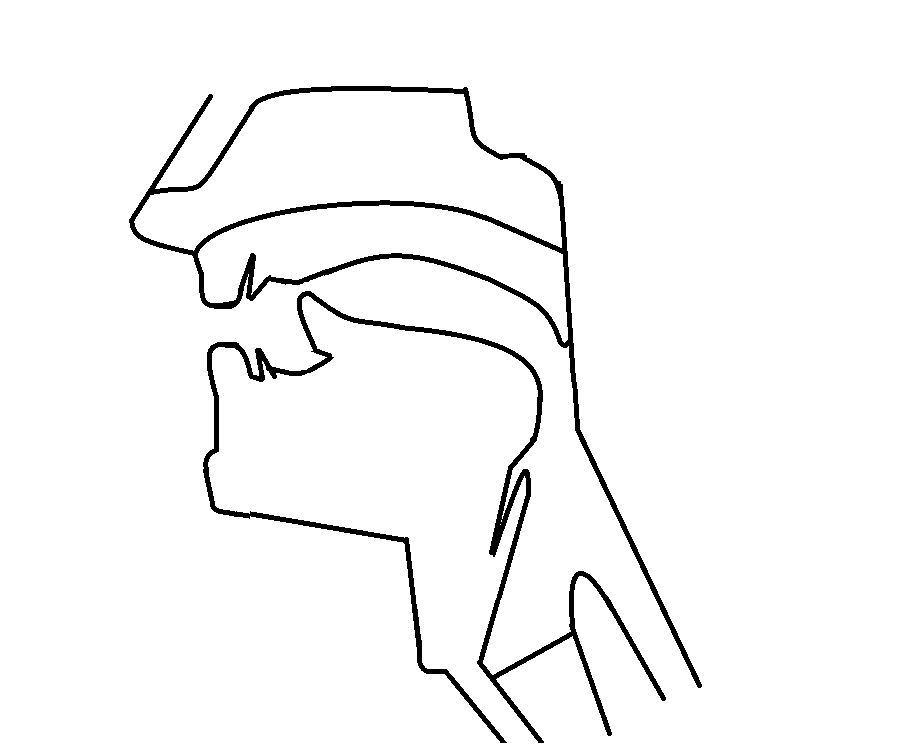
The letter J makes a sound like the 'h' in 'hat', but it's formed deeper in the throat. You can hear it in words like jamón (ham) or jugar (to play).
The Ñ has a 'ny' sound, similar to the middle of the word 'canyon'. Try it: mañana (tomorrow) or español (Spanish).
Finally, the famous rolled RR. This sound takes practice. It’s a continuous vibration of the tongue against the roof of your mouth. It's used for any 'rr' and for a single 'r' at the beginning of a word, like in perro (dog) and rápido (fast). A single 'r' in the middle of a word is just a quick tap of the tongue, as in caro (expensive).
Finding the Stress
Knowing which syllable to emphasize, or stress, is simple in Spanish because the rules are very consistent. There are just two main rules to remember.
Rule 1: If a word ends in a vowel, -n, or -s, the stress falls on the second-to-last syllable.
- ca-sa (house)
- ha-blan (they speak)
- za-pa-tos (shoes)
Rule 2: If a word ends in any other consonant, the stress falls on the last syllable.
- co-mer (to eat)
- ci-u-dad (city)
- a-zul (blue)
What about exceptions? Spanish makes it easy. If a word breaks these rules, it gets a written accent mark (a tilde) over the vowel of the stressed syllable. The accent tells you exactly where to put the emphasis.
- rá-pi-do (fast) - would normally be ra-pi-do
- can-ción (song) - would normally be can-cion
- ár-bol (tree) - would normally be ar-bol
The Music of Spanish
Intonation is the melody of a language. In Spanish, the pitch of your voice changes in predictable ways to signal questions or exclamations.
For a simple statement, your pitch stays relatively flat and then drops slightly at the end.
- La casa es grande. (The house is big.)
For a yes/no question, the pitch rises at the end of the sentence.
- ¿La casa es grande? (Is the house big?)
For questions that start with a question word (like qué, dónde, cuándo), the intonation is a bit different. Your pitch starts high on the question word, then drops, and stays low until the end.
- ¿Dónde está la casa? (Where is the house?)
Listening to native speakers is the best way to get a feel for this rhythm. Pay attention to how their voices rise and fall in different situations.
Train your ear from the start by listening to native Spanish through podcasts, songs, or shows, then imitate pronunciation to sound more natural.
Ready to test what you've learned about Spanish sounds and stress?
How do Spanish vowel sounds generally differ from English vowel sounds?
In Spanish, the letter 'H' is always silent.