Conversational Spanish Essentials
Spanish Alphabet and Pronunciation
The Spanish Alphabet
The Spanish alphabet, or abecedario, is your first step into the language. The good news is that it's almost identical to the English alphabet. It has the same 26 letters you already know, plus one extra character that is unique to Spanish.
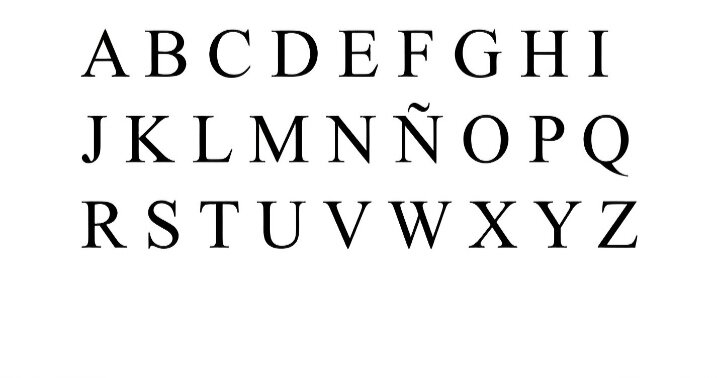
That unique letter is the ñ (pronounced eñe). We'll get to its specific sound in a bit. In the past, you might have seen two other characters, ch and ll, listed as separate letters, but since 2010, the official alphabet no longer includes them as distinct entries. They are now considered letter combinations, just like in English.
Consistent Vowel Sounds
Here's one of the best parts about learning Spanish: the vowels are simple and consistent. Each vowel has only one basic sound, unlike in English where a letter like 'a' can sound completely different in 'cat,' 'car,' and 'cake.' Master these five sounds, and you've unlocked the pronunciation for a huge number of Spanish words.
Spanish pronunciation is consistent: once you learn the sounds, you’ll understand and be understood more easily.
Let's break them down.
| Vowel | Sound Like... | Example Word |
|---|---|---|
| A, a | 'ah' as in father | casa (house) |
| E, e | 'eh' as in bed | elefante (elephant) |
| I, i | 'ee' as in see | si (yes) |
| O, o | 'oh' as in go | hola (hello) |
| U, u | 'oo' as in moo | uno (one) |
That's it. Every time you see these vowels, they will make these sounds. This predictability is a huge advantage for new learners.
Key Consonant Sounds
While most Spanish consonants sound similar to their English counterparts, a few have their own distinct rules. Getting these right will make your Spanish sound much more natural.
ñ
noun
Pronounced 'eñe', this letter makes a 'ny' sound, like the middle of the word 'canyon'.
Here are a few other important consonants to know:
-
H (hache) is always silent. Always. Just pretend it isn't there. So hola is pronounced 'o-la'.
-
J (jota) makes a throaty 'h' sound, like the 'h' in 'house' but produced further back in your throat. Think of the sound in the Scottish word loch. Example: jardín (har-DEEN).
-
LL (elle) sounds like the 'y' in 'yes'. So llamar (to call) is pronounced 'ya-mar'.
-
Z (zeta) sounds like an 's'. The word zapato (shoe) is pronounced 'sa-pa-to'.
-
B (be) and V (uve) are pronounced almost identically. They both make a soft 'b' sound. Try saying 'boat' but without pressing your lips together so forcefully. That's the sound for both barco (boat) and vaca (cow).
The Famous Rolled R
The rolled 'r' can be intimidating, but it's just a matter of practice. Spanish actually has two 'r' sounds. The first is a single, soft 'r' (called ere). It's a quick tap of the tongue against the roof of your mouth, very similar to the 'dd' sound in the American English pronunciation of 'ladder'.
An example is the word pero (but).
The second sound is the strong, trilled 'rr' (erre). This is the sound you probably think of when you hear 'rolled r'. It's used when you see a double 'rr', like in the word perro (dog). This same strong, trilled sound is also used for any single 'r' that appears at the beginning of a word, like rojo (red).
Don't stress if you can't roll your 'r's perfectly right away. It takes time for your tongue to learn the movement. With consistent practice, you'll get there!
Ready to test your knowledge? Let's see what you've learned.
Which letter is unique to the Spanish alphabet compared to the English alphabet?
How is the Spanish vowel 'e' consistently pronounced?
Pronunciation is a skill built through listening and repetition. The more you speak and listen, the more natural these sounds will become.