Conversational Korean Essentials
Hangul Alphabet
An Alphabet You Can Learn in a Day
Forget memorizing thousands of complex characters. The Korean alphabet, called Hangul (한글), is famous for being incredibly logical and easy to learn. It was created in the 15th century by King Sejong the Great with a clear goal: to make reading and writing accessible to everyone. Before Hangul, Koreans used Chinese characters, which took years of study to master.
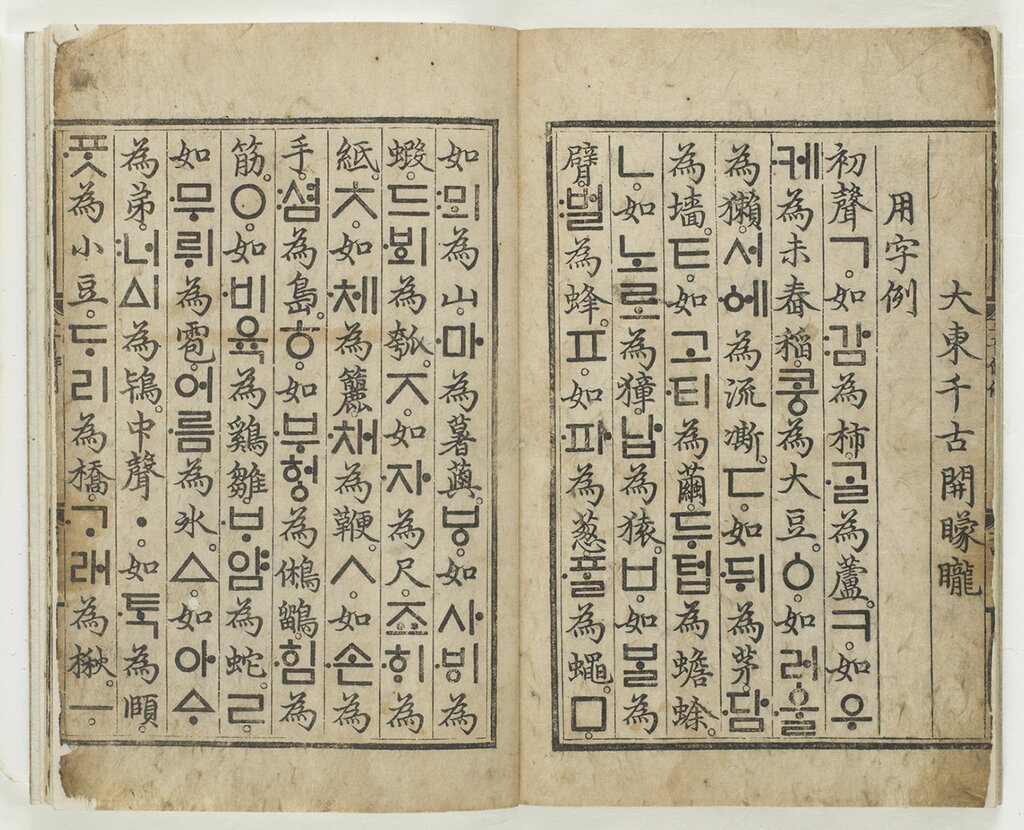
The genius of Hangul is its design. Instead of random shapes, many letters are based on the shapes your mouth and tongue make when you produce their sounds. This intuitive system is why many people can learn the basics in just a few hours.
Most learners can grasp Hangul within a day or two with the right strategy.
The most important concept to understand is that Hangul letters are not written one after another in a straight line like English. Instead, they are grouped together into 'syllable blocks' that represent a single sound.
The Building Blocks
Hangul is made of consonants and vowels, just like English. There are 14 basic consonants and 10 basic vowels. Let's start with the consonants. Notice how some of them are designed to look like the shape of your mouth when you say them.
| Character | Name | Approximate Sound |
|---|---|---|
| ㄱ | giyeok (기역) | g / k |
| ㄴ | nieun (니은) | n |
| ㄷ | digeut (디귿) | d / t |
| ㄹ | rieul (리을) | r / l |
| ㅁ | mieum (미음) | m |
| ㅂ | bieup (비읍) | b / p |
| ㅅ | siot (시옷) | s |
| ㅇ | ieung (이응) | silent or ng |
| ㅈ | jieut (지읒) | j |
| ㅊ | chieut (치읓) | ch |
| ㅋ | kieuk (키읔) | k |
| ㅌ | tieut (티읕) | t |
| ㅍ | pieup (피읖) | p |
| ㅎ | hieut (히읗) | h |
You might notice some letters have two sounds, like ㄱ being 'g' or 'k'. The exact sound often depends on where the letter is in a syllable, but for now, just getting familiar with the basic sound is enough. The letter ㅇ is a special case: it's silent when it comes at the beginning of a syllable but makes an 'ng' sound when it's at the end.
Now for the vowels. They are based on three simple elements from Eastern philosophy: a dot for the sun (•, now a short line), a horizontal line for the flat Earth (ㅡ), and a vertical line for a person standing upright (ㅣ).
| Character | Approximate Sound |
|---|---|
| ㅏ | a (as in 'father') |
| ㅑ | ya |
| ㅓ | eo (as in 'uh') |
| ㅕ | yeo |
| ㅗ | o (as in 'go') |
| ㅛ | yo |
| ㅜ | u (as in 'moo') |
| ㅠ | yu |
| ㅡ | eu (like 'u' in 'put') |
| ㅣ | i (like 'ee' in 'see') |
Building Syllable Blocks
Okay, you've met the letters. Now let's combine them into syllable blocks. Every Korean syllable must have at least one consonant and one vowel. The silent consonant ㅇ is used as a placeholder when a syllable starts with a vowel sound.
Blocks are always written from top to bottom, left to right. The structure depends on the shape of the vowel.
For vertical vowels like ㅏ, ㅑ, ㅓ, ㅕ, and ㅣ, the consonant goes to the left. For horizontal vowels like ㅗ, ㅛ, ㅜ, ㅠ, and ㅡ, the consonant goes on top.
Let's see this in action.
Syllables can also have a final consonant, called a batchim (받침). This third letter always goes on the bottom of the block.
Let's make the word han. We combine ㅎ (h), ㅏ (a), and ㄴ (n). Because ㅏ is a vertical vowel, ㅎ goes on the left. The final consonant ㄴ goes on the bottom: 한.
Let's try another one: geul. We combine ㄱ (g), ㅡ (eu), and ㄹ (l). Since ㅡ is a horizontal vowel, ㄱ goes on top. The final consonant ㄹ goes underneath: 글.
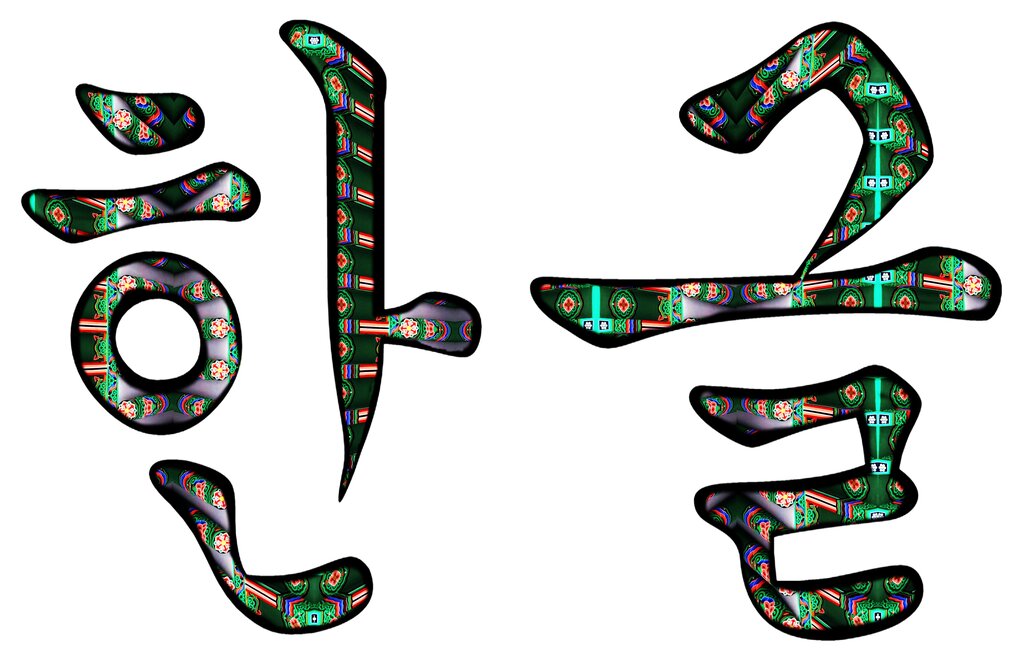
Put them together and you get 한글 (Hangeul)!
Reading Simple Words
Now you know the rules. Let's try to read some simple words by sounding out their syllable blocks. Remember to read each block as a single unit.
tree
Here, you have two blocks: 나 (na) and 무 (mu). The first block is ㄴ + ㅏ. The second is ㅁ + ㅜ.
meat
This word has two blocks: 고 (go) and 기 (gi). The first is ㄱ + ㅗ. The second is ㄱ + ㅣ.
cucumber
This word starts with a vowel sound, so we use the silent consonant ㅇ as a placeholder. The first block is ㅇ + ㅗ (o). The second is ㅇ + ㅣ (i).
With these basic rules, you can already start to decode written Korean. The key is to practice recognizing the letters and how they fit together in blocks. Time to review what you've learned.
Ready to test your knowledge?
Who created the Korean alphabet, Hangul?
What is the fundamental principle behind the design of many Hangul consonants?
Mastering Hangul is the first and most important step to learning Korean. With this foundation, you'll be ready to tackle vocabulary and grammar with confidence.