Conversational French for Spanish Speakers
French Pronunciation Basics
The Music of French
English pronunciation is full of variety. The way you say “tomato” might be totally different from someone across the country. French is much more consistent. Once you learn the rules for how letters and letter combinations sound, you can pronounce almost any word correctly. It's less about memorizing individual words and more about understanding the system.
The key difference is that French sounds are often purer and crisper than English ones. We'll start with the vowels, which are the heart of the French sound.
Pure Vowel Sounds
English vowels often glide from one sound to another. Think about the word "go." Your mouth changes shape as you say it. French vowels are different. They are fixed and short. You hold your mouth in one position for the entire sound. This is a crucial habit to develop early.
Let’s look at some common vowels. Notice how the French sound is quick and clean.
| Letter | Example Word | Sound Comparison |
|---|---|---|
| a | la, papa | Like the 'a' in "father," but shorter. |
| é | été, café | Like the 'a' in "day," but without the 'y' glide at the end. |
| i | vie, ami | Like the 'ee' in "see." |
| o | mot, photo | Like the 'o' in "boat," but again, no 'w' glide. |
| u | tu, sur | This one is tricky. It has no English equivalent. Say 'ee' while rounding your lips as if you were going to whistle. |
The 'u' sound is a classic stumbling block. Practice making the sound in front of a mirror. Your lips should be pushed forward and rounded, but the sound itself comes from the front of your mouth, just like 'ee'.
Getting this sound right is a big step toward sounding more natural.
Nasal Vowels
Next up are the nasal vowels, which are famous in French. These sounds are made by passing air through both the nose and the mouth. In English, we do this at the end of words like "sing" or "song," but in French, the vowel itself is nasalized.
There are four main nasal sounds to know. They usually occur when a vowel is followed by an 'n' or 'm' that isn't followed by another vowel.
Think of it this way: the 'n' or 'm' isn't pronounced. It just tells you to make the vowel before it nasal.
| Combination | Example Word | How to Say It |
|---|---|---|
| an, am, en, em | an, enfant, temps | Start to say "ah" as in "father," but let the air flow through your nose. It's like the vowel in the English word "on" for many speakers. |
| in, im, ain, aim | vin, important | Start with the 'a' sound from "cat" and make it nasal. It's close to the sound in the English word "sang." |
| on, om | bon, nom | Say the 'o' from "boat," but again, through your nose. It sounds like the vowel in "song." |
| un, um | un, parfum | This is the trickiest one. It's like the nasal sound in "sang," but with your lips slightly more rounded. |
Let's try a few words with their pronunciations. Notice how the nasal sound colors the entire vowel.
candy
important
Consonants and Common Pitfalls
French consonants are generally similar to English ones, but with a few key differences. One of the biggest mistakes learners make is pronouncing final consonants that should be silent.
As a general rule, the consonants 'c', 'r', 'f', and 'l' are often pronounced at the end of a word. (A helpful mnemonic is CaReFuL). Most other final consonants, like -s, -t, -d, -p, and -x, are silent.
For example, les (the) is pronounced /le/, and chat (cat) is pronounced /sha/. The final 's' and 't' are completely silent.
Here are a few other consonants to watch out for:
- The French R: This sound is made in the back of the throat, not by rolling the tip of your tongue like in Spanish. It's a light, gargling sound, similar to clearing your throat gently.
- The letter H: In French, the 'h' is always silent. Always. The word hôtel is pronounced /otel/.
- The letters CH: This combination is pronounced like 'sh' in English. Chocolat sounds like 'shocolat'.
- The letter J: This is a soft sound, like the 's' in "measure" or "pleasure." Je (I) sounds like 'zhe'.
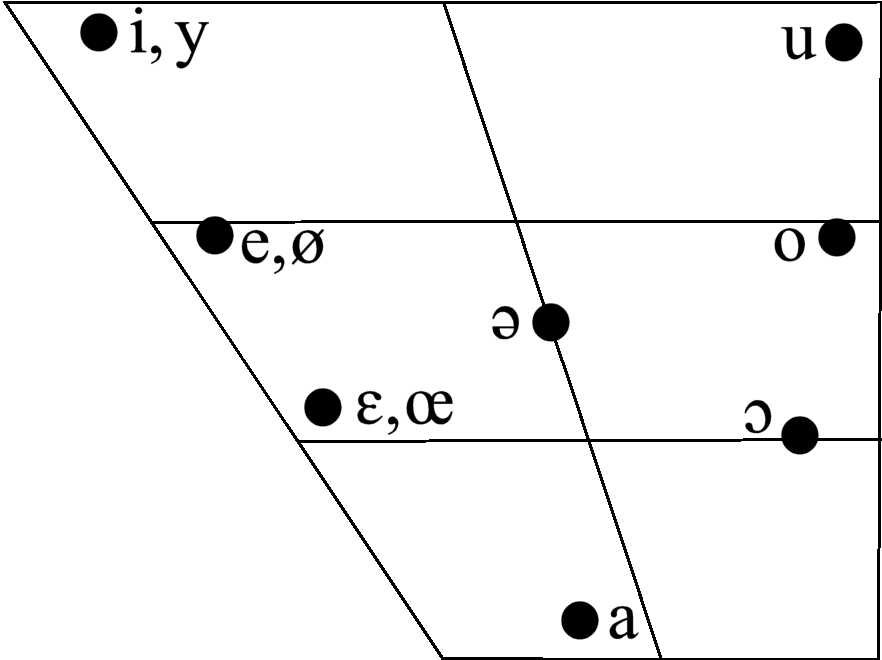
Getting these sounds right takes practice. Listening to native speakers is one of the best ways to train your ear and your mouth.
To improve your pronunciation, listen to recordings of French speakers saying the word in question and repeat it yourself.
Let's review the main ideas.
Now, let's test your knowledge.
What is a key difference between French and English vowels?
Nasal vowels in French typically occur when a vowel is followed by which letters?
Mastering these sounds is the first major step. It builds a strong foundation that makes everything else—vocabulary, grammar, and conversation—much easier.