Conversational AI Agents Explained
Introduction to Conversational AI
What Is Conversational AI?
At its core, conversational AI is technology that allows you to have a conversation with a computer. Instead of clicking buttons or navigating menus, you can just talk or type, and the machine understands and responds in a natural way. It’s the difference between using an ATM and asking a bank teller for help. The goal is to make interacting with technology as simple as talking to another person.
This technology is significant because it makes complex systems more accessible to everyone. You don't need to learn a special command language or understand how a program works internally. You just state what you need. This has opened the door for new applications in almost every industry, changing how we get information, buy products, and receive support.
Conversational AI is a branch of artificial intelligence (AI) that uses natural language processing (NLP) to allow humans to have a context-driven dialogue with machines.
Chatbots and Virtual Assistants
Though often used interchangeably, chatbots and virtual assistants are two distinct types of conversational agents. Think of a chatbot as a specialist. It's usually designed for a specific purpose, like answering frequently asked questions on a shopping website or helping you check your account balance. Early chatbots were often rule-based, following a strict script. Modern ones are smarter, but their scope is typically narrow.
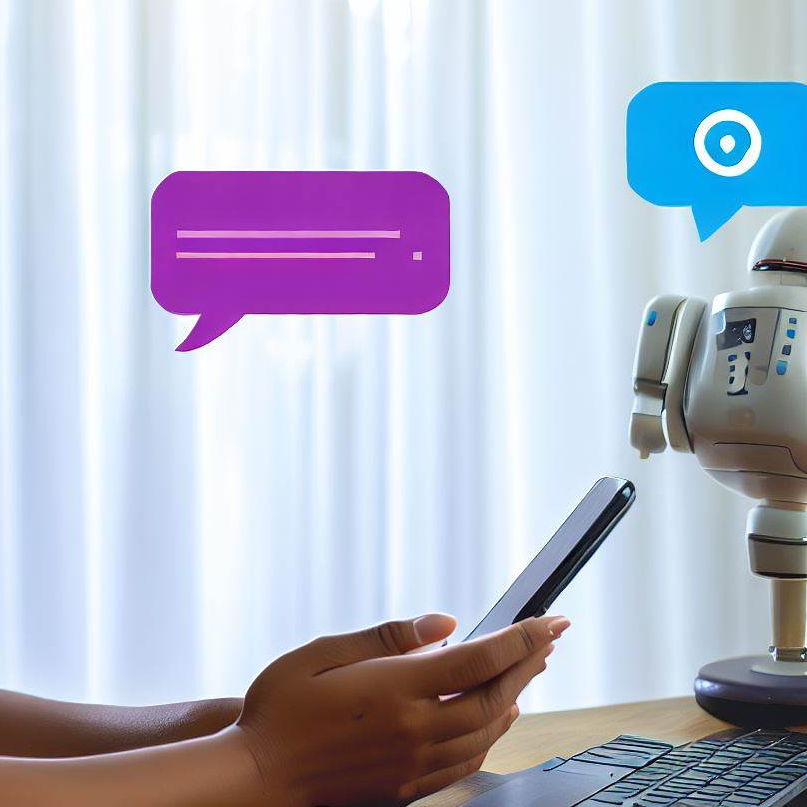
A virtual assistant, on the other hand, is a generalist. These are more powerful systems designed to help with a wide range of tasks. Examples like Apple's Siri, Amazon's Alexa, and Google Assistant can play music, set timers, search the internet, and control smart home devices. They integrate with many different applications and services to act as a central hub for your digital life.
| Feature | Chatbot | Virtual Assistant |
|---|---|---|
| Scope | Narrow, task-specific | Broad, multi-purpose |
| Interaction | Usually text-based | Often voice-activated |
| Complexity | Simple to moderately complex | Highly complex |
| Examples | Website support bots | Siri, Alexa, Google Assistant |
A Quick History
The idea of talking to machines isn't new. It has roots in the 1960s with early programs like ELIZA, which could mimic a psychotherapist by recognizing keywords in typed sentences and reflecting them back as questions. While simple, it was a fascinating first step.
For decades, progress was slow. Then, in the 2010s, things accelerated. The launch of Siri with the iPhone 4S in 2011 brought the concept of a virtual assistant to the masses. This was followed by the rise of smart speakers and more sophisticated AI. The development of large language models (LLMs) in recent years, like the one powering ChatGPT, marked another massive leap forward, enabling conversations that are more fluid, creative, and context-aware than ever before.

Where We See It Today
Conversational AI is no longer a futuristic concept; it's a practical tool used across many fields.
Customer Service: This is one of the most common applications. Chatbots handle routine customer inquiries 24/7, freeing up human agents to focus on more complex problems. They can answer questions, track orders, and schedule appointments instantly.
Healthcare: In healthcare, conversational agents can help patients schedule appointments, get reminders to take medication, and answer basic health questions. This can improve patient engagement and reduce the administrative load on medical staff.
Education: AI tutors and learning assistants provide students with personalized support. They can explain concepts, offer practice problems, and answer questions at any time, allowing students to learn at their own pace.
From booking travel to getting personalized news briefings, conversational AI is becoming a seamless part of our daily interactions with technology.
What is the primary goal of conversational AI?
According to the text, what is the key difference between a chatbot and a virtual assistant?
Now that you've learned the basics, you have a solid foundation for understanding how we communicate with the technology shaping our world.