Controls Engineering in Medical Manufacturing Ireland
Introduction to Control Systems
What is a Control System?
At its heart, a control system is simply a way to make something do what you want it to do. Think about reaching for a cup of coffee. Your brain (the controller) wants the coffee. Your eyes (the sensors) see where the cup is and track your hand's position. Your muscles (the actuators) move your arm. As your hand gets closer, your eyes provide constant updates—or feedback—to your brain, which makes tiny adjustments to your muscle movements until you successfully grab the cup.
That entire process is a control system. In manufacturing, we replace the brain, eyes, and muscles with electronic and mechanical components, but the principle is the same. The goal is to manage, command, or regulate a process to achieve a specific, desired output, whether that's filling a vial with exactly 10 milliliters of medication or sealing a package at a precise temperature.
Open-Loop vs. Closed-Loop
Control systems generally fall into two categories: open-loop and closed-loop. The difference between them is feedback.
An open-loop system runs on a set of instructions and never checks the results. Imagine a simple toaster. You push the lever down, a timer starts, and the heating elements turn on. When the timer is up, your toast pops up. The toaster doesn't know if your bread was thick or thin, frozen or fresh. It just runs its program. It has no feedback on whether the toast is perfectly golden or burnt to a crisp.
Open-loop systems are simple and cheap, but they're not very smart. They can't adapt to unexpected changes or disturbances.
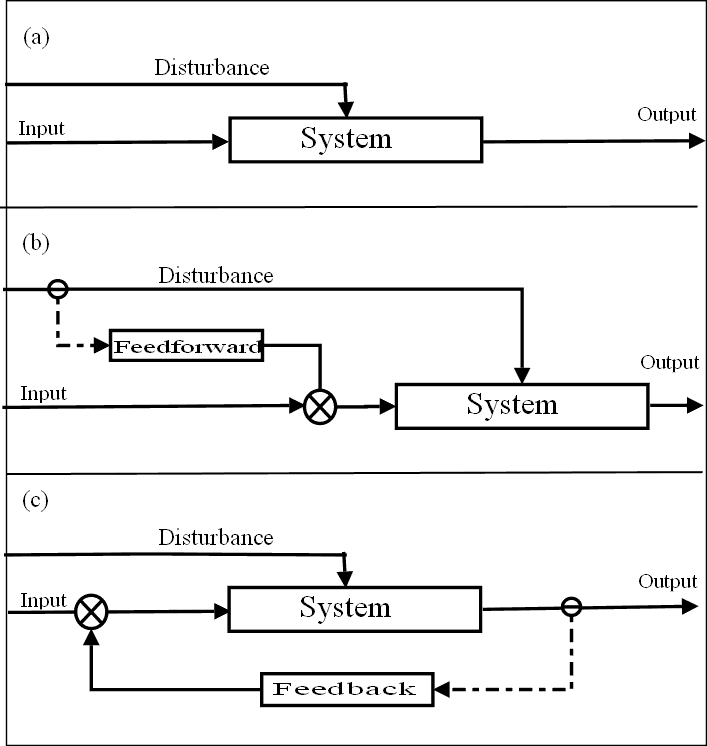
A closed-loop system, on the other hand, is built on feedback. It constantly measures its own output to see if it's meeting the target. A modern home thermostat is a perfect example. You set it to 72 degrees. It has a sensor that measures the actual room temperature. It compares the actual temperature to your setpoint. If the room is too hot, it tells the air conditioner to turn on. It keeps measuring, and once the room reaches 72 degrees, it tells the AC to turn off.
This continuous loop of measuring, comparing, and adjusting is what makes closed-loop systems so powerful and precise. In medical manufacturing, where precision can be a matter of patient safety, nearly all automated systems are closed-loop.
The Core Components
Let's break down the key players in a typical closed-loop system, using the example of a machine that fills vials with a liquid drug.
Sensor
noun
A device that measures a physical property and converts it into a signal that can be read by an instrument or observer.
Sensors are the eyes and ears of the system. They measure what's actually happening. In our vial-filling machine, a sensor might be a flow meter that measures how much liquid is going into the vial or a scale that weighs the vial as it fills.
Actuators are the muscles. They are the components that actually perform an action to affect the system. In our example, the actuator would be the valve or pump that controls the flow of liquid into the vial.
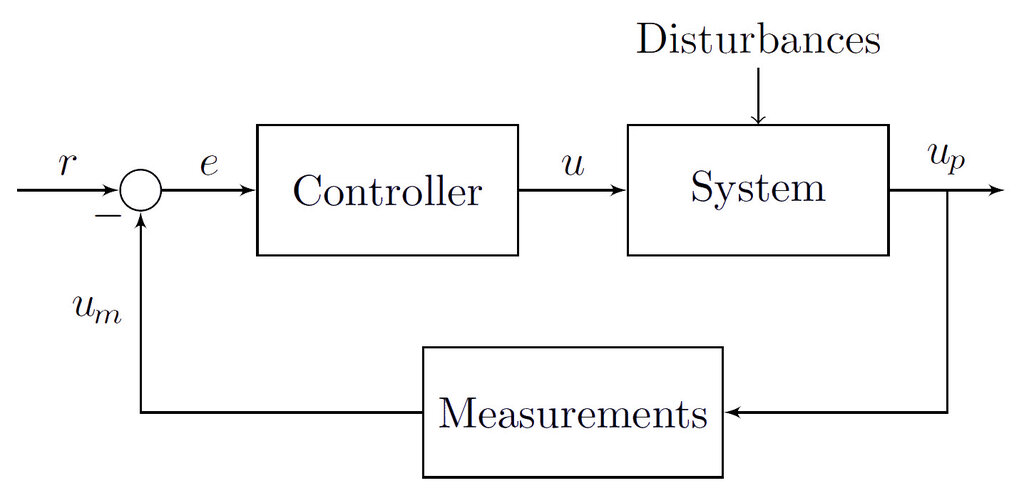
The Controller is the brain. It takes the desired value (the setpoint—say, 10 mL) and compares it to the measured value from the sensor. The difference between these two values is called the error. The controller's job is to calculate an appropriate response based on this error and send a command to the actuator. For instance, as the measured volume approaches 10 mL, the controller tells the valve actuator to close.
The Importance of Stability
A well-designed control system should be stable. Stability means that when you give the system a setpoint, it will eventually settle at that value without wild, uncontrolled behavior.
An unstable system is one that goes haywire. Imagine setting your thermostat, and instead of settling at 72 degrees, the temperature starts swinging wildly between 60 and 80 degrees, overshooting the mark again and again. In our vial-filling example, an unstable system might overshoot the 10 mL mark, then try to correct by slamming the valve shut, causing the liquid level to oscillate. This could lead to incorrectly filled vials and wasted product.
A stable system's output will remain bounded—it won't run off to infinity—when given a bounded input. An unstable system might not.
Achieving stability is a primary goal in control system design. It involves tuning the controller so it reacts quickly enough to be effective but not so aggressively that it overcorrects and creates oscillations. For a controls engineer, ensuring every automated process is stable, predictable, and repeatable is fundamental to the job.
Let's review these core concepts.
What is the primary purpose of a control system?
A standard kitchen toaster, which operates on a timer without checking if the bread is perfectly toasted, is an example of what type of system?
Understanding these building blocks is the first step toward designing, implementing, and troubleshooting the complex automated systems that are essential to modern manufacturing.