Controlling Agentic AI Costs
Introduction to Agentic AI Systems
What is Agentic AI?
Most AI you interact with is reactive. You give it a command, and it gives you a response. Think of asking a chatbot a question or telling a smart speaker to play a song. Agentic AI is different. It's designed to be proactive and autonomous, pursuing goals with minimal human guidance.
agency
noun
The capacity of an actor to act independently and to make their own free choices.
An agentic AI system doesn't just wait for instructions. It perceives its environment, makes decisions, and takes actions to achieve a specific objective. It can break down a complex goal into smaller, manageable steps and execute them in order. If it hits a roadblock, it can adapt its strategy and try a different approach.
Agentic AI represents a transformative leap from traditional, reactive AI systems to autonomous, goal-oriented agents capable of independent decision-making and action.
This ability to operate independently makes agentic AI powerful for handling complex, multi-step tasks that change over time.
Not Your Typical AI
The key difference between agentic and traditional AI lies in initiative. A traditional AI, like a large language model, is a powerful tool that responds to your input. It's a brilliant co-pilot, but you're still the one flying the plane. An agentic AI is more like an autopilot that you give a destination to. It handles the take-off, navigation, and landing on its own.
Traditional AI reacts. Agentic AI acts.
Let's compare them directly:
| Feature | Traditional AI | Agentic AI |
|---|---|---|
| Operation | Reactive (Responds to prompts) | Proactive (Initiates tasks) |
| Autonomy | Low (Requires human input for each step) | High (Operates independently) |
| Task Scope | Single, well-defined tasks | Complex, multi-step goals |
| Adaptability | Limited to its training data | Adapts to new information and changing environments |
How Agentic AI Works
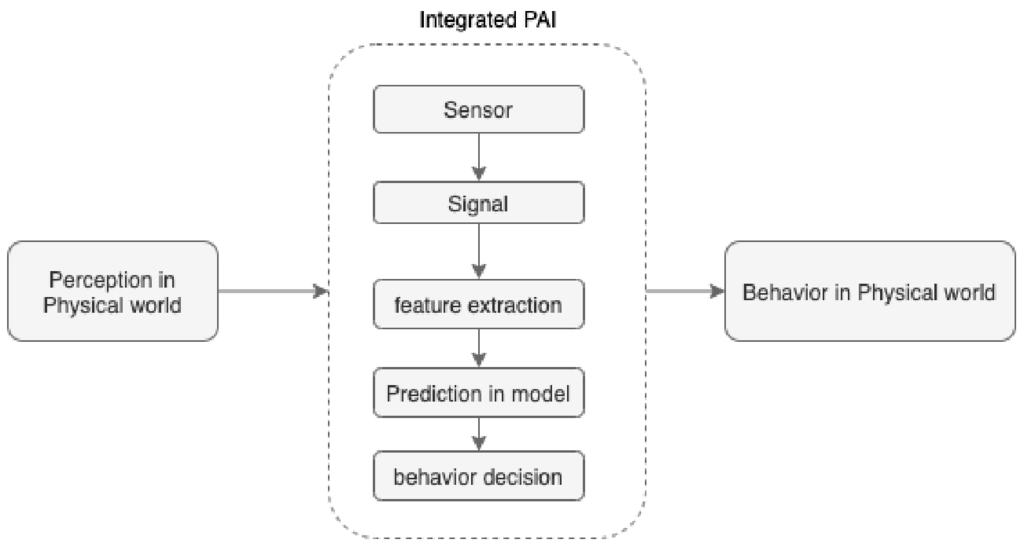
Agentic systems are built around a core loop of perceiving, thinking, and acting. This structure allows them to interact with their environment dynamically.
Let's break down these components:
-
Perception: This is how the agent gathers information from its environment. The environment could be a digital space, like a website's code or a database, or the physical world via sensors. It's the AI's version of eyes and ears.
-
Reasoning: Once the agent has data, its reasoning module processes it. This is the 'brain' of the operation. It analyzes the information, evaluates progress toward its goal, and decides what to do next. This might involve planning a sequence of actions or adapting a plan based on new data.
-
Action: After deciding on a course of action, the agent executes it. This could mean sending an email, buying a stock, adjusting a thermostat, or calling another piece of software (an API). This action changes the state of the environment, which the agent then perceives, starting the loop all over again.
Real-World Examples
Agentic AI isn't just a theoretical concept; it's already being used in various fields.
In finance, an agentic system could monitor market data, news, and social media sentiment to autonomously execute trades based on a predefined investment strategy. It wouldn't just flag an opportunity; it would act on it.
In supply chain management, an agent could track inventory levels, predict demand based on sales data and external factors like weather, and automatically place orders with suppliers to prevent stockouts. It could even negotiate prices or find alternative suppliers if a disruption occurs.
Customer service chatbots are also becoming more agentic. Instead of just answering questions, an advanced AI agent can access a customer's account, understand the context of their problem, and take action to solve it, like processing a refund or rescheduling a delivery, without needing to escalate to a human.
These systems represent a major step toward more capable and independent AI.
What is the primary characteristic that distinguishes agentic AI from traditional, reactive AI?
An agentic AI system operates on a core loop of perceiving its environment, ______, and then taking action to achieve its goals.