Continental Philosophy Essentials
Introduction to Continental Philosophy
A Different Style of Thinking
Continental philosophy isn't a single, neat school of thought. It's more like a family of philosophical traditions that emerged from mainland Europe, primarily France and Germany, starting in the 19th century. The name itself comes from its contrast with the "analytic" philosophy that became dominant in the English-speaking world (the British Isles).
Think of it less as a set of answers and more as a style of asking questions. Continental thinkers tend to believe that you can't understand an idea without understanding the historical and cultural situation it came from. They argue that experience isn't just about objective facts; it’s shaped by our personal histories, societies, and the very language we use.
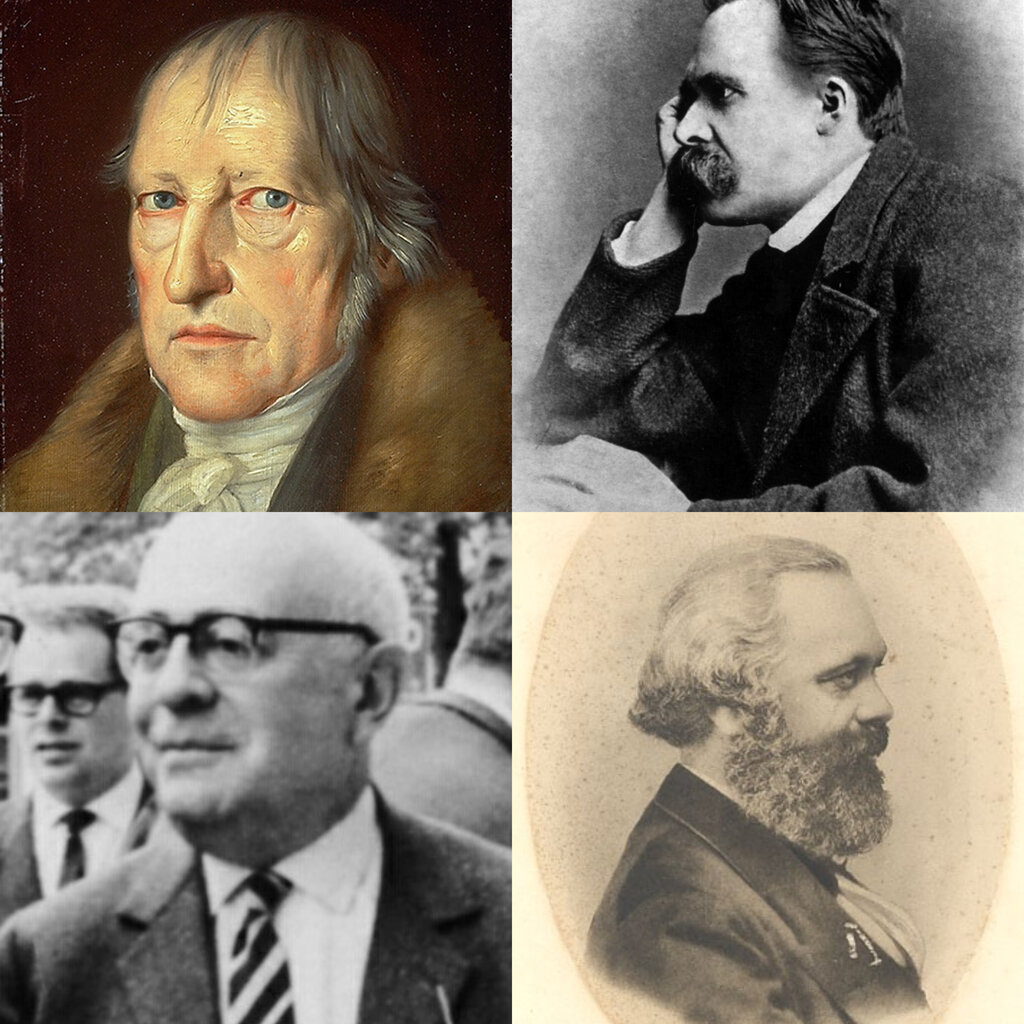
This tradition grew out of the work of German idealists like Immanuel Kant and G.W.F. Hegel. Their ideas sparked new movements that questioned the assumptions of earlier philosophy. Instead of seeing reason as a pure, universal tool, thinkers began to see it as something shaped by human existence. They wanted to bring philosophy back down to earth and connect it with the concrete realities of life, history, and society.
Core Themes
While diverse, Continental traditions share some common ground. They are deeply interested in the nature of human existence, or what it feels like to be alive. This is often called "lived experience." Instead of just analyzing concepts in the abstract, they explore how we encounter the world as embodied, historical beings.
Continental philosophy often focuses on big-picture questions about meaning, freedom, and the nature of society itself.
Many of these thinkers are also critical of existing power structures. They ask who gets to define what is true or normal, and they often examine how language and social institutions shape our beliefs without us even realizing it. This leads to profound questions about freedom: Are we truly free, or are our choices determined by forces beyond our control? What does it mean to make an authentic choice in a complex world?
A Tale of Two Philosophies
The simplest way to grasp Continental philosophy is to see it in contrast with its counterpart, analytic philosophy. The split between them in the 20th century defined much of modern Western thought. They aren't mutually exclusive enemies, but they do have different priorities, methods, and styles.
| Feature | Continental Philosophy | Analytic Philosophy |
|---|---|---|
| Geographic Origin | Mainland Europe (esp. Germany & France) | Great Britain & United States |
| Core Focus | Lived experience, history, society, power | Logic, language, science, argumentation |
| Method & Style | Interpretive, historical, often literary | Precise, logical analysis, argumentation |
| Key Questions | What is the meaning of being? How does history shape us? | What can be said clearly? What is a valid argument? |
Analytic philosophy often breaks problems down into their smallest logical parts, striving for the clarity you might find in mathematics or science. Continental philosophy, on the other hand, tends to synthesize ideas, looking at the whole picture and embracing ambiguity as a part of human experience. It reads more like a critical essay than a formal proof.
Now, let's check your understanding of these foundational ideas.
Continental philosophy is so named because it primarily emerged from which geographical area?
A key tenet of Continental philosophy is that reason is a pure, universal tool, unaffected by history or culture.
This tradition offers powerful tools for questioning the world we live in and our place within it.