Context Caching for AI Efficiency
Introduction to Large Language Models
The Minds Behind the Magic
At their core, Large Language Models (LLMs) are sophisticated prediction engines. They are trained on vast amounts of text from the internet, books, and other sources. Their fundamental goal is to predict the next word in a sequence. If you give it the phrase "The sky is," it knows the most probable next word is "blue."
By repeating this simple process over and over, LLMs can write essays, answer complex questions, and even generate computer code. But how do they know which words are most likely to come next? The answer lies in a powerful design called the Transformer architecture.
The Transformer Architecture
Before 2017, language models processed text sequentially, like reading a sentence one word at a time. This made it difficult to understand the relationships between words that were far apart. The Transformer architecture changed everything by allowing the model to look at all the words in a sentence at once.
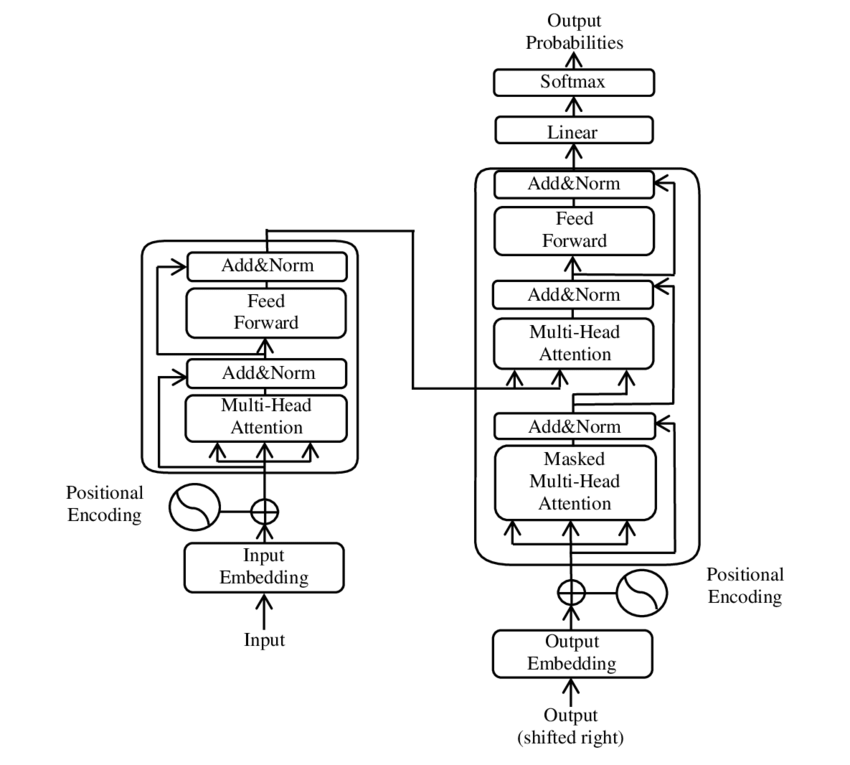
Think of the Transformer as a blueprint for the LLM's brain. It has two main parts: an encoder and a decoder. The encoder's job is to read and understand the input text. The decoder then takes that understanding and generates an output, one word at a time.
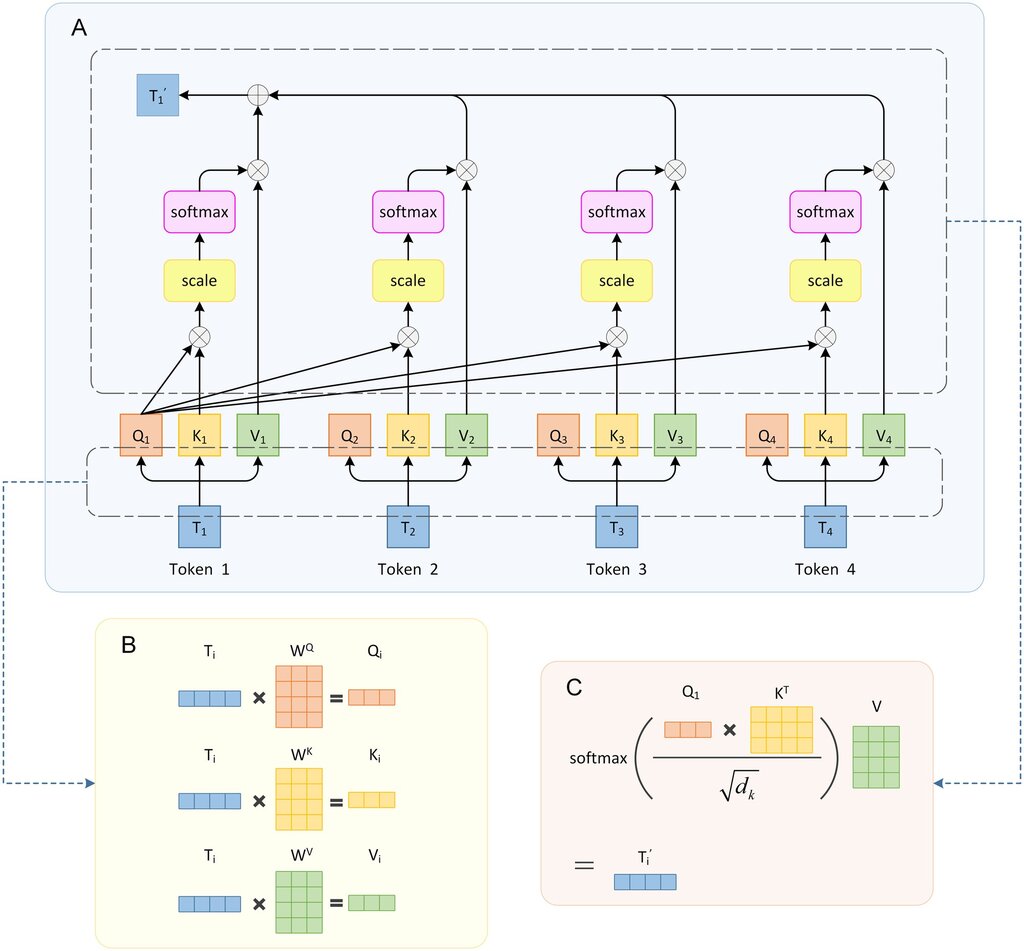
What makes this design so effective is a clever mechanism that allows the model to weigh the importance of different words as it processes the text. This is called the attention mechanism.
Paying Attention
When you read the sentence, "The cat, which had chased the mouse all day, was finally tired," you instinctively know that "was" relates to "cat," not "mouse" or "day." The attention mechanism gives LLMs a similar ability.
It allows the model to calculate a score for every word in the input, indicating how relevant it is to the other words. When generating the next word, the model pays more "attention" to the words with higher scores. This lets it track relationships across long stretches of text, leading to more coherent and context-aware responses.
This ability to focus on what matters is what makes LLMs feel so intelligent. But this focus has its limits. A model can only pay attention to a certain amount of information at once.
The Context Window
An LLM's context window is its short-term memory. It's the total amount of text—both your input and the model's generated response—that it can consider at any one time. This limit is measured in units called tokens, which are roughly equivalent to words or parts of words.
If a conversation or document exceeds the context window, the model starts to "forget" the earliest parts. It's like trying to have a long conversation but only being able to remember the last five minutes. Anything said before that is lost.
A model's context window is its entire world. Anything outside of it effectively doesn't exist for the model.
A larger context window allows a model to handle longer documents, maintain more coherent conversations, and understand more complex instructions. As technology improves, these windows are getting bigger, expanding what LLMs can do.
Putting It All Together
This combination of the Transformer architecture, attention mechanisms, and a defined context window allows LLMs to perform a huge range of tasks. They are used to power conversational chatbots, summarize lengthy articles, translate between languages, and even help developers write code.
They can create marketing copy, draft emails, and act as creative partners for writers and artists. By understanding these core components, you can better appreciate how these powerful tools work and what makes them so revolutionary.
Now, let's test your understanding of these fundamental concepts.
What is the most fundamental task a Large Language Model (LLM) is trained to perform?
The _______ mechanism allows an LLM to weigh the importance of different words in the input text, helping it understand context and relationships.