Content Computing and Qubits Explained
Quantum Mechanics Basics
The Superposition Principle
In the everyday world, things are definite. A light switch is either on or off. A coin on a table is either heads or tails. But in the quantum world, things are a bit fuzzier. Particles can exist in multiple states at the same time. This is called superposition.
Think of a spinning coin. While it's in the air, it's not quite heads and not quite tails. It's in a combination of both states. Only when it lands and you look at it does it settle into a single, definite outcome. A quantum particle in superposition is like that spinning coin. It holds the possibility of multiple states at once until it's measured.
This ability to be in
Quantum Interference
If a particle can be in multiple states at once, how does a quantum computer get to a single, correct answer? The key is interference.
Just like waves in a pond can meet and either reinforce each other (constructive interference) or cancel each other out (destructive interference), the probability waves of quantum states can interfere. A quantum algorithm is cleverly designed to amplify the probabilities of the correct answers and cancel out the probabilities of the incorrect ones. When the final measurement is made, the desired outcome is the one most likely to appear.
Through carefully controlled interference, a quantum computer explores many possibilities at once but guides the calculation toward a useful result. It’s less about getting an answer faster and more about finding a way to make the right answer emerge from a sea of possibilities.
Quantum Entanglement
Some quantum particles can form a deep connection, becoming linked in a way that defies everyday intuition. This connection is called entanglement. When two particles are entangled, their fates are intertwined, no matter how far apart they are.
Imagine you have a pair of gloves, and you put each one in a separate box without looking. You give one box to a friend who travels to the other side of the world. The moment you open your box and see a left-handed glove, you instantly know your friend has the right-handed one. There's no surprise there. But with quantum entanglement, it's as if the gloves don't decide whether they're left or right until one is observed. The act of measuring one particle instantly determines the state of the other, faster than the speed of light.
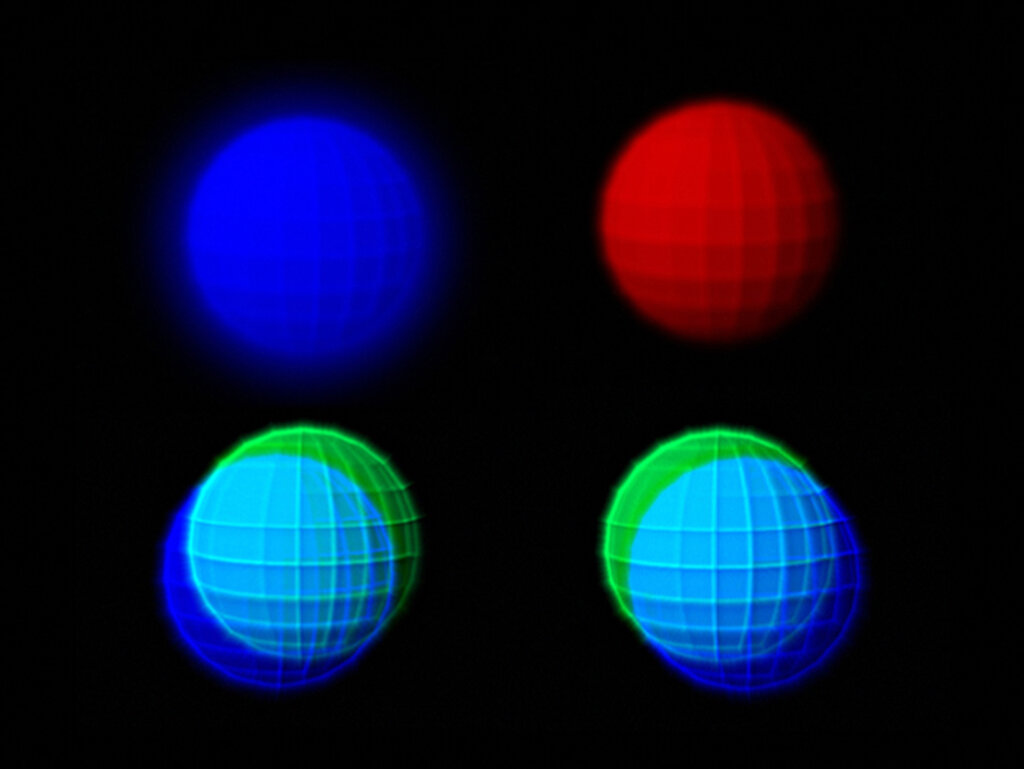
Albert Einstein famously called this "spooky action at a distance." It doesn't allow for faster-than-light communication, because you still have to compare notes using conventional methods to see the correlation. But it's a fundamental property of the quantum world and a powerful resource for quantum computing and cryptography.
Entangled particles behave as a single system, even when they are physically separated. A measurement on one directly influences the other.
Now let's check your understanding of these core concepts.
What is the quantum principle that allows a particle to exist in multiple states at the same time?
A quantum algorithm is designed to make the probabilities of incorrect answers cancel each other out. This process is known as:
These three principles—superposition, interference, and entanglement—are the pillars of quantum mechanics. They allow quantum computers to process information in ways that classical computers simply cannot.