Contemporary History Explained
Post-War Reconstruction
From the Ashes
World War II left a scar across the globe. Cities were flattened, economies were in ruins, and millions of people were displaced. In Europe and Asia, the task of rebuilding seemed impossible. Infrastructure like roads, bridges, and factories had been obliterated. Food was scarce, and political stability was fragile. The world faced a choice: repeat the mistakes of the past or build something new and more durable.
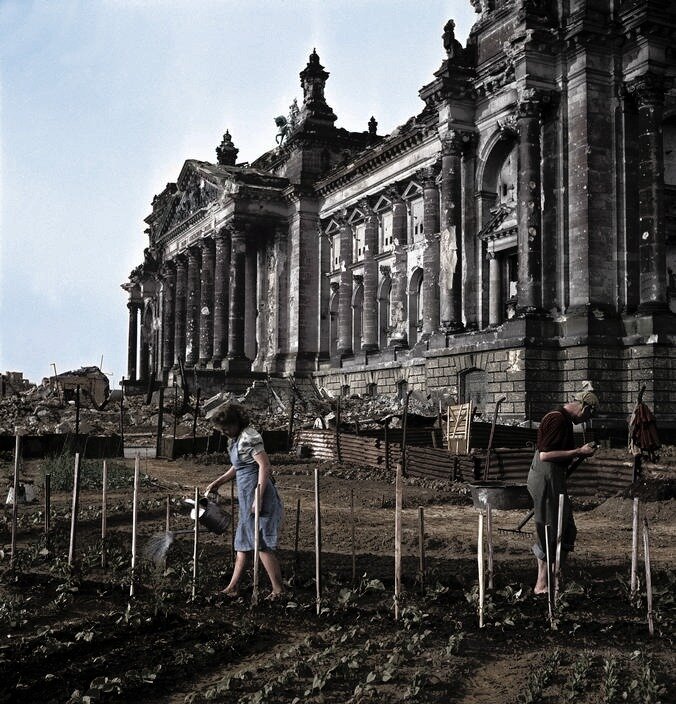
Leaders knew that the punitive measures taken after World War I had only sown the seeds for another conflict. This time, the focus shifted from punishment to reconstruction and cooperation. The goal was not just to rebuild buildings, but to create a new international framework that could prevent such a catastrophe from ever happening again.
A New Blueprint for Peace
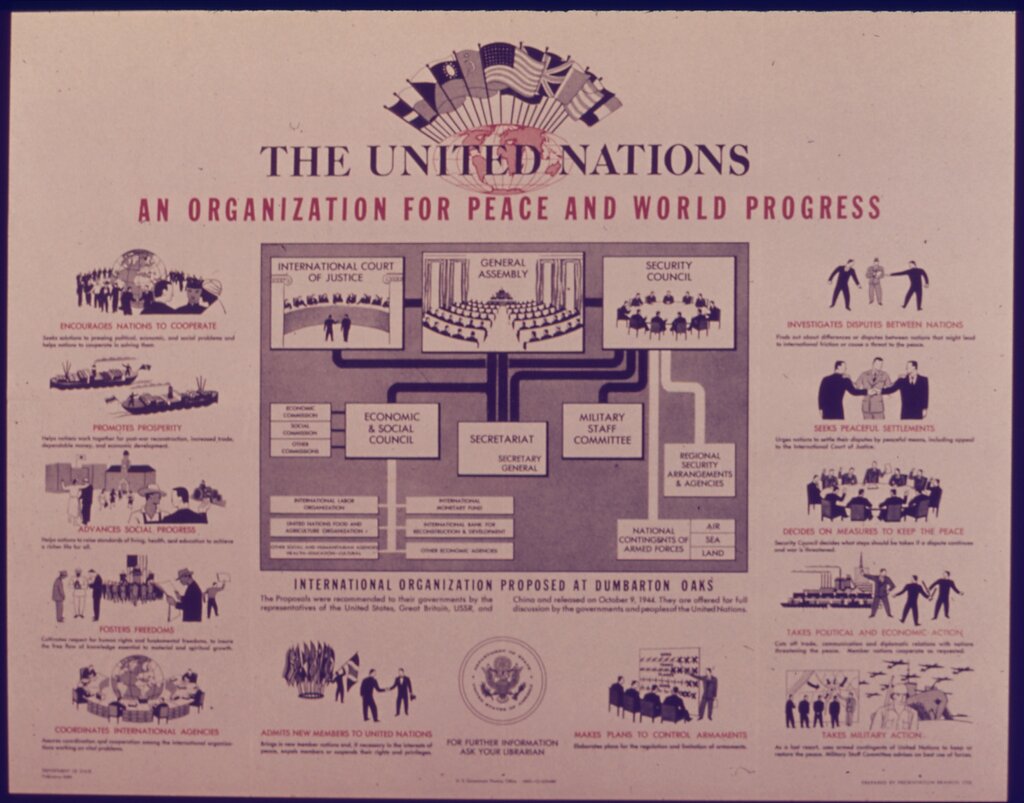
Before the war even ended, delegates from 50 countries met in San Francisco in 1945. Their mission was to create a new organization for global cooperation: the United Nations. Its primary purpose was to maintain international peace and security. Unlike its predecessor, the League of Nations, the UN was given more authority to mediate conflicts and coordinate international action.
The UN's founding charter opens with a powerful declaration: "to save succeeding generations from the scourge of war."
The UN was structured around several key bodies. The General Assembly provides a forum for all member states to discuss global issues, while the Security Council, with five permanent members (the United States, the Soviet Union, the United Kingdom, France, and China), was given the primary responsibility for dealing with threats to peace.
Rebuilding Economies
Political stability couldn't take root in economies shattered by war. Western Europe, in particular, was on the brink of economic collapse. To address this, the United States launched the European Recovery Program in 1948, widely known as the Marshall Plan.
This wasn't a series of loans, but rather a massive injection of direct aid. Over four years, the U.S. provided over $13 billion (equivalent to more than $150 billion today) to help 16 Western European nations rebuild their industries and infrastructure. The aid was used to buy goods from the U.S., repair factories, and modernize agriculture. This not only kickstarted Europe's recovery but also created stable trading partners for the United States.
| Country | Total Aid (millions of U.S. $) |
|---|---|
| United Kingdom | 3,297 |
| France | 2,296 |
| West Germany | 1,448 |
| Italy | 1,204 |
| Netherlands | 1,128 |
On the other side of the world, Japan underwent a similar, dramatic transformation. Following its surrender, Japan was occupied by Allied forces, primarily the United States. The occupation introduced sweeping reforms: a new constitution was written, land was redistributed to farmers, and the powerful industrial conglomerates known as zaibatsu were broken up.
With significant U.S. aid and a focus on developing manufacturing and technology, Japan's economy began a period of explosive growth. By the 1950s, it was on its way to becoming the economic powerhouse we know today.
A Divided Germany and a New Alliance
Germany, the epicenter of the war in Europe, faced a unique fate. After its defeat, the country was divided into four occupation zones, controlled by the United States, the United Kingdom, France, and the Soviet Union. The capital, Berlin, located deep within the Soviet zone, was also divided among the four powers.
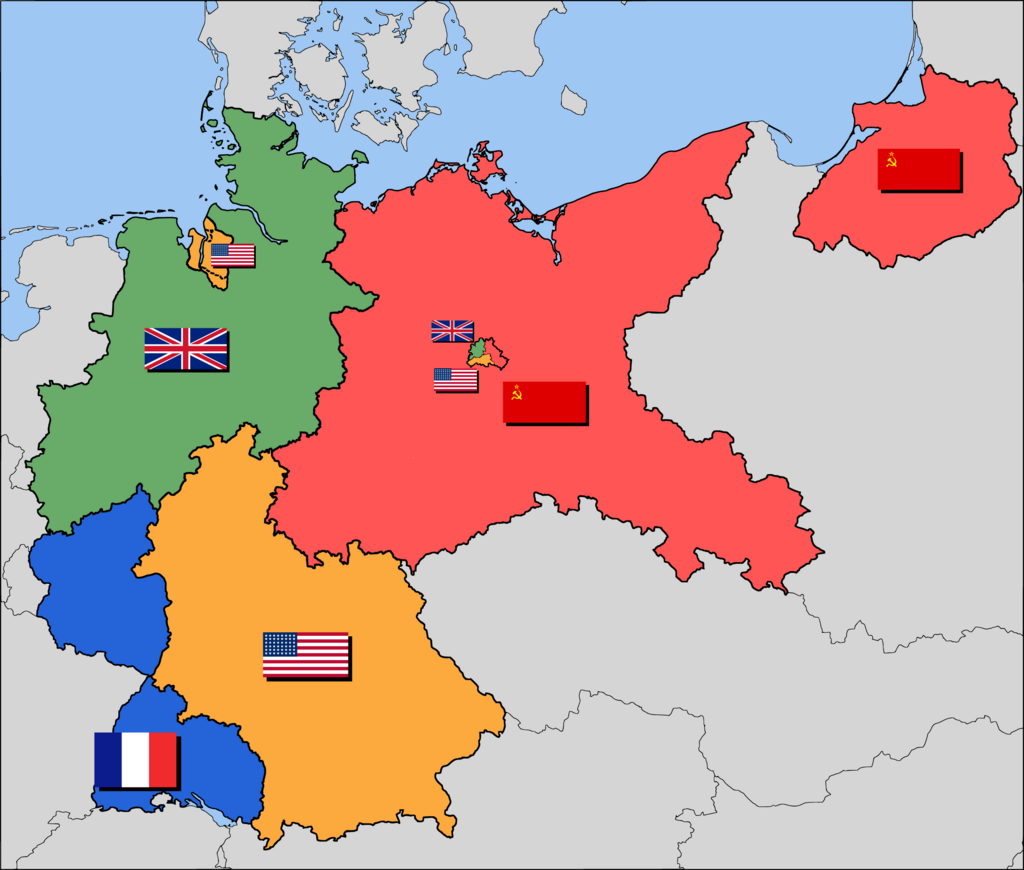
Initial plans to govern Germany jointly quickly fell apart. Differing ideologies and goals between the Western Allies and the Soviet Union made cooperation impossible. In 1949, the three Western zones were merged to form the Federal Republic of Germany (West Germany), a democratic state. In response, the Soviets established the German Democratic Republic (East Germany), a communist state.
This division cemented the new political reality in Europe. To ensure collective security against potential threats, the Western powers formed a military alliance. In 1949, the United States, Canada, and ten European nations signed the North Atlantic Treaty, creating the North Atlantic Treaty Organization (NATO). The core principle of NATO is collective defense: an attack on one member is considered an attack on all.
NATO's Article 5, the collective defense clause, was a clear message that its members would stand together to protect their security and democratic values.
The post-war reconstruction period was a time of immense challenges and bold new ideas. The institutions and alliances forged in these years, from the UN to NATO, would shape international relations for the rest of the 20th century and beyond.