Contact Lens Design Essentials
Introduction to Contact Lenses
A Lens for Your Eye
Correcting vision usually involves placing a lens a short distance from your eye, in a pair of glasses. But what if the lens could sit directly on the eye itself? This idea has been around for centuries. Leonardo da Vinci sketched a concept in 1508 involving a bowl of water over the eye to alter vision, though it was hardly practical.
The first true contact lenses were made from glass in the late 1800s. They were large, uncomfortable, and could only be worn for a few hours. It wasn't until the development of advanced plastics in the 20th century that contact lenses became the comfortable, effective option we know today.
The Eye's Landscape
To understand how a contact lens works, we first need to know the part of the eye it rests on. A contact lens doesn't just float randomly; it's designed to fit the unique shape of your eye's surface.
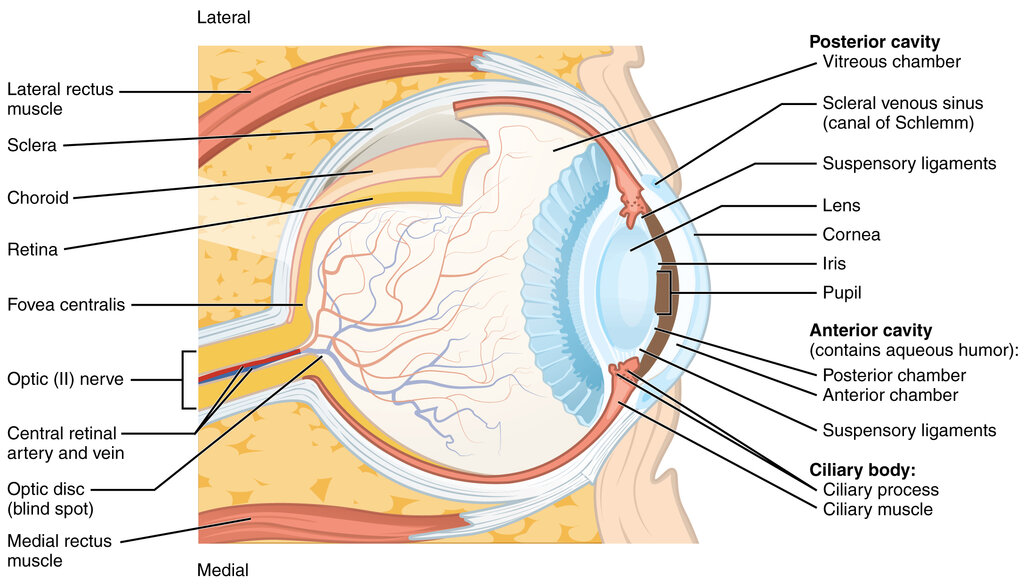
The most important structure for a contact lens is the cornea. This is the transparent, dome-shaped outer layer at the very front of your eye that covers the iris and pupil. It's the eye's primary focusing element. A contact lens sits on the thin layer of tears that coats the cornea, correcting the way light enters the eye before it even reaches the eye's natural lens.
The cornea is sensitive, so it's crucial that a lens fits well and allows oxygen to pass through to keep the tissue healthy.
Not All Contacts Are the Same
Contact lenses come in a few main types, each with different materials and designs tailored to various needs. The main distinction comes down to the flexibility of the material.
Soft Lenses These are the most common type of contact lens. Made from flexible, water-containing plastics called hydrogels, they are known for their immediate comfort. They easily conform to the shape of the cornea.

Soft lenses come in various wearing schedules. Some are designed for a single day of use, while others can be worn for up to a month. Because they are soft and pliable, they are generally very comfortable right from the start.
Rigid Gas Permeable (RGP) Lenses Often called "hard contacts," RGP lenses are made from a firm, durable plastic that allows oxygen to pass through it. They are smaller than soft lenses and rest on the cornea.
While they require a short adaptation period to get used to, RGP lenses can provide sharper, crisper vision than soft lenses, especially for people with astigmatism. They are also more durable and resistant to deposit buildup.
Hybrid Lenses As the name suggests, these lenses combine the features of both soft and RGP lenses. They have a rigid gas permeable center to provide clear vision, surrounded by a soft outer skirt for comfort.
Hybrid lenses aim to offer the best of both worlds: the sharp optics of a hard lens and the wearing comfort of a soft one. They can be a great option for individuals who need the visual acuity of an RGP lens but find them uncomfortable.
A contact lens rests on a thin layer of tears that covers which part of the eye?
Who is credited with sketching an early concept for altering vision by placing a bowl of water over the eye in 1508?
Each type of lens serves the same basic function: to bend light correctly before it enters your eye, providing clear vision without the need for glasses.