Construction of Stonehenge
Neolithic Earthworks
The First Circle
Long before the iconic stones were raised, Stonehenge began as a massive earthwork. Around 3000 BCE, Neolithic people carved a huge circular enclosure into the chalk of Salisbury Plain. This initial phase established a sacred space about 110 meters in diameter, defined not by stone, but by a formidable ditch and bank.
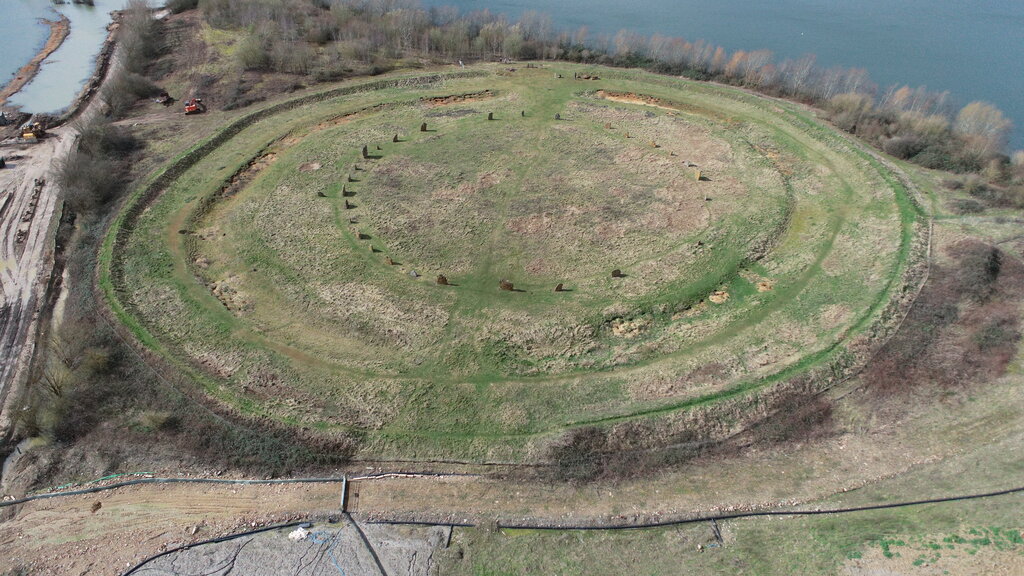
Carving this feature was a monumental undertaking. The builders used simple but effective tools: picks made from the antlers of red deer and shovels fashioned from the shoulder blades of cattle. Teams of workers would have systematically loosened the chalk with the picks and then scooped it out with the bone shovels. The excavated chalk was then piled up to form an inner and outer bank.
Just inside the inner bank, the builders dug a ring of 56 evenly spaced pits, now known as the , named after the 17th-century antiquarian John Aubrey who first identified them. For a long time, archaeologists debated their purpose. Were they sockets for a ring of timber posts, or did they hold the very first stones brought to the site? Current evidence suggests they may have held Welsh bluestones for a brief period before the stones were rearranged.
A Place for the Dead
The primary purpose of this early henge was not astronomical observation, but burial. Excavations within the circle, particularly in the ditch and the Aubrey Holes, have revealed the cremated remains of at least 64 different individuals—men, women, and children. This makes Stonehenge the largest known Neolithic cremation cemetery in Britain. The placement of remains suggests that for about 500 years, the site was a domain of the ancestors, a place where the community honored its dead.
This first phase laid the foundation—both literally and figuratively—for everything that followed. The precise circular geometry and its designated entrances established a sacred geography that would dictate the placement of every massive sarsen and every carefully transported bluestone for the next 1,500 years. The circle was set.