Constructing AI Agents
Introduction to AI Agents
What Are AI Agents?
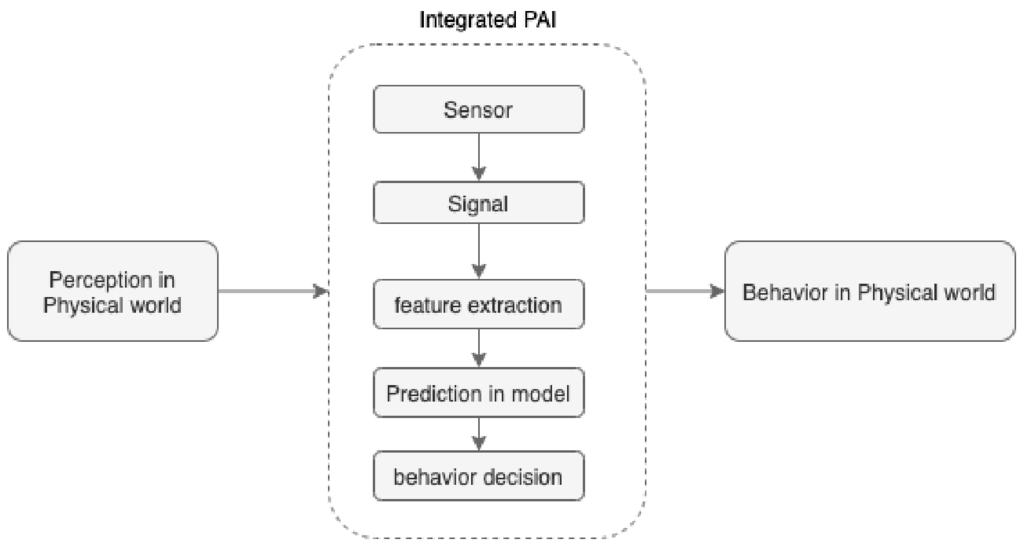
An AI agent is a system that can observe its environment, make decisions, and take actions to achieve a specific goal. Think of a smart thermostat. It senses the room's temperature (its environment), decides if it's too cold or hot, and then acts by turning the heat or air conditioning on or off. Its goal is to maintain the temperature you've set.
At its core, an agent follows a simple loop: perceive, think, act.
This simple loop is what allows agents to operate autonomously. Unlike a regular computer program that just follows a script, an agent has a degree of independence. This autonomy is built on a few key characteristics:
A Quick Trip Through Time
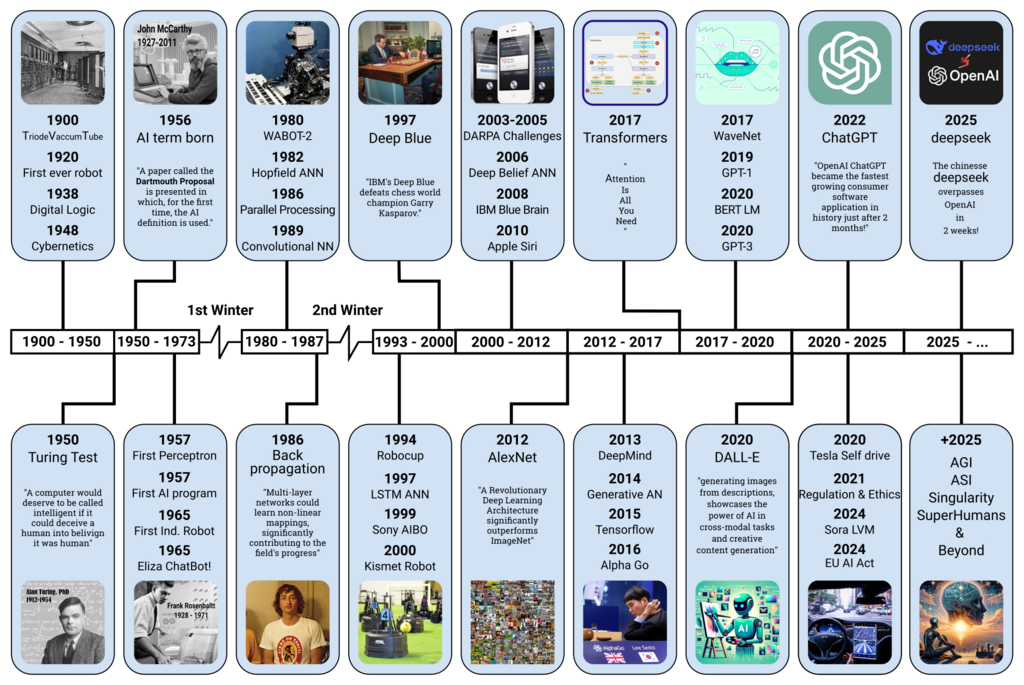
The idea of agents is nearly as old as artificial intelligence itself. Early concepts emerged in the 1950s, but the first agents were simple, rule-based systems. They could perform tasks only if they had explicit, pre-programmed instructions for every possible situation.
As machine learning developed, agents became more sophisticated. They could learn from data and adapt their behavior instead of relying solely on rigid rules. The real game-changer, however, has been the recent rise of large language models (LLMs). These powerful models give agents an unprecedented ability to understand language, reason about complex problems, and use a wide range of digital tools.
Types of Agents
Not all agents are created equal. They can be grouped into different types based on how they make decisions. Let's look at three common categories.
Reactive Agent
noun
An agent that acts only based on its current perception of the environment, without considering past events or future consequences.
Reactive agents are the simplest type. They operate on a simple "if this, then that" logic. For example, if a self-driving car's sensor detects an object directly in front of it, its reactive component immediately applies the brakes. It doesn't need to think about where the object came from or what its long-term travel plan is. It just reacts to the immediate situation.
A deliberative agent thinks ahead. It maintains an internal model of its world and considers how its actions will affect the future to achieve its goals.
This is a step up in complexity. A navigation app on your phone is a deliberative agent. It doesn't just react to your current location. It has a goal (your destination), a model of the world (a map with traffic data), and it plans a sequence of actions (the route) to get you there efficiently. If it hits unexpected traffic, it updates its model and re-plans.
A hybrid agent combines the best of both worlds: the speed of reactive control with the intelligence of deliberative planning.
Most sophisticated agents today are hybrids. That self-driving car needs to react instantly to a sudden obstacle (a reactive behavior), but it also needs to plan the best route to its destination (a deliberative behavior). Hybrid systems use different layers to handle both immediate responses and long-term goals, allowing them to navigate complex, dynamic environments effectively.
Agents in the Wild
AI agents are no longer just concepts in a research lab; they're active in many industries. Your email's spam filter is an agent that perceives incoming messages and acts to sort them. In finance, agents execute trades based on market conditions, trying to achieve the goal of maximizing returns.
In logistics, agents optimize delivery routes in real-time, saving fuel and time. Customer service chatbots are agents designed to understand user queries and provide helpful responses. As AI continues to advance, these autonomous systems will become even more integrated into our daily personal and professional lives.
Now, let's test your understanding of these core concepts.
What are the three fundamental actions that form the core operational loop of an AI agent?
A self-driving car that instantly brakes for a pedestrian while also planning the overall route to a destination is an example of what kind of agent?
AI agents represent a powerful way to delegate tasks and solve problems, moving us from simply telling computers what to do to telling them what we want to achieve.