Constructing Agentic AI Systems
Introduction to Agentic AI
Beyond the Prompt
For years, our interactions with AI have been a back-and-forth conversation. We give a command, and the AI responds. We ask a question, and it gives an answer. This is reactive AI. It's powerful, but it waits for us to tell it what to do.
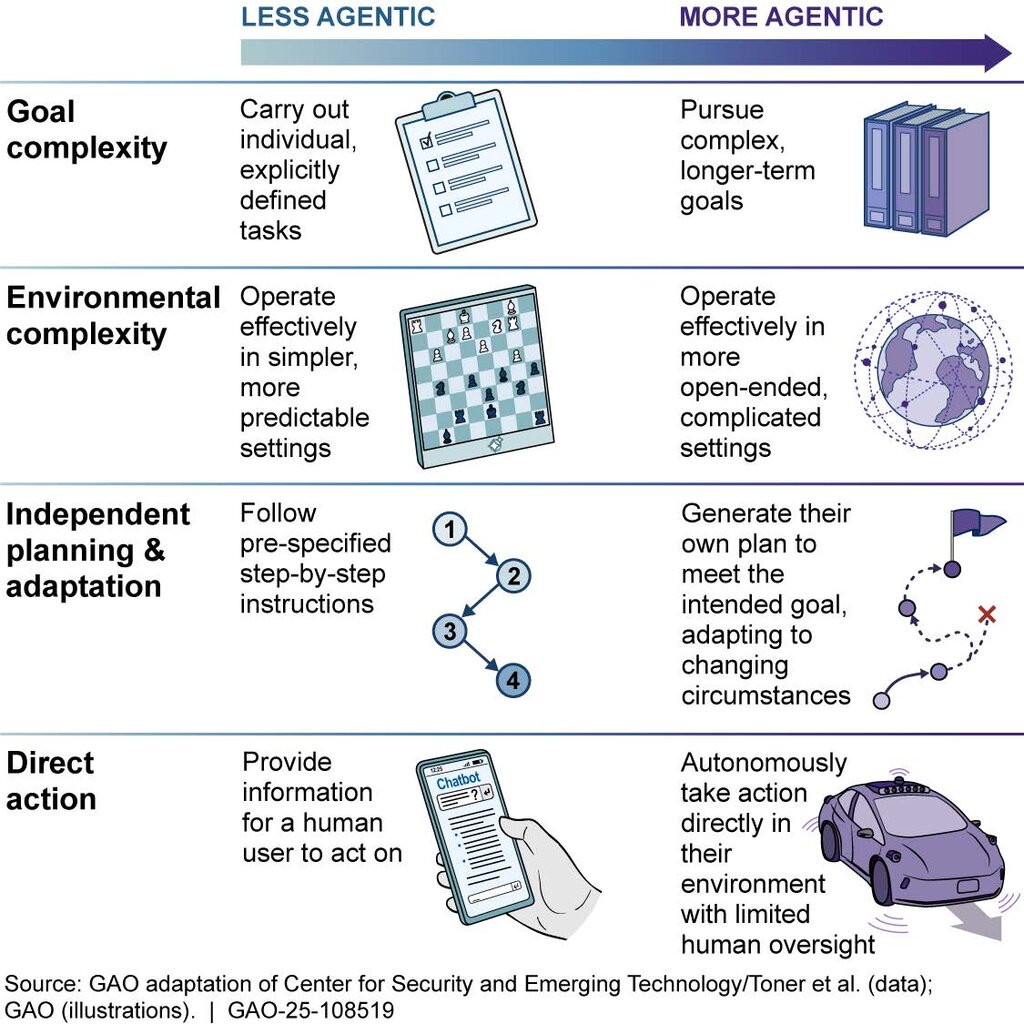
Agentic AI is different. It represents a shift from a reactive assistant to a proactive partner. Instead of just following instructions, an agentic AI system can take a goal, break it down into steps, make decisions, and act on its own to achieve that goal. Think of it less like a calculator and more like an experienced project manager.
Agentic AI refers to AI systems designed with autonomy, capable of reasoning, planning multi-step tasks, adapting to changing contexts, and acting toward defined goals without constant human prompting.
This ability to act independently is what sets agentic AI apart. It doesn't need to be told how to do something, just what needs to be done. It can then figure out the best course of action, even if the situation changes unexpectedly.
From Following Rules to Making Plans
Traditional AI excels at specific, rule-based tasks. A classic example is a factory robot that performs the same weld on a car frame thousands of times a day. It's precise and efficient, but if a part is misaligned, it can't adapt. It will keep trying to perform its pre-programmed task.
Generative AI, like the large language models you might be familiar with, is a step up. It can generate creative text or images in response to a prompt, but it's still a one-off action. It completes the request and then waits for the next one.
Agentic AI builds on these capabilities and adds a crucial layer: agency. It can perceive its environment, make a plan, and then execute that plan over multiple steps, learning and adjusting as it goes. It has a goal and the freedom to figure out how to reach it.
| Feature | Traditional AI | Generative AI | Agentic AI |
|---|---|---|---|
| Core Function | Follows rules, automates tasks | Responds to prompts | Pursues goals |
| Initiative | Reactive | Reactive | Proactive |
| Operation | Single, predefined tasks | Single, prompt-based tasks | Multi-step, dynamic tasks |
| Adaptability | Low | Limited | High |
The Agentic Toolkit
Three core characteristics define agentic AI systems and give them their power.
Autonomy: The ability to operate and make decisions without direct human control for every action. It's entrusted with a goal and works independently to achieve it.
Proactivity: Agentic systems don't just wait for problems to arise. They can anticipate needs, identify opportunities, and take initiative. A proactive AI might notice a potential supply chain delay and reroute a shipment before it becomes an issue.
Adaptability: The real world is messy and unpredictable. An agentic AI can handle change. When faced with new information or an unexpected obstacle, it can adjust its plan and find a new path to its goal.
Agents in the Wild
While the technology is still evolving, agentic AI is already being applied in various fields to enhance efficiency and handle complex problems.
In e-commerce, an AI agent could manage a company's inventory. Instead of just flagging low stock, it could analyze sales trends, predict future demand, compare prices from different suppliers, and automatically place orders to ensure products are always available without overstocking.
For personal productivity, imagine an AI travel agent. You tell it, "Book me a weekend trip to see the cherry blossoms next spring for under $800." The agent would then research peak bloom times, find flights and hotels that fit your budget, check for rental cars, and present you with a complete itinerary for approval, having handled all the complex coordination itself.
In scientific research, agentic AI can design and run experiments. A system could be given the goal of discovering a more efficient material for solar panels. It could then sift through databases of chemical compounds, run simulations, and even operate lab equipment to test its hypotheses, accelerating the pace of discovery.
These examples show the shift from AI as a tool that performs a task to AI as a system that manages a process. By giving AI the ability to plan and act on its own, we unlock its potential to solve bigger, more dynamic problems.
What is the primary characteristic that distinguishes agentic AI from reactive or generative AI?
A user tells an AI, 'Plan my team's offsite retreat in Austin for next quarter.' The AI then researches flight deals, compares venue costs, polls team members for availability via email, and presents three fully-costed itinerary options. This is an example of: