Constant Current vs Constant Voltage for LEDs
Introduction to LED Technology
What is an LED?
LED stands for Light Emitting Diode. At its core, it's a tiny semiconductor—a special type of electronic component—that lights up when electricity passes through it. Unlike the old incandescent bulbs that burn a filament, or fluorescent bulbs that excite a gas, an LED creates light directly from the movement of electrons in a solid material.
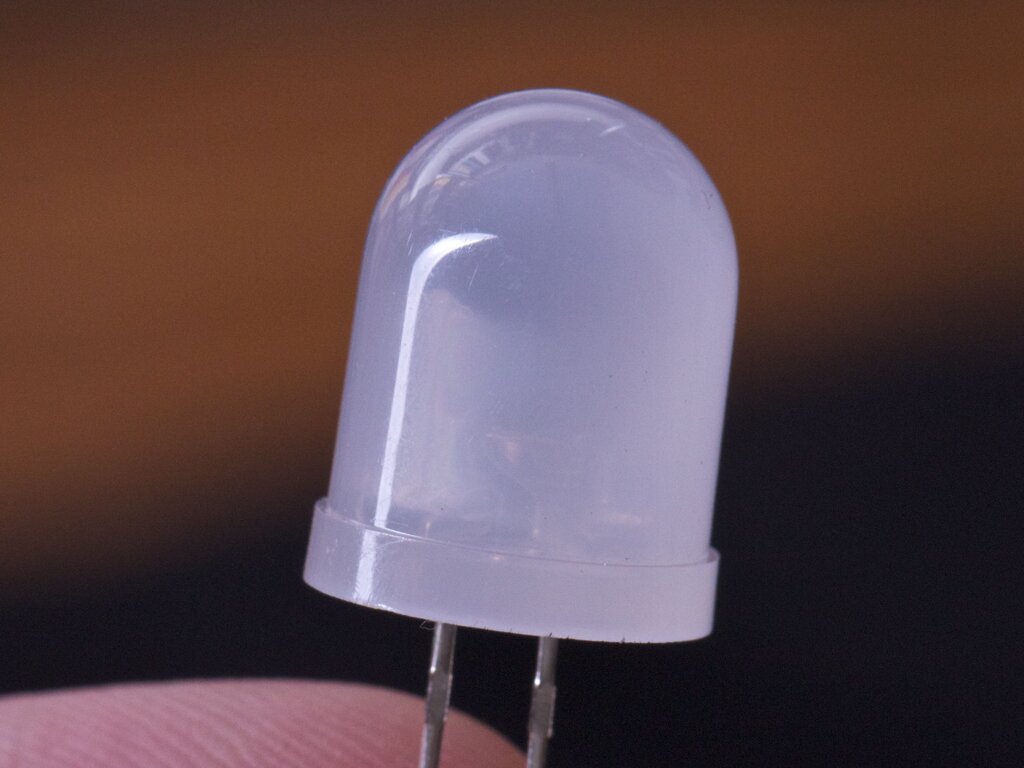
This fundamental difference is what makes LEDs so efficient and versatile. They are essentially the smallest practical source of light, which allows them to be used in everything from tiny indicator lights on your phone to massive stadium screens.
How an LED Creates Light
The magic of an LED happens inside a semiconductor chip. This chip is made of two different types of material layered together. One layer has an excess of electrons (the n-type layer), and the other has a shortage of electrons, creating what are called "holes" (the p-type layer). The boundary where these two layers meet is called a p-n junction.
When you apply a voltage to the LED, you're pushing electrons from the n-type layer toward the p-type layer. As the electrons cross the junction, they fall into the holes. This reunion releases a small burst of energy in the form of a photon, which is a particle of light. This process is called electroluminescence.
The color of the light isn't random. It's determined by the specific semiconductor materials used and the amount of energy released when an electron and hole recombine. For instance, aluminum gallium arsenide (AlGaAs) is often used for red LEDs, while indium gallium nitride (InGaN) is used for blue and green ones. To get white light, manufacturers often use a blue LED and coat it with a yellow phosphor, which mixes the colors to appear white.
LEDs vs Older Tech
Compared to incandescent and fluorescent lights, LEDs come out ahead in almost every category. Incandescent bulbs work by heating a tiny wire until it glows, which wastes about 90% of its energy as heat. Fluorescent lights are more efficient but contain mercury, making them a hassle to dispose of safely.
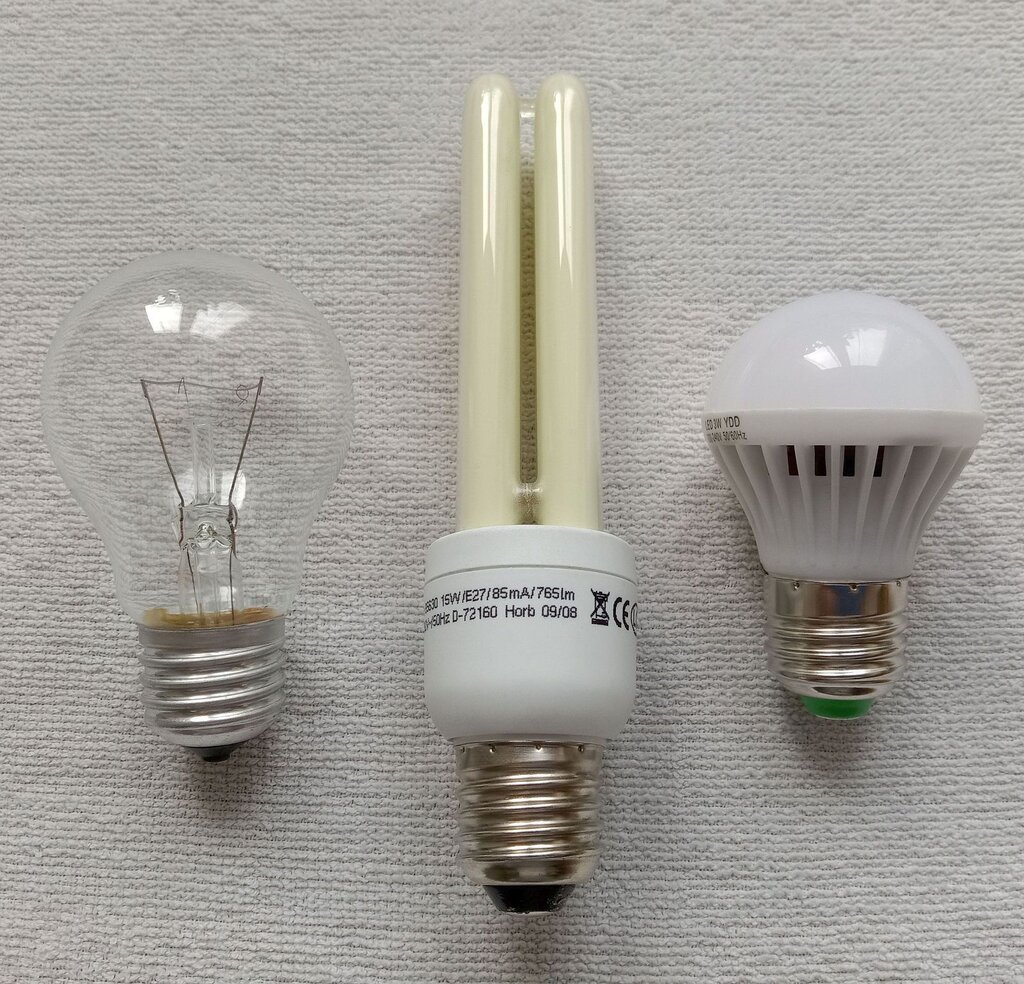
LEDs are a significant leap forward. They convert electricity to light with very little wasted heat, last much longer, and are far more durable because they have no fragile filaments or glass tubes to break.
| Feature | Incandescent | Fluorescent (CFL) | LED |
|---|---|---|---|
| Efficiency | Very Low | Medium | Very High |
| Avg. Lifespan | ~1,000 hours | ~8,000 hours | 25,000+ hours |
| Durability | Fragile | Fragile | Very Durable |
| Heat Output | High | Low | Very Low |
| Mercury | No | Yes | No |
Basic Electrical Needs
Because an LED is a diode, it has a crucial property: electricity flows through it in only one direction. An LED has two leads, a positive one called the anode and a negative one called the cathode. If you connect it backward, it won't light up. The anode typically has a longer lead.
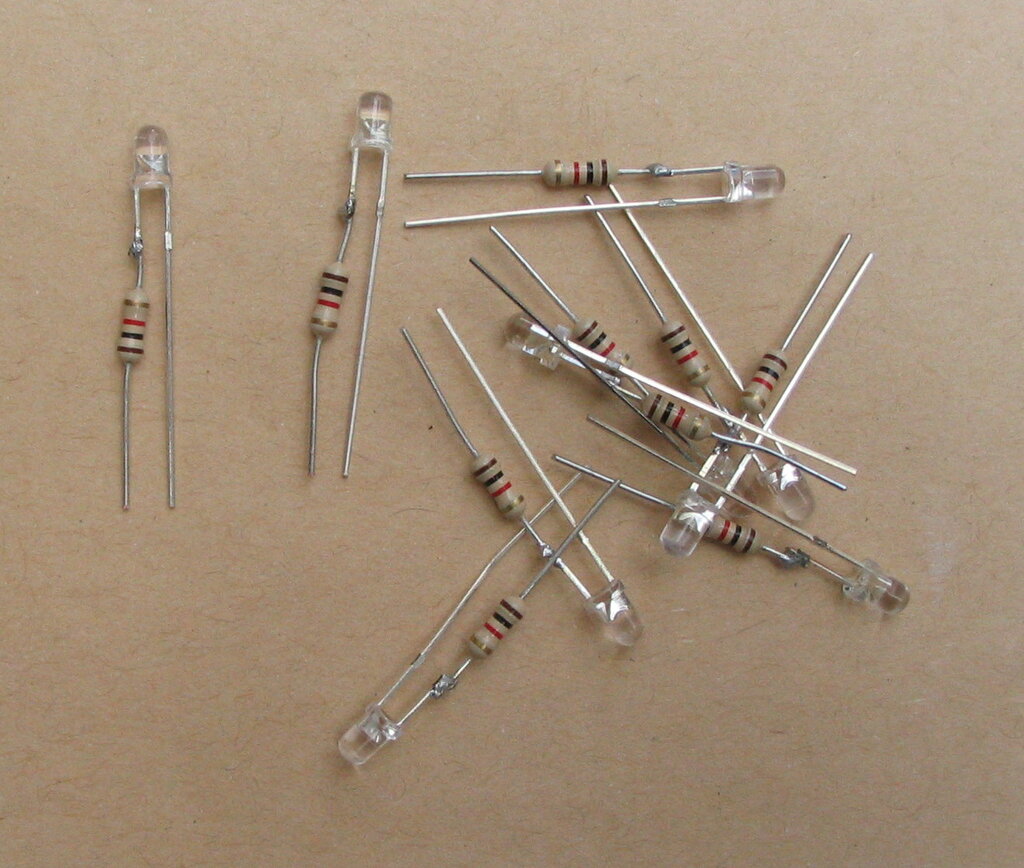
LEDs are also sensitive to the amount of electrical current. Too much current will burn them out instantly. To prevent this, a simple component called a resistor is almost always used in series with an LED. The resistor's job is to limit the current to a safe level. This is why you can't just hook an LED directly up to a battery; you need to manage the flow of electricity.
Finally, LEDs run on direct current (DC), where electricity flows steadily in one direction. The power from a wall outlet is alternating current (AC), which constantly changes direction. This difference means LEDs can't be plugged directly into a wall socket. They require a power supply, often called a driver, to convert AC to the low-voltage DC they need.
Ready to check your understanding?
What is the fundamental process that allows an LED to produce light?
The color of light emitted by a specific LED is primarily determined by:
Understanding these basic properties is the first step. Next, we'll look at the different kinds of power supplies designed specifically to meet these needs.