Consanguinity and Legal Frameworks
Comparative Jurisdictional Frameworks
Jurisdictional Conflicts in Consanguinity
The legal status of consanguineous unions presents a complex challenge in private international law. A marriage validly contracted in one jurisdiction may be deemed incestuous and void in another, creating significant conflicts of law. The core tension arises when determining which legal system's rules should govern the validity of a marriage, especially when the parties' domicile and the place of celebration differ.
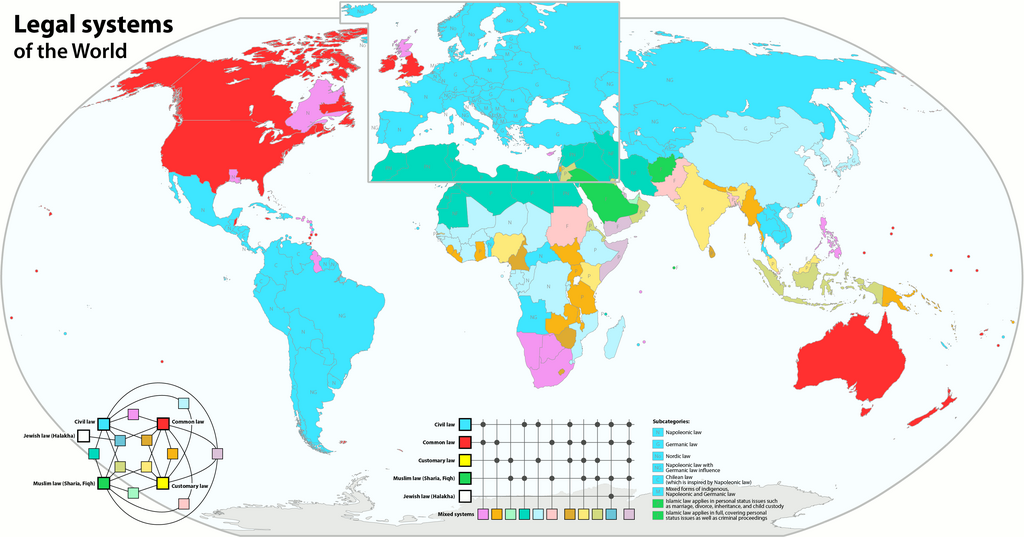
Common law countries base their legal systems on the English common law tradition, whereas civil law countries have codified law.
This divergence is particularly stark when comparing civil and common law traditions. Civil law systems, often influenced by canonical law prohibitions, tend to establish clear, codified bars on marriage within specific degrees of kinship. These statutes frequently lack nuance, creating absolute prohibitions. In contrast, common law jurisdictions often rely on a combination of statutory law and evolving judicial precedent, which can result in a more flexible—or at times, ambiguous—framework. The legislative intent behind these differing approaches reflects deeply embedded cultural and historical views on kinship and social structure.
Governing Law and Its Exceptions
The primary choice-of-law rule for marriage validity is often —the law of the place where the marriage was celebrated. This principle favors the validation of marriages and promotes certainty. However, its application is not absolute. Many jurisdictions, particularly those with strong prohibitions against certain consanguineous unions, will instead apply lex domicilii, the law of the parties' domicile at the time of the marriage.
The most significant check on the lex loci celebrationis principle is the public policy exception, or ordre public. A court may refuse to recognize a foreign marriage, even if valid where it was performed, if doing so would violate a fundamental public policy of the forum state. This is frequently invoked in cases involving avunculate or first-cousin marriages where the forum state has a strong legislative prohibition against them.
The public policy exception acts as a crucial safety valve, preventing the recognition of marriages that are considered morally or socially repugnant within the forum jurisdiction.
Void vs. Voidable
Incest statutes create a critical distinction between marriages that are void ab initio and those that are merely voidable. A void marriage is a legal nullity from its inception; it never legally existed and requires no court action to be nullified. Unions within the closest degrees of consanguinity, such as parent-child or sibling relationships, are universally treated as void.
A , by contrast, is considered valid until it is annulled by a court decree. This distinction carries profound consequences for issues like legitimacy of children, inheritance rights, and spousal benefits. Jurisdictions vary significantly on whether first-cousin or avunculate unions are treated as void or voidable, a determination that hinges on the perceived severity of the public policy violation.
| Characteristic | Void Marriage | Voidable Marriage |
|---|---|---|
| Legal Status | Never legally existed (ab initio) | Valid until annulled |
| Judicial Action | Not required for invalidity | Annulment decree required |
| Example | Sibling marriage | Marriage procured by fraud |
| Consequences | No legal rights (e.g., inheritance) | Rights may exist until annulment |
Ultimately, the enforceability of a consanguineous marriage across borders depends on an intricate analysis of competing legal traditions, choice-of-law rules, and the powerful, though often unpredictable, public policy considerations of the forum state.