Conquer Stress with Daily Meditation
Understanding Stress
What is Stress?
Stress is your body's natural reaction to a challenge or demand. In short bursts, it can be helpful. Think of the surge of focus you get before a big presentation or the jolt of energy that helps you swerve to avoid a car accident. This is your body's way of rising to an occasion.
stress
noun
A state of mental or emotional strain or tension resulting from adverse or demanding circumstances.
We often talk about stress as a single, negative thing, but there's a crucial distinction between two types. Acute stress is the short-term kind. It comes on quickly and, once the challenge has passed, your body returns to normal. It’s a temporary state of high alert.
Chronic stress, on the other hand, is long-term. This happens when the source of stress is constant and you feel you have little control. It might be a difficult job, financial worries, or a strained relationship. With chronic stress, your body stays in that high-alert state for days, weeks, or even longer. This is where stress stops being helpful and starts causing harm.
The Body on High Alert
When you encounter a perceived threat, your brain’s hypothalamus sets off an alarm system. This system prompts your adrenal glands, located on top of your kidneys, to release a surge of hormones, including adrenaline and cortisol. This is often called the "fight-or-flight" response.
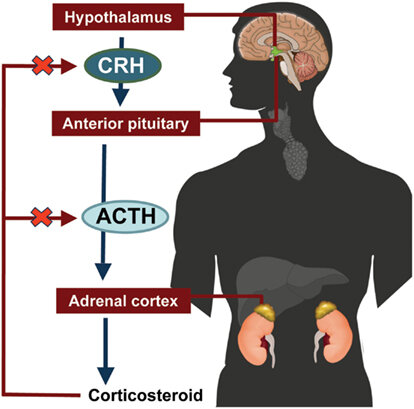
Adrenaline increases your heart rate, elevates your blood pressure, and boosts energy supplies. Cortisol, the primary stress hormone, increases sugars (glucose) in the bloodstream, enhances your brain's use of glucose, and increases the availability of substances that repair tissues.
Cortisol also curbs functions that would be nonessential in a fight-or-flight situation. It alters immune system responses and suppresses the digestive system, the reproductive system, and growth processes. This complex natural alarm system also communicates with regions of your brain that control mood, motivation, and fear.
In a short-term, stressful situation, this response is life-saving. But when it never turns off, the effects of cortisol and other stress hormones can wreak havoc on your body.
The Mind Under Pressure
Stress doesn't just affect your body; it has a profound impact on your mind. The psychological effects can be just as debilitating as the physical ones. When you're under chronic stress, you might find it hard to concentrate or make decisions. Your memory might feel fuzzy, and you could find yourself constantly worrying or seeing only the negative side of things.
Emotionally, stress can lead to irritability, frustration, and moodiness. It can feel like you're on a short fuse, ready to snap at the smallest thing. Over time, this can lead to a feeling of being overwhelmed or out of control, which can contribute to more serious mental health problems like anxiety and depression.

These psychological effects can create a vicious cycle. Feeling anxious or irritable makes it harder to cope with the sources of your stress, which in turn can make you feel even more stressed. It's a feedback loop that can be difficult to break.
Behavioral changes are also common. You might find yourself eating too much or too little, sleeping poorly, withdrawing from others, or procrastinating.
Why Stress Management Matters
Because chronic stress keeps your body in a constant state of high alert, it can lead to serious health problems over time. The continuous exposure to cortisol and other stress hormones can disrupt almost all your body's processes. This increases your risk for numerous health issues, including:
- Heart disease
- Sleep problems
- Digestive issues
- Depression and anxiety disorders
- Memory and concentration impairment
- Weakened immune system
This is why managing stress is not a luxury; it's a necessity for long-term health. The goal of stress management isn't to eliminate stress entirely—that's impossible and not even desirable. The goal is to develop healthier ways to respond to it.
Recovering from chronic stress is possible.
By learning to identify the sources of your stress and practicing techniques to counteract its effects, you can interrupt the cycle. This helps your body and mind return to a state of balance, protecting you from the long-term damage that chronic stress can cause. It empowers you to navigate life's challenges without sacrificing your well-being.
What is the key difference between acute and chronic stress?
During the 'fight-or-flight' response, the adrenal glands release a surge of hormones, primarily ______ and ______.