Conquer Stress with Daily Meditation
Understanding Stress
What is Stress?
Stress is your body's natural response to a challenge or demand. Think of it as a built-in alarm system. When you encounter a potential threat, whether it's a looming project deadline or a car swerving into your lane, your body reacts. This reaction isn't always bad. A little bit of stress can be motivating, helping you stay focused and energetic. This positive stress, known as eustress, can feel like the excitement you get before a first date or a big presentation.
The problem is when the alarm system stays on for too long. The external events or internal thoughts that trigger this response are called stressors. They can range from minor hassles, like traffic, to major life changes, such as a job loss or illness. Your body doesn't distinguish between a physical threat and a psychological one. A difficult workday can trigger the same stress response as a dangerous situation.
Stressor
noun
A chemical or biological agent, environmental condition, external stimulus, or an event that causes stress to an organism.
The Body's Alarm System
When you perceive a threat, a tiny region at the base of your brain, the hypothalamus, springs into action. It initiates a cascade of signals that prepare your body to either fight the threat or flee from it. This is the famous “fight-or-flight” response.
The hypothalamus signals the pituitary gland, which in turn tells your adrenal glands to release stress hormones, primarily cortisol and adrenaline. Adrenaline increases your heart rate, elevates your blood pressure, and boosts energy supplies. Cortisol, the primary stress hormone, increases sugars in the bloodstream, enhances your brain's use of glucose, and curbs functions that would be nonessential in a fight-or-flight situation. This complex communication network is known as the HPA axis (Hypothalamic-Pituitary-Adrenal axis).
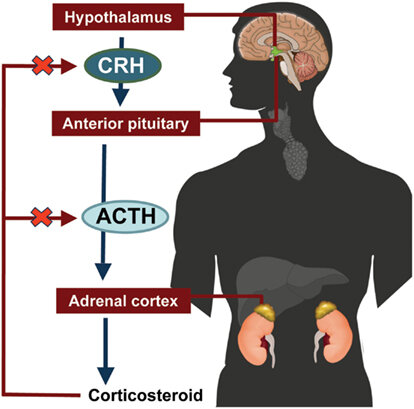
This response is brilliant for short-term survival. It sharpens your focus, strengthens your muscles, and speeds up your reaction time. It's what helps you slam on the brakes to avoid an accident.
When Stress Lingers
The body's stress response system is usually self-regulating. Once a perceived threat has passed, hormone levels return to normal. Your heart rate and blood pressure come down, and other systems resume their regular activities.
But when stressors are always present, that fight-or-flight reaction stays turned on. This is chronic stress. The long-term activation of the stress response system and the overexposure to cortisol and other stress hormones that follows can disrupt almost all your body's processes. This puts you at increased risk for numerous health problems.
| System | Potential Effects of Chronic Stress |
|---|---|
| Cardiovascular | High blood pressure, heart attack, stroke |
| Immune | Weakened response to viruses and illness |
| Digestive | Stomachaches, ulcers, irritable bowel syndrome |
| Musculoskeletal | Tension headaches, muscle pain, joint problems |
| Mental Health | Anxiety, depression, sleep problems, memory impairment |
Psychologically, chronic stress can feel like a constant state of unease. You might experience irritability, anxiety, or sadness. It can become difficult to concentrate or make decisions. Your energy levels may plummet, and you might lose interest in activities you once enjoyed. These feelings aren't just in your head; they are the result of your brain being continuously bathed in stress hormones.

Why Management Matters
Since we can't eliminate stress entirely, learning to manage it is crucial for our health and well-being. Effective stress management helps you break the hold stress has on your life, so you can be happier, healthier, and more productive. The goal is a balanced life, with time for work, relationships, relaxation, and fun, plus the resilience to hold up under pressure and meet challenges head-on.
Recovering from chronic stress is possible.
Managing stress isn't about a single perfect technique. It's about building a toolkit of strategies that work for you. By understanding how your body and mind react to stressors, you can start to identify your triggers and develop healthier ways of coping. This proactive approach allows you to buffer the negative effects of stress before they take a toll, protecting both your physical and mental health for the long term.
What is the term for the type of stress that is considered positive and motivating, like the excitement before a big presentation?
Which hormone is referred to as the primary stress hormone, responsible for increasing sugars in the bloodstream and curbing nonessential bodily functions during a 'fight-or-flight' response?