Conquer Stress Through Daily Meditation
Understanding Stress
What is Stress Anyway?
You’ve probably used the word “stress” a hundred times. Maybe you were stressed about a big test, a tight deadline at work, or a difficult conversation. But what is it, really? At its core, stress is your body's way of responding to any kind of demand or threat.
Stress is a natural physiological and psychological reaction to demands or threats.
When you sense danger, whether it’s real or imagined, the body's defenses kick into high gear in a rapid, automatic process known as the “fight-or-flight” reaction. This response is your body's way of protecting you. In emergencies, it can save your life, giving you extra strength to defend yourself, for instance, or spurring you to slam on the brakes to avoid an accident. It's an evolutionary survival tool.
stress
noun
A state of mental or emotional strain or tension resulting from adverse or demanding circumstances.
This response isn't just for life-or-death situations. Your body can also react this way to everyday pressures, like public speaking or navigating a crowded grocery store. The key is understanding how this natural reaction affects you, both inside and out.
Your Body on Stress
When you encounter a stressor, your brain’s hypothalamus gets the ball rolling. It signals your adrenal glands to release a surge of hormones, including adrenaline and cortisol. This is the start of a complex cascade of events.
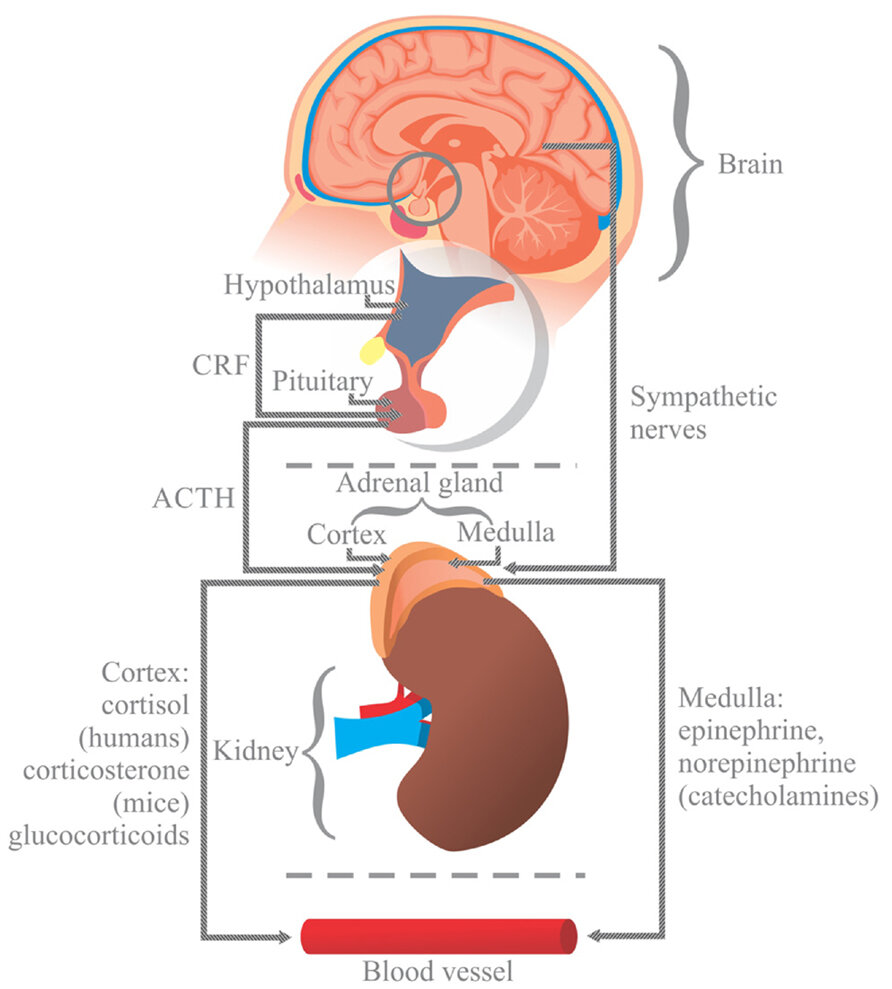
Adrenaline increases your heart rate, elevates your blood pressure, and boosts energy supplies. Cortisol, the primary stress hormone, increases sugars (glucose) in the bloodstream, enhances your brain's use of glucose, and increases the availability of substances that repair tissues. It also curbs functions that would be nonessential in a fight-or-flight situation. It alters immune system responses and suppresses the digestive system, the reproductive system, and growth processes.
This complex natural alarm system also communicates with the brain regions that control mood, motivation, and fear. So, while it helps you tackle immediate challenges, it also has a powerful effect on how you feel emotionally.
Psychological effects of stress often include irritability, anxiety, and difficulty concentrating.
Mentally, you might find it hard to focus. Your thoughts might race, or you could feel constantly worried. Some people become forgetful or disorganized. Emotionally, stress can lead to mood swings, frustration, or a sense of being overwhelmed. Feeling like you've lost control is a common psychological symptom. Over time, this can wear down your confidence and sense of self-worth.

These feelings aren't just in your head. They are a direct result of the chemical changes happening in your body. The same hormones that get your heart pumping also put your mind on high alert, making it difficult to relax and think clearly.
When Stress Sticks Around
The body’s stress response system is usually self-limiting. Once a perceived threat has passed, hormone levels return to normal. As adrenaline and cortisol levels drop, your heart rate and blood pressure return to baseline levels, and other systems resume their regular activities.
But when stressors are always present and you constantly feel under attack, that fight-or-flight reaction stays turned on. This is known as chronic stress.
Chronic exposure to stress, from workplace pressures to personal challenges, can persistently elevate cortisol levels, disrupting the body's most basic functions and leading to long-term health consequences.
The long-term activation of the stress response system can disrupt almost all your body's processes. This puts you at increased risk for many health problems, including:
- Heart Disease: Increased heart rate and blood pressure can damage arteries over time.
- Sleep Problems: Stress can make it hard to fall asleep and stay asleep.
- Digestive Issues: Stress can lead to stomachaches, cramps, and other gut problems.
- Weakened Immune System: Chronic stress makes you more vulnerable to infections and illnesses.
- Mental Health Issues: Long-term stress is a major risk factor for anxiety and depression.
This is why managing stress is so important. It's not about getting rid of stress completely, which is impossible, but about learning how to handle it in a healthy way to prevent it from becoming chronic.
By understanding your own stress responses, you can start to take control. Recognizing the physical and psychological signs is the first step toward building resilience and protecting your long-term health. Let's test what you've learned.
What is the primary function of the “fight-or-flight” reaction?
Which two hormones are primarily released by the adrenal glands during the initial stress response?
Learning to recognize how stress affects your body and mind is a crucial skill for maintaining your overall well-being.