Congress and Presidential Power
Congress Structure
Two Houses, One Congress
The United States Congress is the heart of the federal government's legislative branch, but it's not just one big group. It's split into two distinct parts, or chambers: the House of Representatives and the Senate. This two-chamber system is known as a bicameral legislature.
Bicameral
adjective
Having two branches or chambers, as a legislative body.
Why two houses? This design wasn't an accident. It was the result of a major debate during the 1787 Constitutional Convention. Delegates from larger states wanted representation in Congress to be based on population. More people, more power. Delegates from smaller states feared this would leave them voiceless. They wanted equal representation for every state, regardless of size.
The solution was the Great Compromise. It created both. The House of Representatives would satisfy the large states by basing representation on population. The Senate would satisfy the small states by giving every state two senators, period. This structure was designed to balance the power of populous states with the rights of smaller ones.
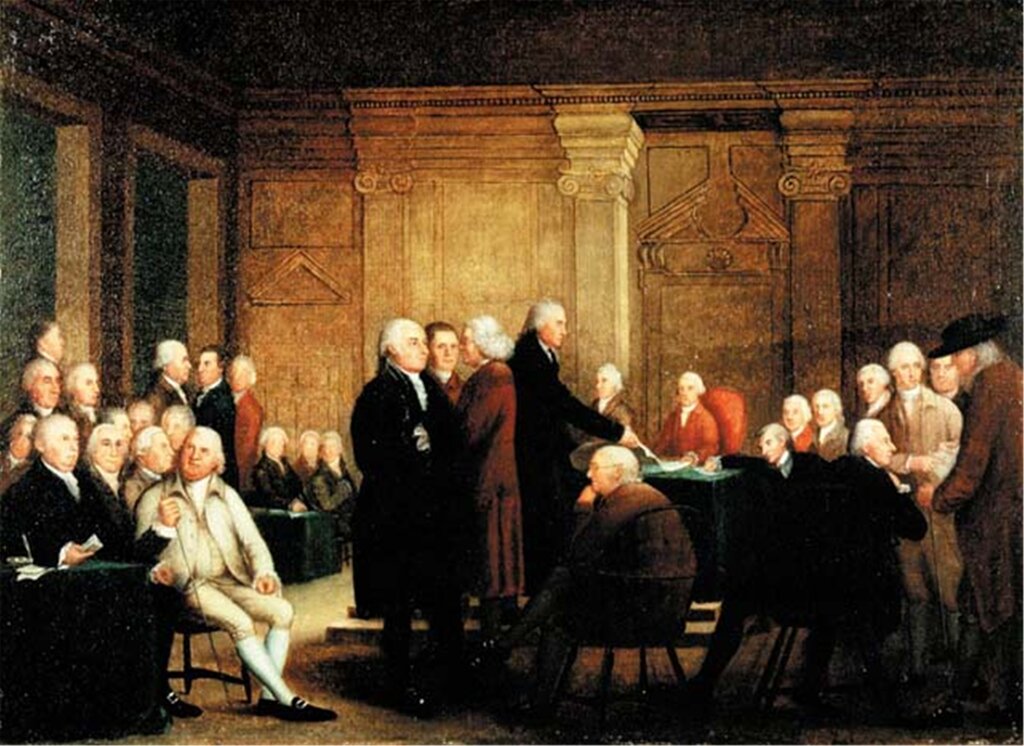
The People's House
The House of Representatives is often called “the People’s House” because its members are elected from smaller, specific districts within each state. They serve two-year terms, meaning they face reelection frequently. This short cycle is intended to keep them closely tied to the needs and moods of their local constituents.
There are 435 voting members in the House. This number was fixed by law in 1929. The number of representatives each state gets is determined by its population, which is counted every 10 years by the Census. States with more people, like California and Texas, have many representatives, while states with fewer people, like Wyoming and Alaska, have only one.
Because its members represent smaller districts and serve shorter terms, the House is considered the chamber more responsive to public opinion.
The House has some unique powers. All bills that raise revenue, meaning tax bills, must originate in the House. It also has the sole power of impeachment, which is the authority to formally accuse a federal official of wrongdoing.
The Deliberative Body
The Senate is a different story. With only 100 members, two for each of the 50 states, it's a much smaller body. Senators are elected for six-year terms, which are staggered so that only about one-third of the Senate is up for reelection every two years. This longer term is meant to insulate senators from the constant pressure of public opinion and allow them to take a longer-term view on issues.
This structure makes the Senate a more deliberative and stable body than the House. It's intended to be a place for cooling down the passions that might sweep through the more populist House of Representatives.

The Senate also has its own special responsibilities. It provides “advice and consent” to the President. This means it has the power to approve or reject major presidential appointments, such as cabinet members, ambassadors, and federal judges. The Senate also has the sole power to ratify treaties with foreign countries.
If the House votes to impeach a federal official, it is the Senate's job to hold the trial and decide whether to convict and remove the official from office.
Checks and Balances in Action
The bicameral system is a powerful check and balance within the legislative branch itself. For a bill to become a law, it must be passed in the exact same form by both the House and the Senate. This is harder than it sounds.
A bill might easily pass the House, where a simple majority can act quickly, only to get stuck in the Senate, where rules give more power to the minority party to slow things down. This forces negotiation and compromise. The two chambers, with their different structures, term lengths, and constituencies, ensure that laws are made with broad support and careful consideration, not just on a temporary whim.
| Feature | House of Representatives | Senate |
|---|---|---|
| Members | 435 voting members | 100 members |
| Representation | Based on state population | 2 per state |
| Term Length | 2 years | 6 years |
| Elections | All members every 2 years | 1/3 of members every 2 years |
| Key Powers | Originate revenue bills, Impeachment | Confirm appointments, Ratify treaties |
| Character | More responsive to public will | More deliberative and stable |
This dual structure is fundamental to how American laws are made. It reflects the founders' desire to create a government that was both responsive to the people and stable enough to endure.
Ready to check your understanding?
The creation of a two-chamber Congress during the 1787 Constitutional Convention was a solution to a debate between large and small states. This solution is known as:
Why are members of the House of Representatives often considered more directly responsive to the will of the people than senators?
The division of Congress into two houses is a cornerstone of the American political system, ensuring a careful balance between population-based representation and state equality.