Confucius and Mencius on Governance
Introduction to Confucianism
A World in Chaos
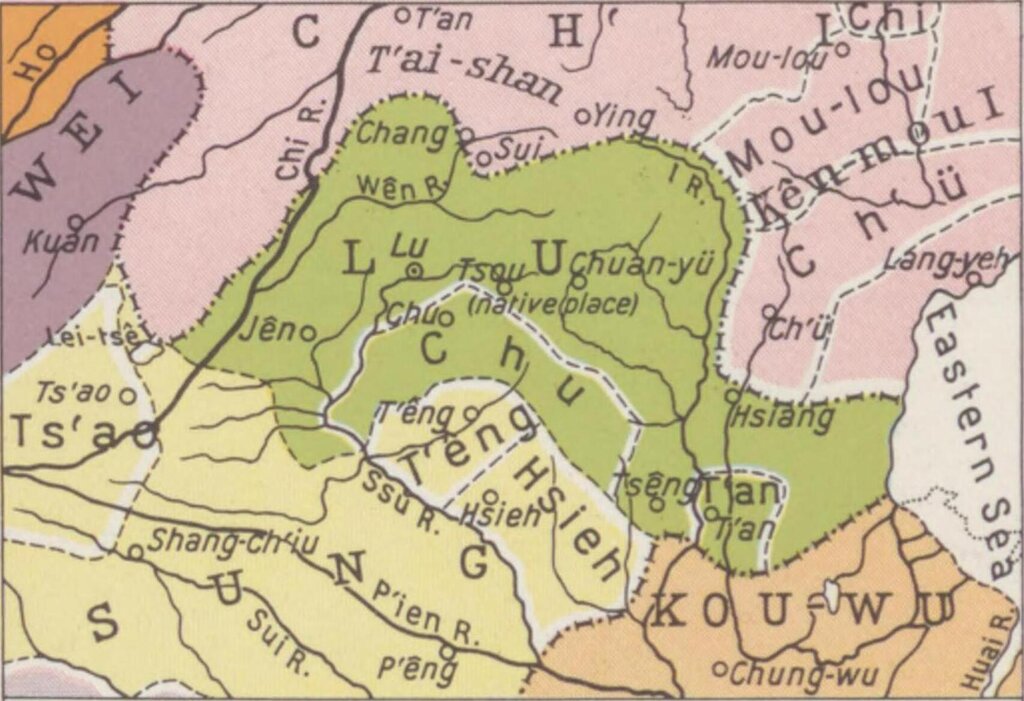
Imagine a time of constant conflict. The great Zhou Dynasty, which had ruled for centuries, was crumbling. Local lords fought each other for land and power, alliances were made and broken overnight, and the common people suffered. This was the reality of ancient China during the Spring and Autumn period, from roughly 771 to 476 BCE.
Into this chaotic world, a man named Kong Fuzi, later known in the West as Confucius (551-479 BCE), was born. He wasn't a king or a general. He was a thinker, a teacher, and a minor official who believed he had a solution to the violence and instability around him. His answer wasn't conquest or new laws, but a return to moral principles. He looked to the past, to the early days of the Zhou Dynasty, as a golden age of peace and order, and he dedicated his life to teaching others how to recreate it.
The Three Pillars
Confucius believed that a stable, peaceful society is built from the ground up, starting with the individual. He taught that if people could cultivate their own moral character, order would naturally follow in their families, communities, and the entire kingdom. His philosophy rests on several core concepts, but three stand out: Rén, Lǐ, and Yì.
Ren (仁)
noun
The core virtue of benevolence, compassion, and humaneness. It's the feeling of altruism and empathy for others.
Rén is perhaps the most important concept in Confucianism. It is the essence of being human. Think of it as the ultimate form of empathy. It's not just about feeling sorry for someone; it's about actively caring for their well-being and understanding your connection to them. Confucius taught that if a ruler governed with rén, the people would be loyal and the state would prosper without the need for harsh punishments.
Rén is the simple but profound idea that you should treat others as you wish to be treated.
Li (禮)
noun
The system of norms, rituals, and proper conduct that guides human relationships and social interactions.
If rén is the inner feeling, lǐ is its outer expression. Lǐ refers to all the rituals, customs, and rules of proper behavior that structure society. This isn't just about stuffy ceremonies. Lǐ covers everything from how a son should speak to his father, to how friends should interact, to the proper way for a minister to advise his ruler. These rituals aren't empty gestures; they are the practical means by which people express rén and maintain social harmony. For Confucius, following lǐ was how you trained yourself to be a better person and built a predictable, orderly world.
Yi (義)
noun
The moral sense to recognize what is right and the duty to do it. It is righteousness in action.
Yì is the moral compass that guides your actions. It’s the ability to see a situation and just know what the right, proper, and moral thing to do is. While lǐ provides the structure for behavior, yì is the judgment required to apply it correctly. A person of yì doesn't just follow rules blindly. They understand the moral principle behind the rules and act from a place of integrity. It's about doing the right thing for the right reason, simply because it is the right thing to do.
A Blueprint for Society
Together, rén, lǐ, and yì form a blueprint for both personal and social order. Confucius believed that when individuals cultivate these virtues, they become what he called a junzi (君子), or an exemplary person. A society led by and filled with such people would be harmonious, stable, and just.
His teachings weren't just abstract ideas. They were a practical response to the political decay he witnessed. He believed that moral leadership, not military might, was the true foundation of a state's strength. This idea, radical for its time, would go on to shape Chinese civilization for millennia.
What historical period's chaos and instability heavily influenced Confucius's philosophical development?
Which Confucian concept can be best described as the internal, humane feeling of empathy and care for others?
Confucius's vision was one where personal morality and good governance were inseparable, creating a ripple effect of virtue from the individual out to the entire world.