Conflict Theory Explained
Introduction to Conflict Theory
A World of Competition
Why do some groups in society have more wealth, power, and influence than others? Is society a harmonious system where everyone works together, or is it more like an arena where different groups compete for dominance? Conflict theory offers a clear answer: society is fundamentally about competition.
Conflict theory looks at society as a competition for limited resources among groups and individuals who have unequal amounts of power.
This framework sees social life as a constant struggle for things like money, jobs, and political influence. Instead of focusing on stability and shared values, it highlights the tensions and conflicts that arise from inequality. The core idea is that society is not a level playing field. It's composed of various groups—defined by class, race, gender, or other factors—that are constantly vying for control over scarce resources.
The Roots of Conflict
The ideas behind conflict theory are most famously associated with Karl Marx, a 19th-century philosopher and economist. Marx viewed history as a story of class struggle. He focused on the conflict between two main classes in capitalist society: the bourgeoisie, who owned the factories and other means of production, and the proletariat, the working class who sold their labor for wages.
Marx argued that this economic arrangement was inherently unequal. The owners profited from the workers' labor, creating a system where the rich got richer and the poor remained dependent. He believed this tension would inevitably lead to conflict and, eventually, revolutionary change.
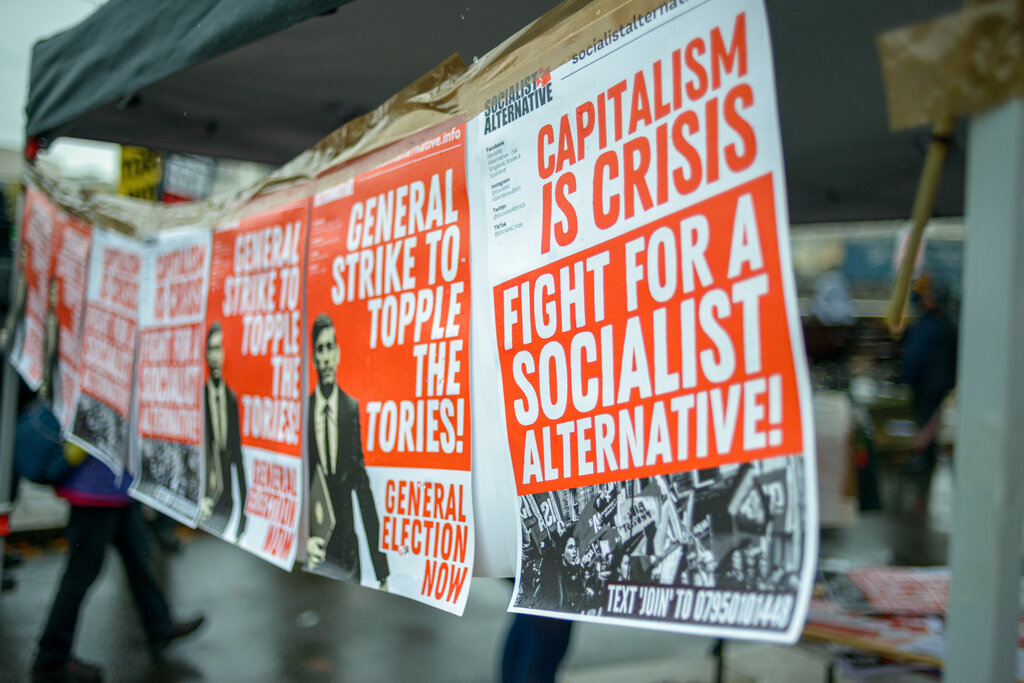
While Marx laid the groundwork, other sociologists expanded on these ideas. Max Weber, for example, agreed that economic inequality was a source of conflict, but he added other factors to the mix. Weber argued that power could also come from social status and political influence, not just from owning property. He showed that conflict is more complex than a simple battle between owners and workers. It can happen in many areas of social life, from political parties to social clubs.
Core Concepts
To really grasp conflict theory, it helps to understand its key building blocks: power, inequality, and competition.
Power
noun
The ability of an individual or group to impose their will on others, even against resistance.
Power is central. Dominant groups use their power to shape society's institutions—like laws, education systems, and the media—in ways that benefit them. This creates and reinforces social inequality, where resources and opportunities are distributed unevenly. The result is a state of constant competition, where subordinate groups struggle to gain more resources and challenge the existing power structure.
Conflict vs. Consensus
Conflict theory stands in sharp contrast to another major sociological perspective: functionalism, a type of consensus theory. Functionalism views society as a complex system whose parts work together to promote stability and solidarity. It sees institutions like family, school, and government as essential components that fulfill specific functions to keep society running smoothly.
Think of it this way: a functionalist might see the education system as a place that socializes children and prepares them for the workforce, benefiting everyone. A conflict theorist, on the other hand, would see the education system as a tool that perpetuates inequality. They might argue that schools in wealthy neighborhoods get more funding, giving affluent students an unfair advantage and reinforcing the existing class structure.
Whereas functionalism assumes the status quo is generally good and sudden social change is undesirable, conflict theory assumes the status quo generally results in unequal societies.
Essentially, functionalism focuses on what holds society together (consensus), while conflict theory focuses on what pulls it apart (competition). It sees social change not as a slow, evolutionary process, but as the result of conflict between competing groups.
What is the central premise of conflict theory?
According to Karl Marx, the primary conflict in capitalist societies is between which two groups?