Confident English Verbal Communication
Pronunciation and Phonetics
Beyond the Words
You know the difference between RAM and a router. But on a support call, clarity is everything. Mispronouncing a key term can lead to confusion and slow down a fix. This isn't about vocabulary; it's about the physical act of speaking clearly. We'll focus on the specific sounds and rhythms of North American English that make technical speech easy to understand.
The key to mastering pronunciation is understanding that letters and sounds are not the same thing. The letter 'a' sounds different in 'cache', 'adapter', and 'manage'. To talk about sounds precisely, linguists use the International Phonetic Alphabet (IPA). It’s a system where one symbol equals one sound, guaranteed. No more guessing.
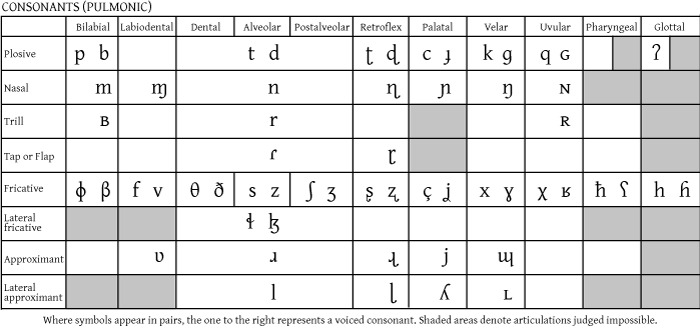
We won't learn the whole chart. We'll just focus on a few sounds that are crucial for technical English, starting with vowels. Vowels are all about the shape of your mouth and where your tongue is. A slight change in tongue position can turn 'disk' into 'desk'.
Vowels and Word Stress
Let's look at two key vowel sounds you'll encounter constantly. The sound in 'beet' is written as /i/ in IPA. To make it, the front of your tongue is high and tense. Now, consider the sound in 'bit', written as /ɪ/. Your tongue is in a similar place, but it's lower and more relaxed. This small difference is what separates 'leave' from 'live' or 'sleep' mode from a computer 'slip'.
| IPA Symbol | Example Word | Technical Term |
|---|---|---|
| /i/ | green | screen, feed, keyboard |
| /ɪ/ | pin | link, system, disk |
Just as important as the sounds themselves is word stress. English has a natural rhythm, and stressing the right syllable is vital for being understood. In technical terms, the stress pattern can change a word's meaning or just make it sound wrong. Think about the word 'install'. We say in-STALL, not IN-stall. Or 'RE-start', not re-START.
For many two-syllable nouns in IT, the stress falls on the first syllable. For two-syllable verbs, it often falls on the second.
Consider 'AD-dress' (a location) versus 'ad-DRESS' (to speak to). Or 'CON-duct' (behavior) versus 'con-DUCT' (to lead). Stress changes everything.
The All-Important Schwa
The most common vowel sound in English isn't one most people can name. It's called the schwa, and its IPA symbol is /ə/. It’s the relaxed, neutral 'uh' sound you hear in unstressed syllables. It's the 'a' in about, the 'e' in system, and the 'o' in memory.
Mastering the schwa is the secret to sounding natural. Native speakers don't pronounce every vowel with its full value. In a word like 'database', the first 'a' is strong (/eɪ/), but the second one becomes a schwa: DAY-tə-bays. Trying to pronounce it as DAY-ta-bays sounds robotic. The schwa lets you glide through the unimportant parts of words.
schwa
noun
The unstressed mid-central vowel sound in any language, often symbolized by /ə/ in the International Phonetic Alphabet.
Let's apply this to a common IT term: 'application'. The stress is on the 'ca' syllable. All the other vowels soften into schwas or near-schwas. It's not ap-plee-cay-shun. It's more like /ˌæp-lə-ˈkeɪ-ʃən/. Notice that unstressed 'i' becomes /ə/. Learning to hear and produce the schwa will make your speech much more fluid.
Tricky Consonants
Technical language is full of consonant clusters, which can be tough to pronounce clearly. Think of a word like 'script'. You have to navigate from /s/ to /k/ to /r/ without adding extra vowels. Practice saying it slowly: s-k-r-ipt. Don't say 'es-kuh-ript'.
Another common issue is the difference between voiced and unvoiced consonants. The only difference between /s/ (as in 'base') and /z/ (as in 'baze') is that you vibrate your vocal cords for /z/. Feel your throat when you say them. The same is true for /t/ and /d/, or /p/ and /b/. In English, this distinction is critical. 'The application crashed' (/t/ sound at the end) is very different from 'The application grazed' (/d/ sound at the end, from the voicing of the /z/ sound).
Time to check your understanding of these core phonetic ideas.
What is the primary purpose of the International Phonetic Alphabet (IPA) as described in the text?
Which pair of words demonstrates the difference between the tense vowel /i/ (as in beet) and the lax vowel /ɪ/ (as in bit)?
Improving pronunciation is a physical skill. It takes consistent, mindful practice. Listen carefully on calls, record yourself saying technical terms, and focus on one or two target sounds at a time. Clear communication is a powerful tool in any technical role.